Section 1: Product Introduction & Clinical Purpose
The Curedent Kois Deprogrammer is a precision-milled, anterior-contact appliance engineered to disrupt habitual neuromuscular engrams and enable reliable centric relation recording prior to definitive restorative treatment. Developed for general dentists, prosthodontists, TMD clinicians, and gnathology-focused practitioners, this appliance provides a controlled anterior bite platform that separates the posterior dentition during wear, allowing the mandible to seat into its true musculoskeletal position without interference from habitual closure patterns.
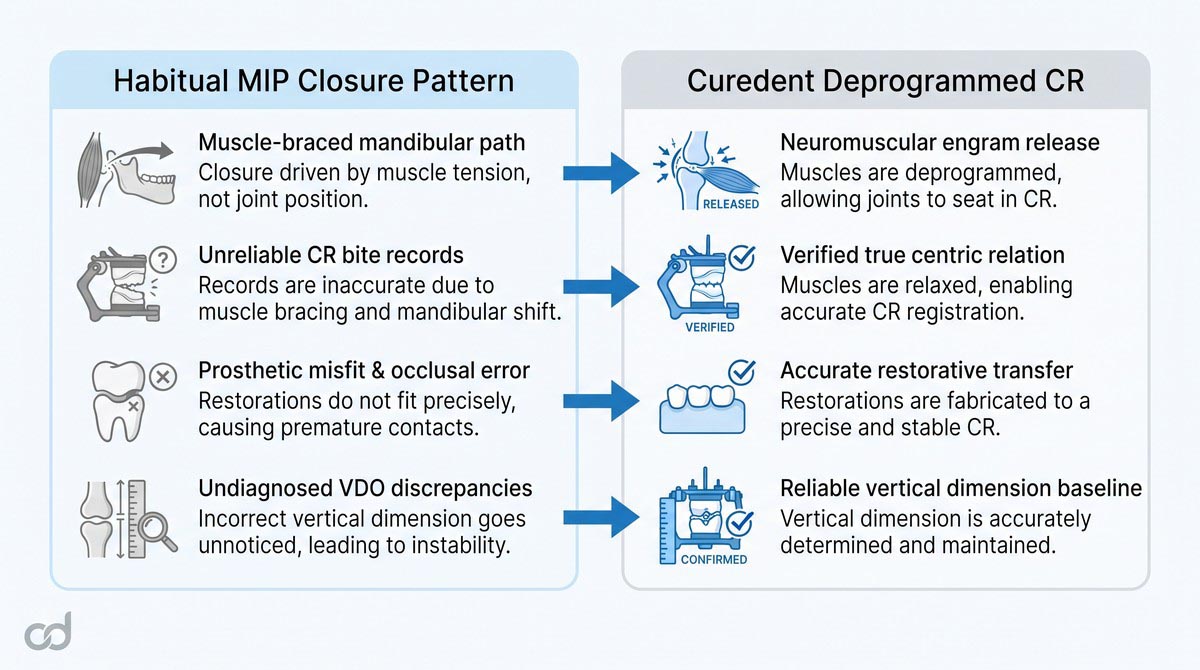
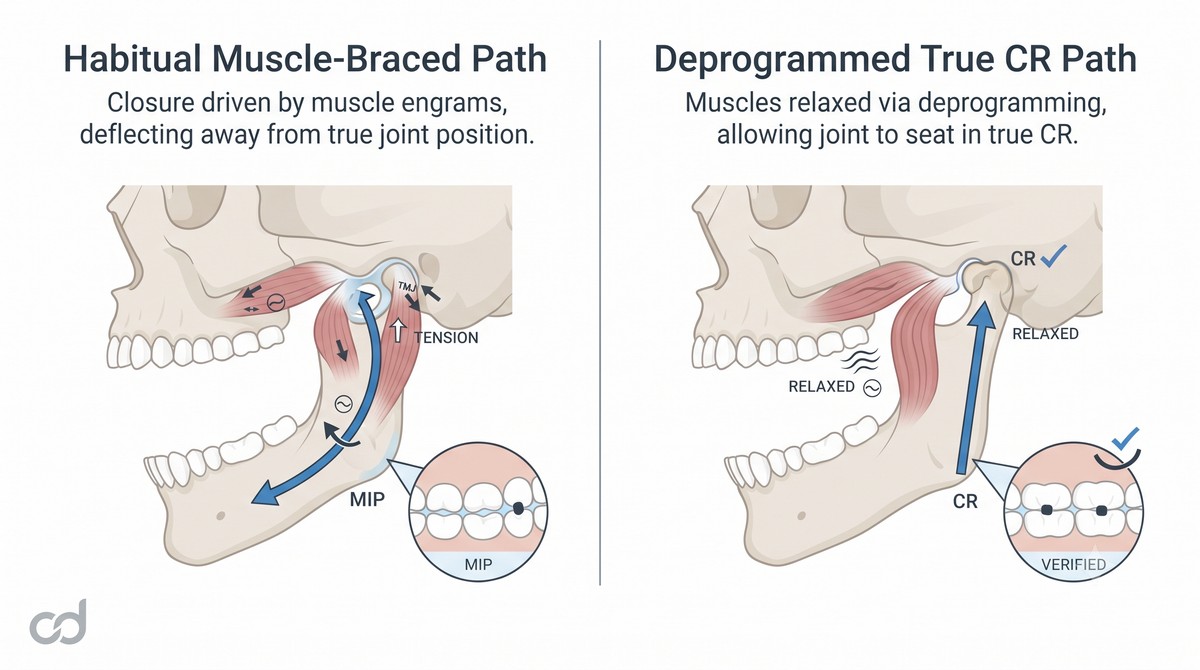
Every clinician who has attempted centric relation recording on a patient with a strong muscular engram understands the diagnostic challenge: the mandible instinctively returns to its habitual maximum intercuspation (MIP) position, masking the true condylar seating relationship. This MIP-CR discrepancy, when uncorrected, leads to inaccurate occlusal records, poorly designed restorations, and unpredictable prosthetic outcomes. The Kois deprogrammer solves this problem mechanically. By providing a single anterior contact point, it removes the posterior tooth guidance that reinforces the engram and allows the elevator musculature to release into a reproducible centric relation position.
Key Clinical Advantages
- Reliable Neuromuscular Release: Anterior-only contact eliminates posterior tooth guidance that sustains habitual muscle bracing.
- Reproducible CR Recording: Enables consistent, verifiable centric relation bite registration for prosthetic and diagnostic workflows.
- Precision-Milled Contact Point: Digitally designed single contact point ensures predictable mandibular seating without lateral deflection.
- Short-Term Diagnostic Tool: Designed for controlled short-term wear during the diagnostic phase, not for long-term nocturnal protection.
- Integrated with Digital Workflow: CAD-designed from intraoral scans for accurate adaptation to the maxillary anterior dentition.
Section 2: Product Anatomy & Physical Construction
Medical-Grade Milled PMMA Construction
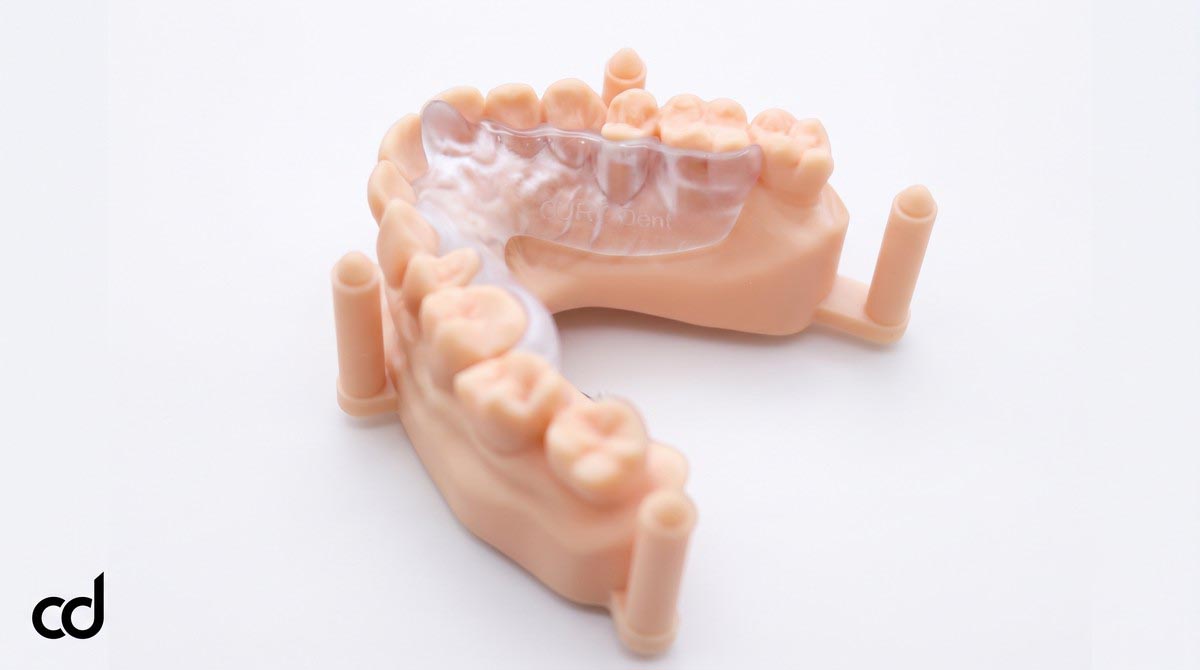
Every Curedent Kois Deprogrammer is milled from a high-density, medical-grade PMMA blank or a certified Class IIa biocompatible resin, depending on the clinical indication. The material provides high flexural strength, dimensional stability, and biocompatibility under short-term intraoral wear. Unlike hand-fabricated cold-cure acrylic deprogrammers that exhibit polymerization shrinkage and irregular contact surfaces, milled PMMA is fully pre-polymerized, ensuring uniform density and precise geometric execution across the entire appliance.
The Anterior Bite Platform: Structural Foundation
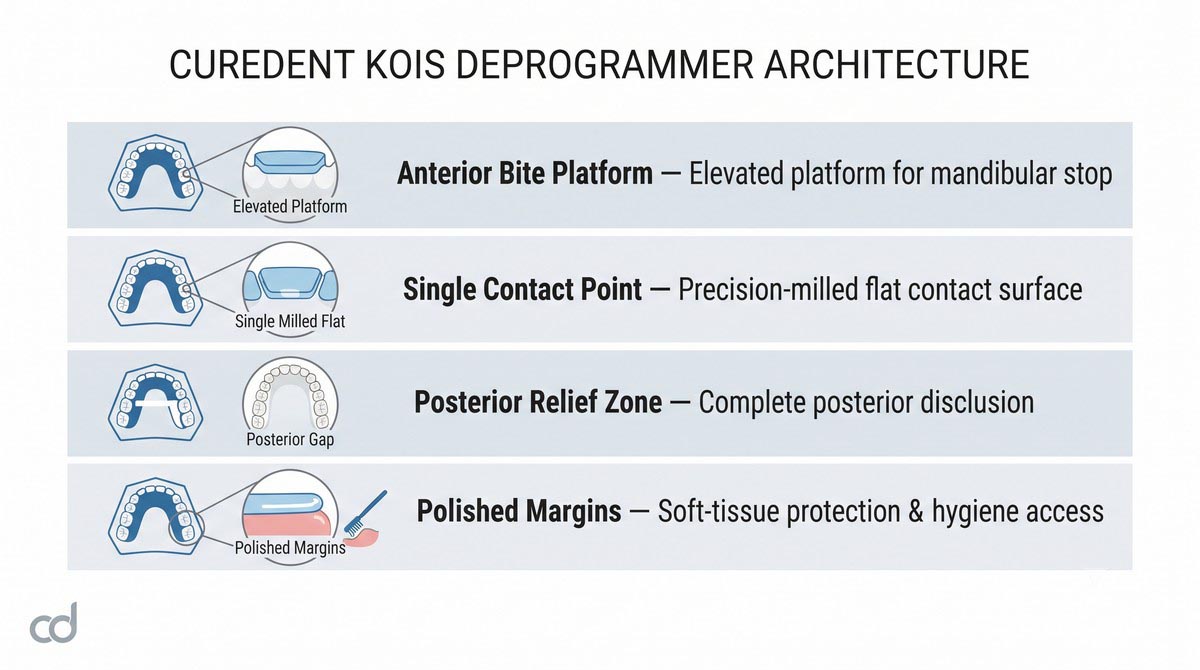
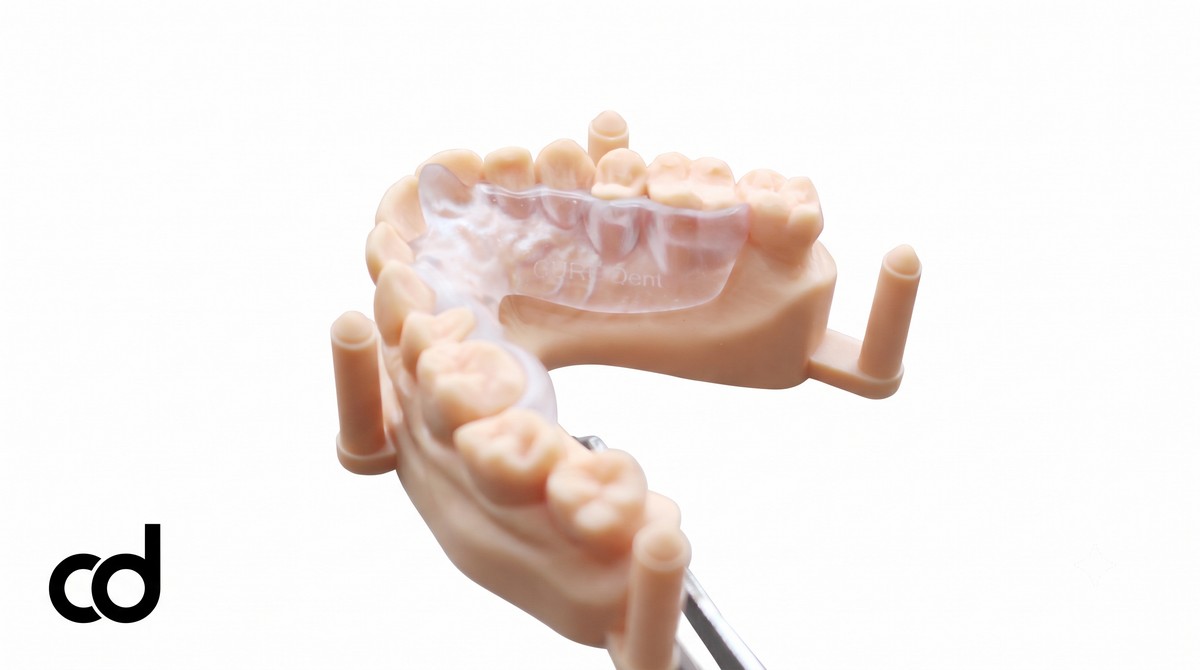
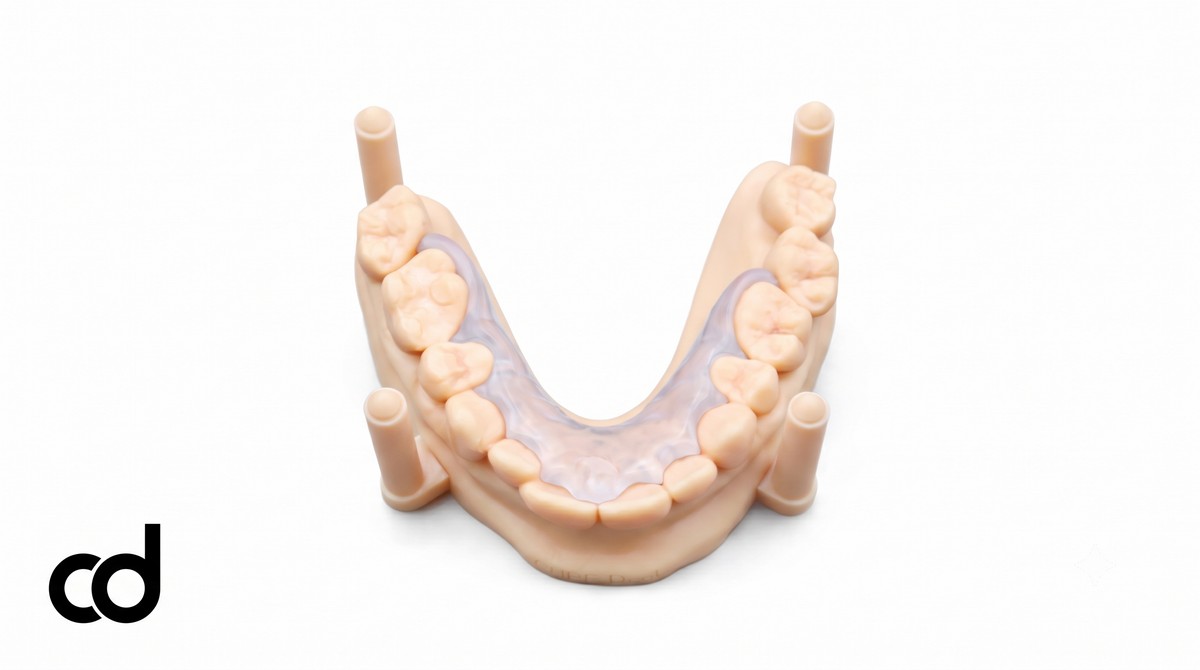
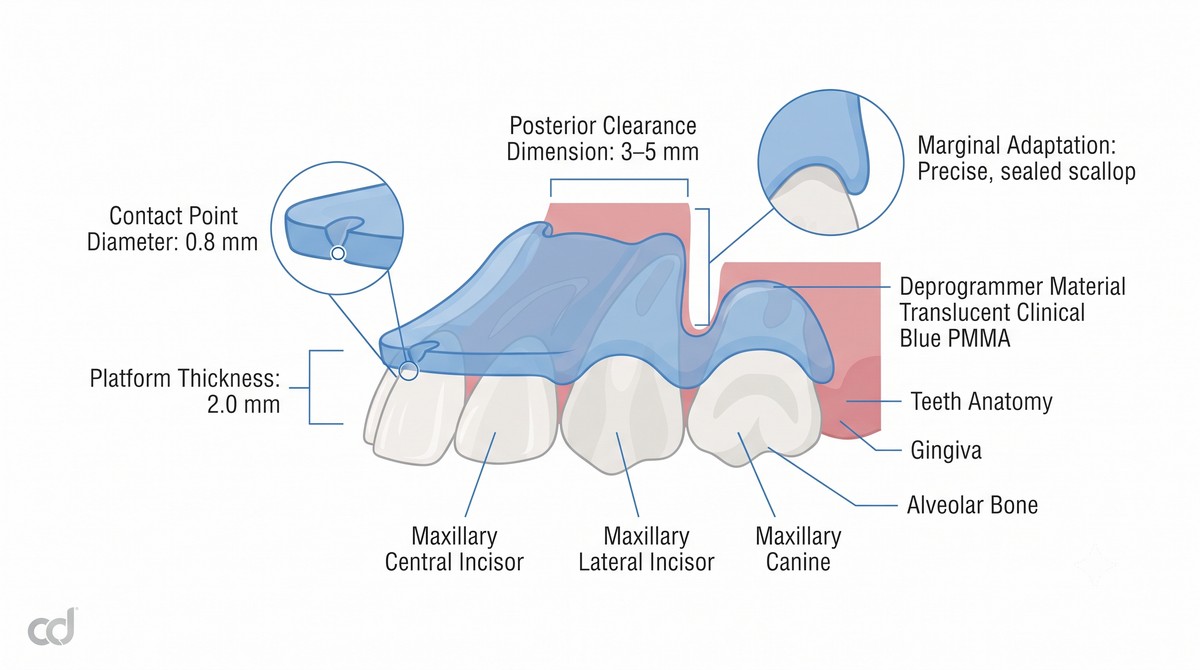
The defining structural feature of the Kois Deprogrammer is the anterior bite platform, an elevated horizontal surface positioned over the maxillary anterior teeth. The platform is milled to a precise vertical height that, when the patient closes, establishes a controlled separation between the posterior arches. This separation eliminates posterior tooth contact, removing the proprioceptive and mechanical guidance that sustains the habitual muscle engram.
The Single Contact Point: Precision Mandibular Stop
At the center of the anterior platform sits the single contact point—a small, precisely milled flat surface that provides the only occlusal stop during wear. Unlike a full-coverage splint that distributes contacts across multiple teeth, the single contact point eliminates lateral guidance and forces the mandible to seat into its true musculoskeletal position without deflection. The diameter and surface polish of the contact point are digitally calibrated to provide a stable, non-deflective stop.
Posterior Relief Zone: Complete Disclusion
The posterior relief zone is engineered to provide complete disclusion of the posterior teeth during wear. Unlike a partial-coverage splint that maintains some posterior contact, the deprogrammer intentionally removes all posterior stops. This is critical: any posterior contact—even light—can reinforce the habitual engram and prevent reliable neuromuscular release.
Surface Finish and Marginal Adaptation
The appliance body is milled to a uniform thickness that balances structural rigidity against interocclusal space requirements. Margins are finished with a smooth, rounded contour that seats 0.5–1.0 mm coronal to the gingival crest, protecting soft tissue while allowing unobstructed oral hygiene. The intaglio surface is polished to eliminate pressure spots and ensure passive seating across the maxillary anterior dentition.
Digital Workflow and Milling Precision
[Intraoral Optical Scan (STL/PLY)] ──┐
├─► [Digital CAD Design] ──► [5-Axis Milled PMMA Deprogrammer]
[Occlusal Records / CR Reference] ┘
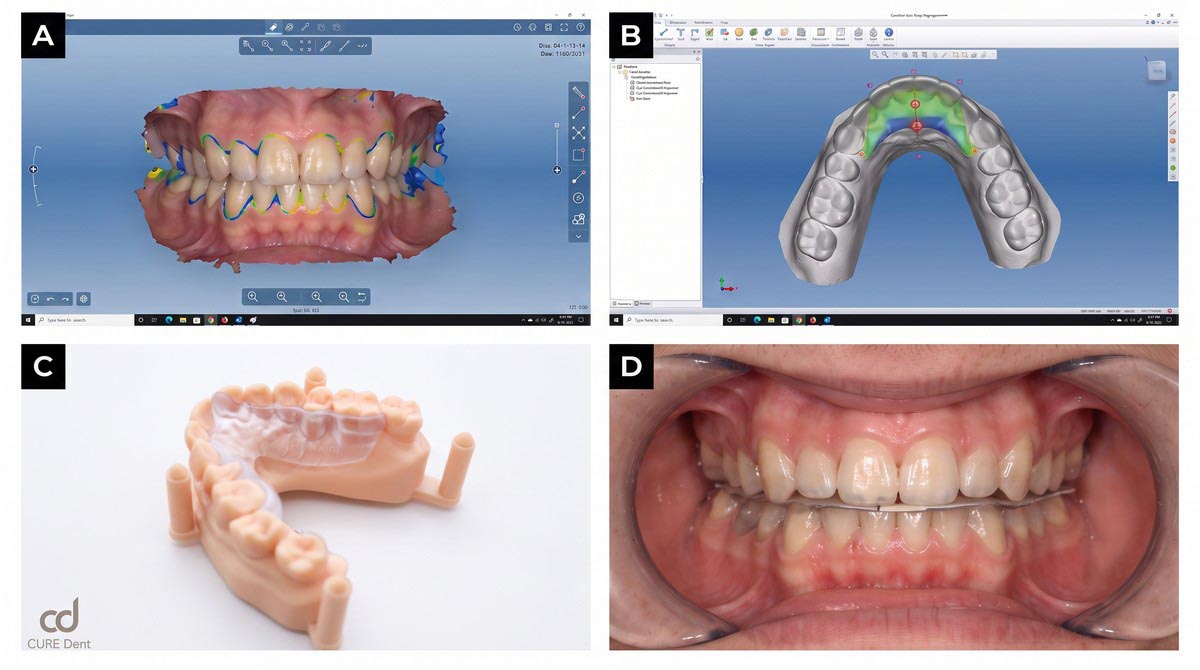
The appliance is designed entirely in CAD from the patient’s optical intraoral scan, occlusal registration data, and—when indicated—articulator or facebow transfer records. The digital design is then executed on a 5-axis milling unit, producing a monolithic deprogrammer with precise platform height, accurate single contact point geometry, and clean marginal contours.
Platform Height and Its Clinical Function
The anterior bite platform is milled to a specific vertical height calibrated to the patient’s interocclusal space. This height determines the vertical separation between the posterior arches during wear. Clinical guidelines typically recommend a platform height sufficient to achieve 3–5 mm of posterior separation. This clearance ensures that no posterior cusp contact occurs while the patient closes into the single contact point, effectively isolating the anterior guidance from any posterior engram reinforcement.
Section 3: Indications & Clinical Applications
Primary Clinical Indications
The Curedent Kois Deprogrammer is indicated across a range of diagnostic and treatment-planning scenarios:
- Unreliable Centric Relation Recording: Patients whose habitual muscle bracing prevents reproducible CR bite registration during routine occlusal records.
- MIP-CR Discrepancy Diagnosis: Cases where the habitual maximum intercuspation position differs significantly from the true centric relation position, requiring diagnostic verification.
- Suspected Muscle Engram Interference: Patients with strong elevator muscle bracing, chronic clenching habits, or asymmetric closure patterns that mask true condylar seating.
- Pre-Rehabilitation Diagnostic Phase: Cases scheduled for full-mouth reconstruction, implant-supported restorations, or complex occlusal therapy where accurate CR records are essential.
- TMD Muscle Bracing Cases: Patients presenting with masticatory muscle pain, restricted opening, or joint tenderness where muscle decompression is required before occlusal records can be reliably captured.
Kois Deprogrammer Feasibility Checklist:
[✓] Adequate anterior teeth for stable platform seating
[✓] Controlled periodontal status with no active inflammation
[✓] Sufficient interocclusal space for platform height
[✓] Patient compliance for short-term wear protocol
[✗] Insufficient anterior dentition for platform retention (Contraindicated)
Case Selection Criteria
- Adequate Anterior Dentition: The appliance requires stable maxillary anterior teeth to seat the platform. Mobile teeth, fractured crowns, or missing anterior units compromise seating stability and should be addressed before delivery.
- Controlled Periodontal Status: Active periodontitis, acute peri-implant inflammation, or significant tooth mobility must be controlled before deprogrammer wear.
- Sufficient Interocclusal Space: The platform height required to achieve posterior separation must be accommodated within the patient’s available interocclusal space. Patients with severely restricted vertical opening may not tolerate the appliance.
- Patient Compliance for Short-Term Wear: The deprogrammer is designed for controlled short-term use during the diagnostic phase. Patients must understand and commit to the wear protocol.
The Biology of Neuromuscular Engram Disruption
The masticatory system relies on a complex network of proprioceptive feedback loops that guide the mandible into its habitual closure pattern. Over years of function, these loops reinforce a specific neuromuscular pattern—an engram—that directs the elevator muscles to close the jaw into maximum intercuspation. When the clinician attempts to record centric relation, the engram overrides conscious guidance, pulling the mandible back into its habitual position.

The Kois Deprogrammer interrupts this cycle through neuromuscular engram disruption. By removing all posterior contacts and providing only a single anterior stop, the appliance eliminates the mechanical guidance that sustains the habitual pattern. Over a short period of wear, the elevator musculature releases its bracing pattern and the mandible seats into its true musculoskeletal position. This process is often referred to as central muscle deprogramming, and it is the essential first step in achieving a reliable centric relation recording.
Typical Clinical Scenarios
- Full-Mouth Rehabilitation Planning: Patients scheduled for comprehensive occlusal reconstruction where accurate CR transfer to the articulator is essential for predictable prosthetic design.
- Implant-Supported Full-Arch Cases: Patients requiring multi-unit implant restorations where MIP-CR discrepancy could compromise the passive fit of the definitive framework.
- Chronic TMD Muscle Bracing: Patients presenting with masticatory muscle pain and restricted opening where deprogramming is required before any occlusal records can be reliably captured.
- Diagnostic Occlusal Analysis: Cases where the clinician suspects a significant VDO collapse or occlusal instability but requires deprogrammed records to confirm the diagnosis.
Section 4: Clinical Workflow & Deprogramming Protocol

Step 1: Data Acquisition
Acquire a high-resolution optical intraoral scan of the maxillary and mandibular arches with accurate soft-tissue margin capture. Record the patient’s habitual occlusal registration and any available centric relation reference data. When indicated, submit facebow or articulator transfer records to support accurate platform design.
Step 2: Digital CAD Design
Curedent digital engineers design the deprogrammer within a virtual articulator environment. The anterior bite platform is established at the planned vertical height to achieve 3–5 mm of posterior separation. The single contact point is positioned at the optimal location for stable mandibular seating, and the posterior relief zone is verified to ensure complete disclusion.
Step 3: 5-Axis Milling and Finishing
The approved design is milled from a medical-grade PMMA blank on a 5-axis milling unit, producing a monolithic deprogrammer with precise platform geometry and accurate contact point execution. The appliance is then hand-polished and inspected for surface uniformity before dispatch.
Step 4: Delivery Verification
Upon receiving the appliance, inspect the deprogrammer on the master model: confirm complete seating on the anterior teeth, verify platform height against the digital design, check the single contact point for smooth polish, and ensure margins are smooth and rounded.
Step 5: Chairside Seating and Posterior Disclusion Verification
- Seat the deprogrammer on the maxillary anterior teeth using gentle finger pressure.
- Verify passive seating: the appliance should seat without rocking and remain stable when the patient opens and closes.
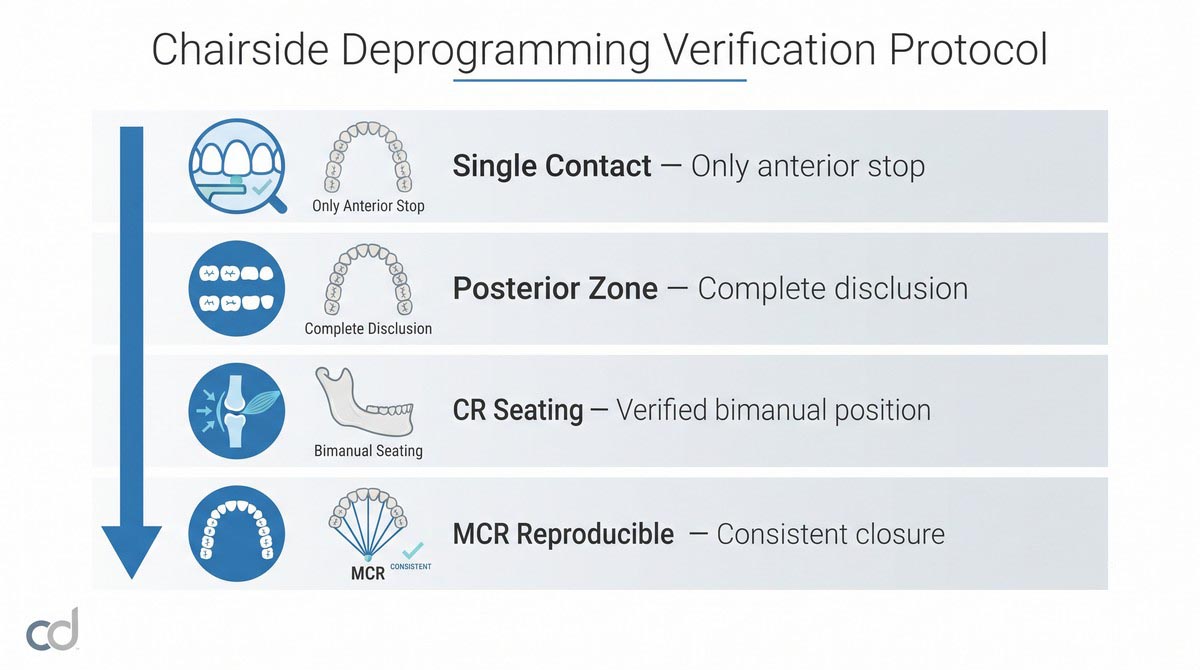
- Have the patient close gently into the single contact point. Confirm that only the anterior contact is present.
- Verify lateral pterygoid release: observe the patient’s mandibular position after 10–15 minutes of wear. The mandible should gradually seat posteriorly and superiorly into its true centric relation position as the muscle bracing releases.
- Confirm true centric relation seating by gently manipulating the mandible with bimanual technique while the patient wears the deprogrammer. The condyles should seat into their anterior-superior position without deflection.
- Verify muscular centric relation (MCR) by asking the patient to close repeatedly into the contact point. The mandibular position should reproduce consistently without slide or deflection.
Step 6: Short-Term Wear Protocol and CR Recording
Prescribe short-term wear of 20–45 minutes per session, repeated as needed until the musculature releases and the CR position becomes reproducible. The deprogrammer is a diagnostic tool, not a long-term nocturnal appliance. Once reliable CR records are captured, the clinician should proceed with definitive treatment planning or transition the patient to a full-coverage stabilization splint.
Step 7: Reliable CR Recording Following Deprogramming
After successful deprogramming, capture the centric relation bite registration immediately while the patient is still wearing the deprogrammer or immediately after removal. Record the CR position using a rigid bite registration material or digital jaw tracking. Verify the record by repeating the manipulation and confirming reproducibility. Transfer the CR record to the articulator or digital design environment for definitive treatment planning.
Safety and Wear Duration Considerations
The Kois Deprogrammer must be used strictly as a short-term diagnostic appliance. Prolonged wear without posterior support carries a documented risk of unopposed molar supraeruption. Posterior teeth, freed from occlusal loading, may begin to erupt vertically within weeks of continuous wear. This risk is especially significant in patients with active eruption potential. Clinicians must limit wear to the diagnostic phase and transition patients to a full-coverage stabilization splint once CR records are secured. Any patient reporting posterior tooth sensitivity, occlusal changes, or jaw discomfort during deprogrammer wear should be evaluated immediately.
Section 5: Technical Specifications & Recording Accuracy
Certified Technical Specifications
The Curedent Kois Deprogrammer is manufactured to strict biomedical and dimensional tolerances to ensure reliable neuromuscular release and accurate CR recording.
| Parameter | Specification | Clinical Relevance |
|---|---|---|
| Material | Medical-grade milled PMMA (or Class IIa biocompatible resin) | High rigidity, zero polymerization shrinkage |
| Fabrication method | Precision 3D printing or 5-axis milling | Uniform platform flatness, precise contact geometry |
| Design | Anterior bite platform with single contact point | Removes posterior guidance, releases engram |
| Posterior relief | Full posterior disclusion during wear | Eliminates posterior engram reinforcement |
| Contact point diameter | Case-dependent, precisely milled | Stable, non-deflective mandibular stop |
| Surface finish | Polished, uniform | Prevents wear facets and contact instability |
| Fit tolerance | Engineered for stable seating on maxillary anterior teeth | Passive seating without rocking |
| Wear duration | Short-term deprogramming use only | Minimizes unopposed molar supraeruption risk |
| Retention type | Removable anterior-contact appliance | Stable during diagnostic wear sessions |
| Sterilization | Delivered ready for clinical use | Cleaned and packaged for immediate operatory use |
Platform Flatness and Contact Point Precision
The diagnostic accuracy of the deprogrammer depends on precise milling tolerances:

- Platform Flatness: Mill tolerance is held to ± 0.05 mm across the platform surface, ensuring that the single contact point provides a stable, non-deflective stop.
- Contact Point Geometry: The contact point is milled to a precise diameter and polished to a smooth finish, preventing wear facets that could introduce lateral deflection during closure.
- Posterior Separation: The platform height is calibrated to achieve 3–5 mm of posterior separation, verified in the digital design and confirmed at chairside delivery.
MIP-CR Slide Analysis and Its Diagnostic Value
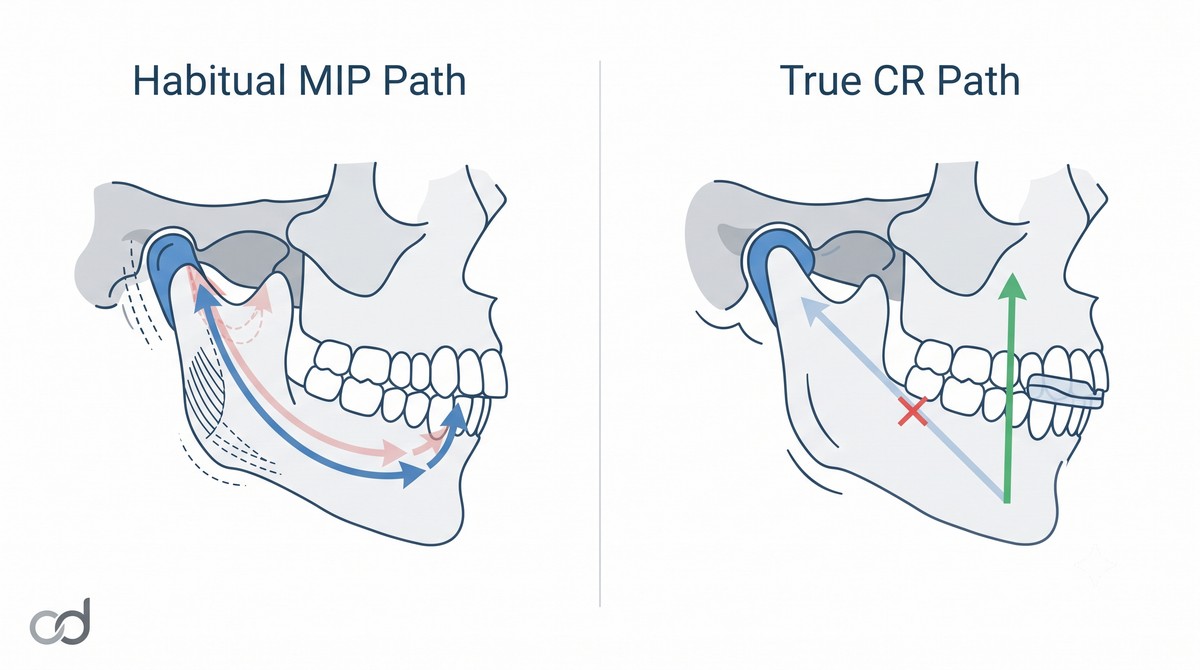
The MIP-CR slide analysis is a fundamental diagnostic procedure that becomes reliable only after successful neuromuscular deprogramming. In the habitual state, the mandible slides from its centric relation position into maximum intercuspation along an unpredictable path—often with lateral or anterior components that mask the true CR. After deprogramming, the slide path is reduced to a simple, reproducible vertical or near-vertical closure. This simplified slide provides a reliable diagnostic reference for:
- Determining the direction and magnitude of the MIP-CR discrepancy
- Assessing whether the discrepancy requires orthodontic, restorative, or combined correction
- Planning occlusal adjustments or prosthetic reconstruction
- Verifying the stability of the CR record before definitive treatment
Section 6: Clinical Benefits & Practice Impact
Patient-Level Clinical Benefits
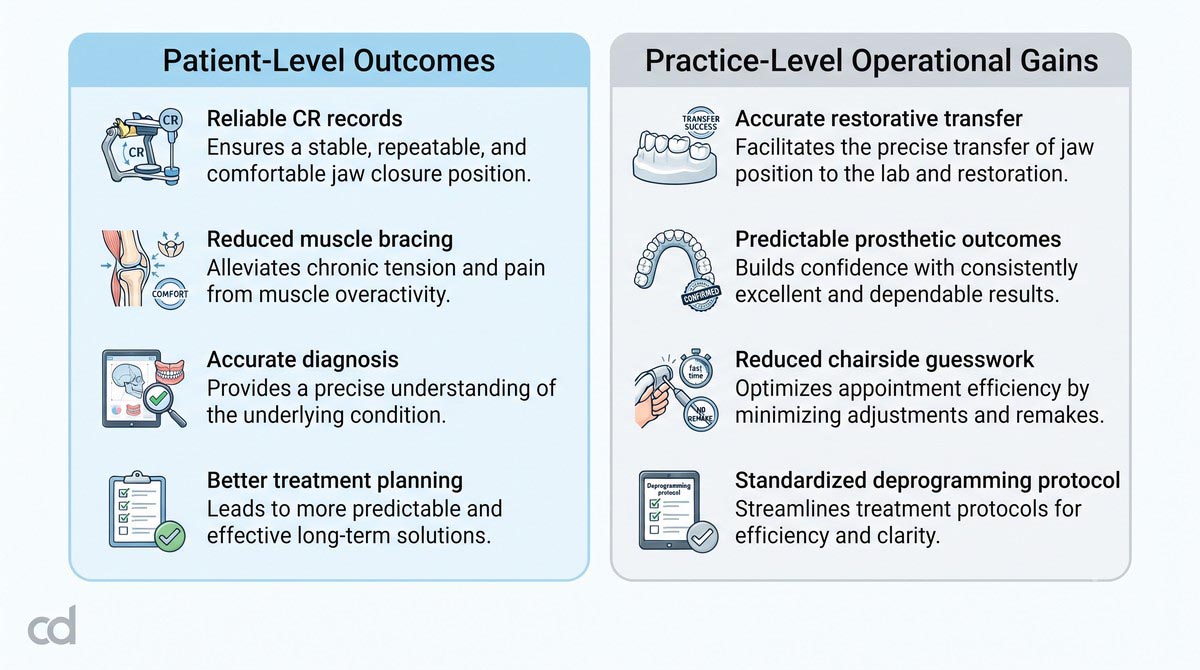
- Reliable Centric Relation Recording: The deprogrammer enables the clinician to capture a true, reproducible CR record that reflects the patient’s musculoskeletal position rather than a habitual muscle-braced pattern.
- Reduced Muscle Bracing: By removing posterior guidance, the appliance allows the elevator musculature to release its habitual bracing pattern, reducing muscle tension and associated discomfort.
- Accurate Diagnosis: Deprogrammed records provide the diagnostic clarity needed to assess MIP-CR discrepancy, VDO collapse, and occlusal instability without the confounding influence of muscle engrams.
- Better Treatment Planning: With reliable CR records, the clinician can plan restorative, orthodontic, or combined treatment with confidence, reducing the risk of mid-treatment occlusal instability or prosthetic misfit.
Practice-Level Operational Advantages
- Routine Adoption of Deprogramming Protocols: Integrating the Kois Deprogrammer into the diagnostic workflow standardizes centric relation recording and eliminates the variability that plagues habitual bite records.
- Reduced Chairside Guesswork: With a reliable CR record, prosthetic design, occlusal adjustments, and full-mouth rehabilitation planning become predictable processes rather than exercises in clinical intuition.
- Improved Predictability in Rehabilitation Cases: Accurate CR transfer to the articulator or digital design environment reduces the risk of occlusal discrepancies, fractured provisionals, and unplanned vertical dimension corrections.
- Standardization Across Complex Cases: A structured deprogramming protocol allows clinical teams to manage complex occlusal cases with consistent, repeatable workflows.
Deprogramming as a Modern Standard
Deprogramming before centric relation recording is no longer an optional refinement in complex restorative practice—it is a routine standard. Hand-fabricated acrylic deprogrammers and chairside guesswork cannot deliver the precision and reproducibility that modern digital restorative workflows demand. The Curedent Kois Deprogrammer provides a milled, CAD-designed solution that integrates seamlessly into contemporary diagnostic protocols. By establishing a reliable CR baseline, clinicians can plan and execute complex restorative cases with confidence.
Integrating the Kois Deprogrammer with Other Curedent Appliances
The Kois Deprogrammer is often the first step in a multi-phase occlusal therapy workflow. After successful CR recording, patients typically transition to a Curedent Occlusal Splint for long-term stabilization. In cases where acute TMD symptoms require immediate relief before deprogramming, the Curedent Anterior Bite Splint provides rapid neuromuscular relaxation. For patients requiring full-mouth rehabilitation with verified condylar seating, the Curedent B Splint offers dual-arch diagnostic verification before definitive treatment.
Section 7: Ordering, FAQ & Call to Action
Simple Three-Step Ordering Workflow
Ordering the Curedent Kois Deprogrammer through the doctor portal is designed to be efficient:
[Step 1: Upload Records] ──► [Step 2: Review Digital Design] ──► [Step 3: Receive Deprogrammer]
Scan + Occlusal Data CAD Approval via Portal Milled & Polished
- Upload Case Records: Access the Curedent portal and upload the patient’s optical intraoral scans (maxillary, mandibular, and bite registration in STL or PLY format) along with any occlusal registration data or CR reference records.
- Review Digital Design: Curedent engineers design the deprogrammer within a virtual articulator, establish the anterior platform height, position the single contact point, and verify posterior clearance. Review and approve the design via the interactive web viewer.
- Receive and Deliver: Curedent mills the deprogrammer from medical-grade PMMA, hand-polishes the platform and contact point, verifies geometry and margin adaptation, packages the appliance in protective clinical casing, and dispatches it directly to your practice.
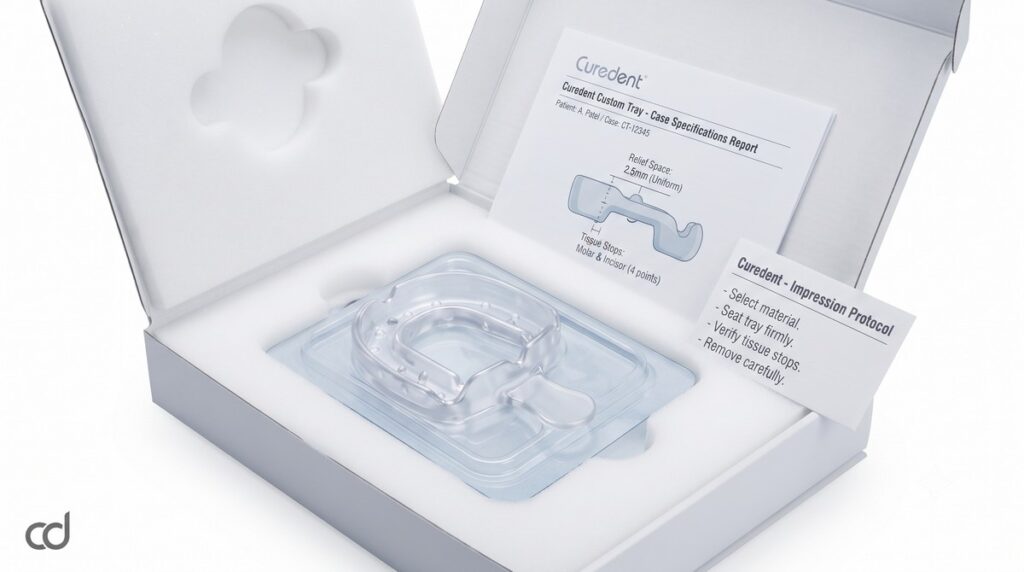
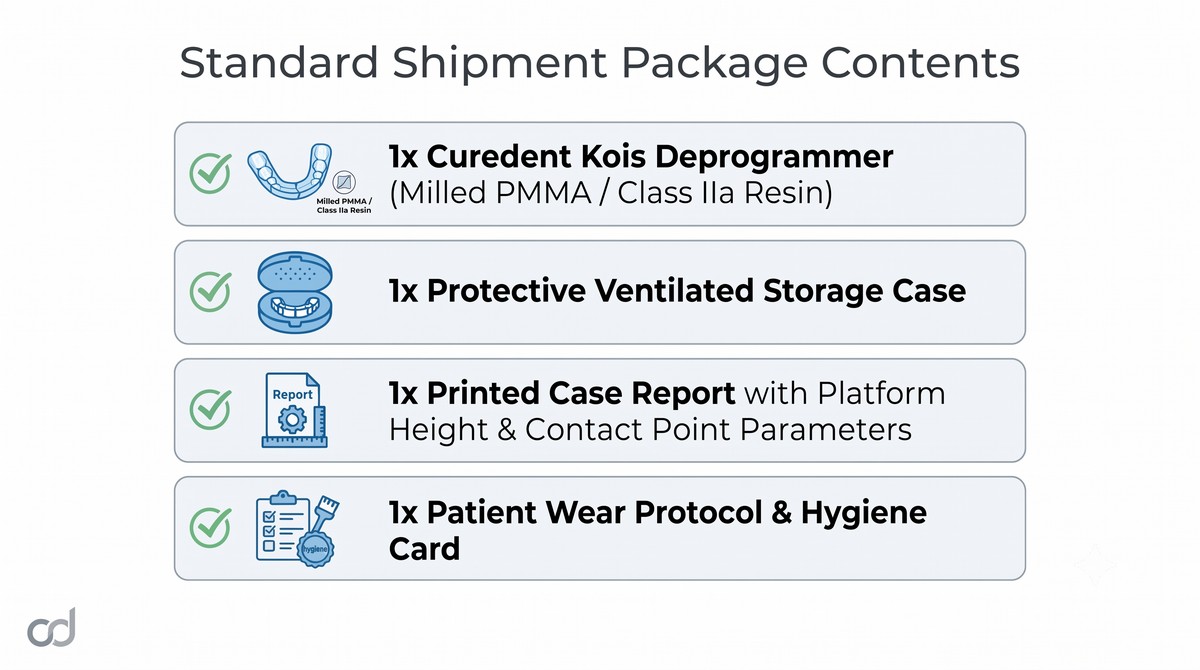
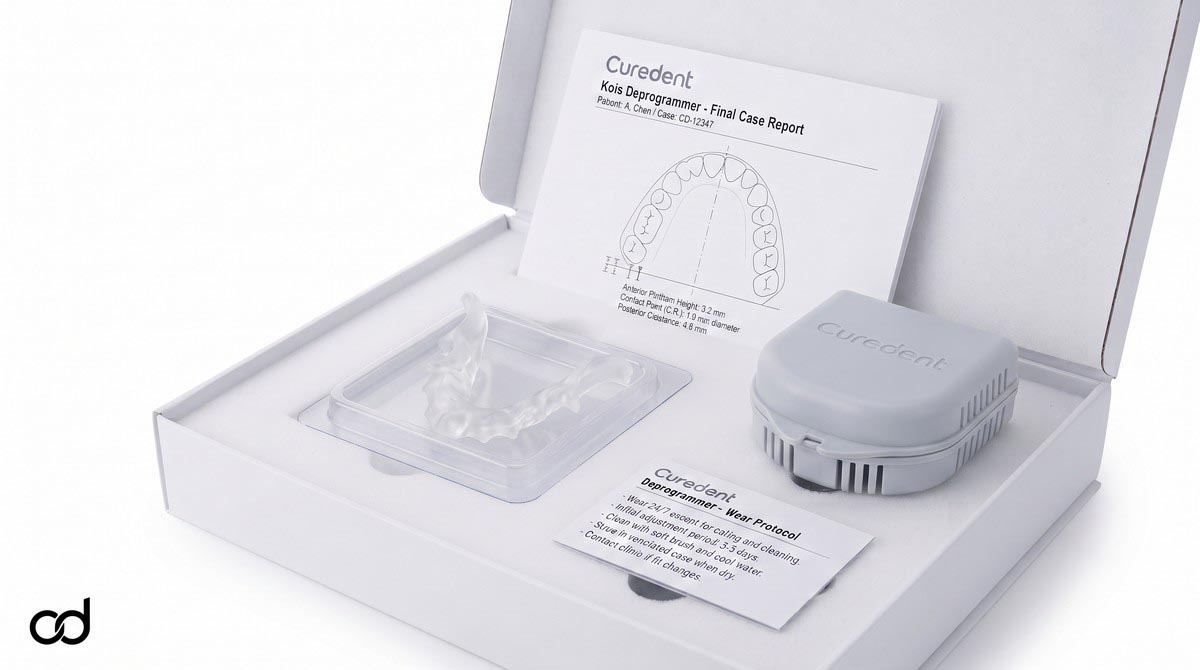
Standard Shipment Package Contents:
Frequently Asked Questions
How long should the patient wear the Kois Deprogrammer?
Prescribe short-term wear of 20–45 minutes per session, repeated as needed until the musculature releases and the CR position becomes reproducible. The appliance is not designed for overnight or long-term wear. Once reliable CR records are captured, transition the patient to a full-coverage stabilization splint.
Can the deprogrammer be used for daily wear?
No. The Kois Deprogrammer is a diagnostic tool intended for short-term use only. Prolonged wear without posterior support risks unopposed molar supraeruption, which can alter the patient’s occlusal vertical dimension. Limit wear to the diagnostic phase and transition to a full-coverage splint for long-term stabilization.
Is the Kois Deprogrammer the same as a night guard?
No. A night guard is designed to cushion tooth-to-tooth contact and protect enamel from wear during sleep. The Kois Deprogrammer is a diagnostic appliance engineered to disrupt neuromuscular engrams and enable reliable centric relation recording. It serves an entirely different clinical purpose and should not be used as a long-term protective appliance.
Can the Kois Deprogrammer be used for TMD diagnosis?
Yes. The deprogrammer is a valuable diagnostic tool in TMD cases where muscle bracing masks the true condylar position. By releasing the engram, the clinician can assess the patient’s true CR and determine whether the TMD symptoms are occlusally driven or require additional evaluation. In acute TMD cases with muscle spasm, the Curedent Anterior Bite Splint may be preferred as a first-line appliance.
How often should the deprogrammer be remade?
The Kois Deprogrammer is typically fabricated once for the diagnostic phase. If the patient’s anterior dentition changes—due to restorative work, orthodontic movement, or tooth loss—the appliance may need to be remade to maintain accurate seating. For most patients, a single deprogrammer is sufficient for the diagnostic workflow.
Suggested Clinical Solutions
- Transition to long-term stabilization with the Curedent Occlusal Splint.
- Manage acute TMD muscle spasm with the Curedent Anterior Bite Splint.
- Verify condylar seating with the dual-arch Curedent B Splint.