Section 1: Product Introduction & Clinical Purpose
The Curedent Bleaching Guards (Soft and Hard) are custom-fabricated, patient-specific bleaching carriers engineered to deliver professional at-home vital tooth bleaching with precise gel containment, uniform shade development, and predictable gingival protection. Developed for general dentists, cosmetic dentists, prosthodontists, and laboratory managers, this paired system offers two distinct material configurations—a soft EVA variant for comfort-focused patients and a rigid PETG variant for maximum gel retention—allowing the clinician to match the carrier to each patient’s gingival sensitivity, bleaching protocol, and lifestyle.
Professional at-home bleaching remains the gold standard for vital tooth whitening because it combines clinical supervision with patient-controlled wear, producing more stable and predictable shade outcomes than retail over-the-counter products. However, the clinical success of any at-home bleaching program depends on the quality of the carrier tray. A poorly fitted tray leaks bleaching gel onto the gingival tissues, causing chemical burns, uneven shade development, and patient discomfort. A well-designed custom tray contains the gel precisely against the facial surfaces of the teeth, protects the marginal gingiva, and maintains consistent gel contact throughout the wear period. The Curedent Bleaching Guards are engineered specifically for this purpose, with precision-scalloped gingival margins, controlled reservoir space, and material options calibrated to different clinical needs.

Key Clinical Advantages
- Gingival Margin Protection: Precision laser-scalloped margins conform to the gingival contour and protect soft tissue from chemical burns.
- Controlled Gel Distribution: Engineered reservoir space ensures uniform gel contact with the facial tooth surfaces throughout the wear period.
- Two Material Options: Soft EVA for comfort and flexibility, or rigid PETG for maximum sealing and gel retention.
- Predictable Shade Outcomes: Uniform gel contact produces consistent shade development across the full smile zone.
- Custom-Fitted Precision: Digitally designed from the patient’s intraoral scan for stable, comfortable, and repeatable seating.

Section 2: Product Anatomy & Physical Construction
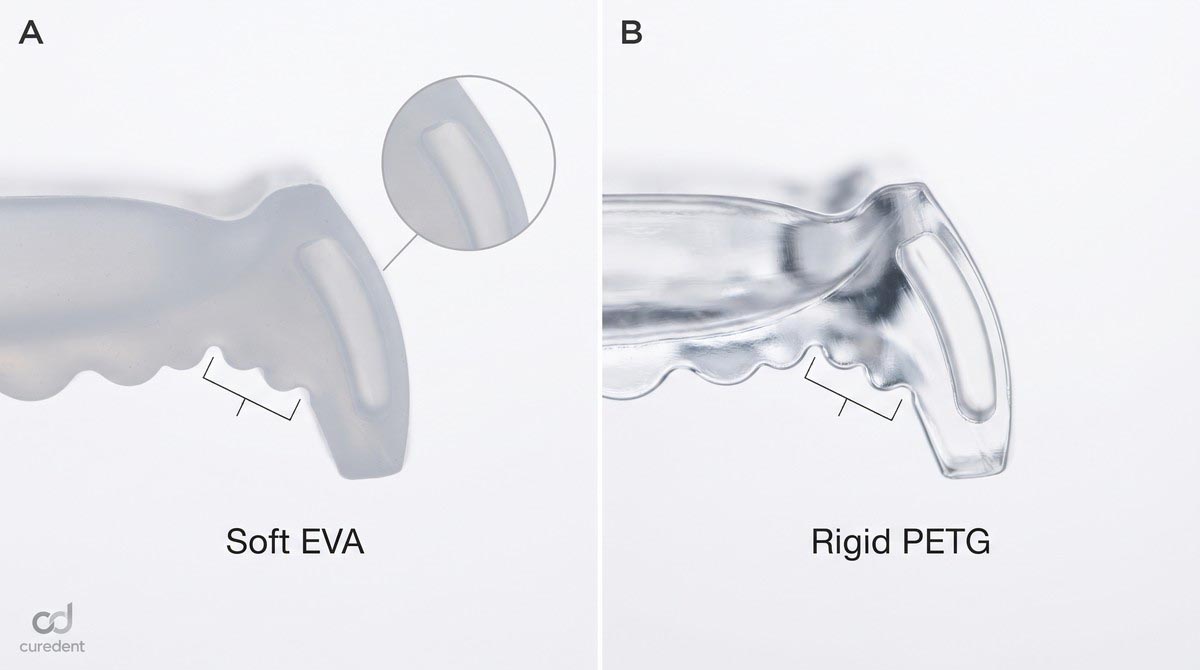
Dual-Material Architecture: Soft EVA and Rigid PETG
The Curedent Bleaching Guard system offers two distinct material configurations engineered to address different clinical priorities:

The Soft EVA Bleaching Tray: Flexibility and Comfort
The soft EVA bleaching tray is fabricated from medical-grade ethylene vinyl acetate, a biocompatible thermoplastic elastomer known for its flexibility, comfort, and ease of insertion. The soft variant is designed for patients who prioritize comfort, have sensitive gingiva, or are new to at-home bleaching. Its flexibility allows for easy insertion and removal around undercut areas, and its soft texture minimizes gingival irritation during wear. The soft EVA tray is also a common first choice for patients with a history of gag reflex or difficulty tolerating rigid intraoral appliances.
The Rigid PETG Bleaching Tray: Sealing and Retention
The rigid PETG bleaching tray is fabricated from medical-grade polyethylene terephthalate glycol, a rigid, transparent thermoplastic known for its dimensional stability and superior sealing characteristics. The rigid variant is designed for patients who require maximal gel retention, have deep undercuts or complex dental anatomy, or are completing a more intensive bleaching protocol. Its rigidity provides a more consistent marginal seal against the gingival margin, reducing gel leakage and enhancing the efficiency of the bleaching process. The PETG material also resists deformation during wear, maintaining a more uniform reservoir space throughout the bleaching period.
Precision Scalloped Gingival Margins
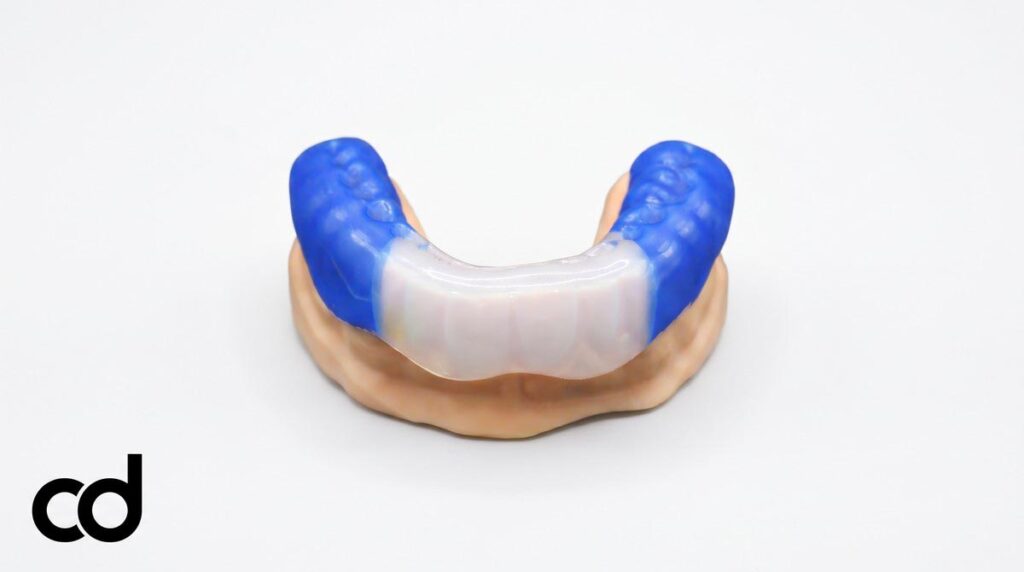
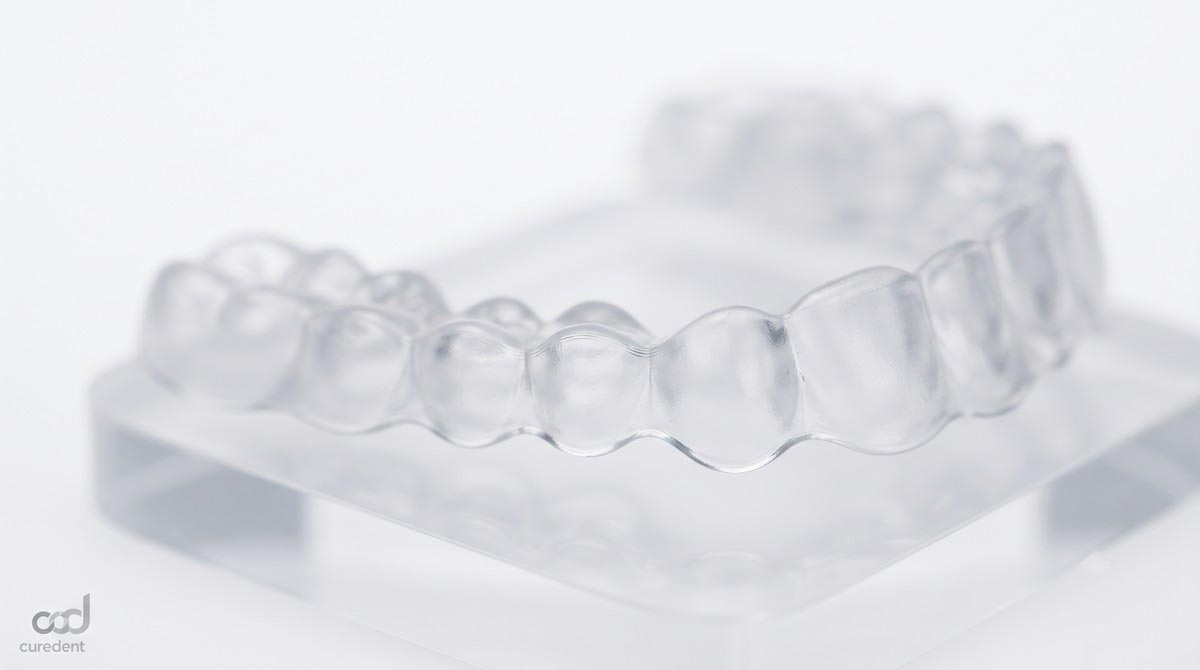
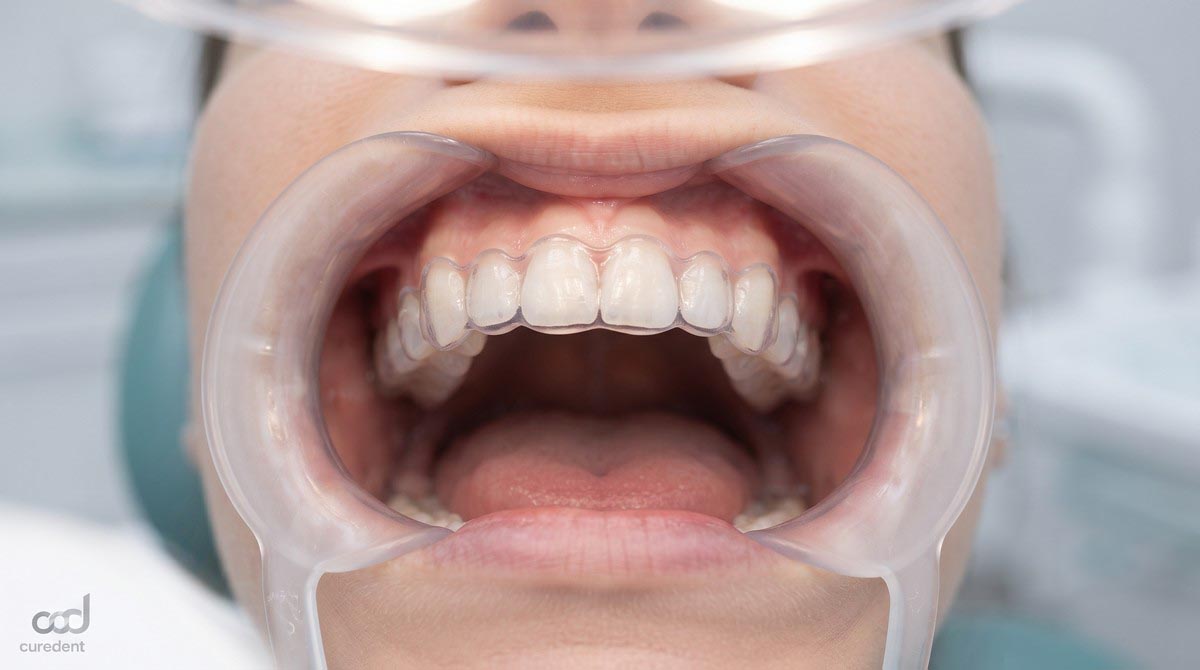
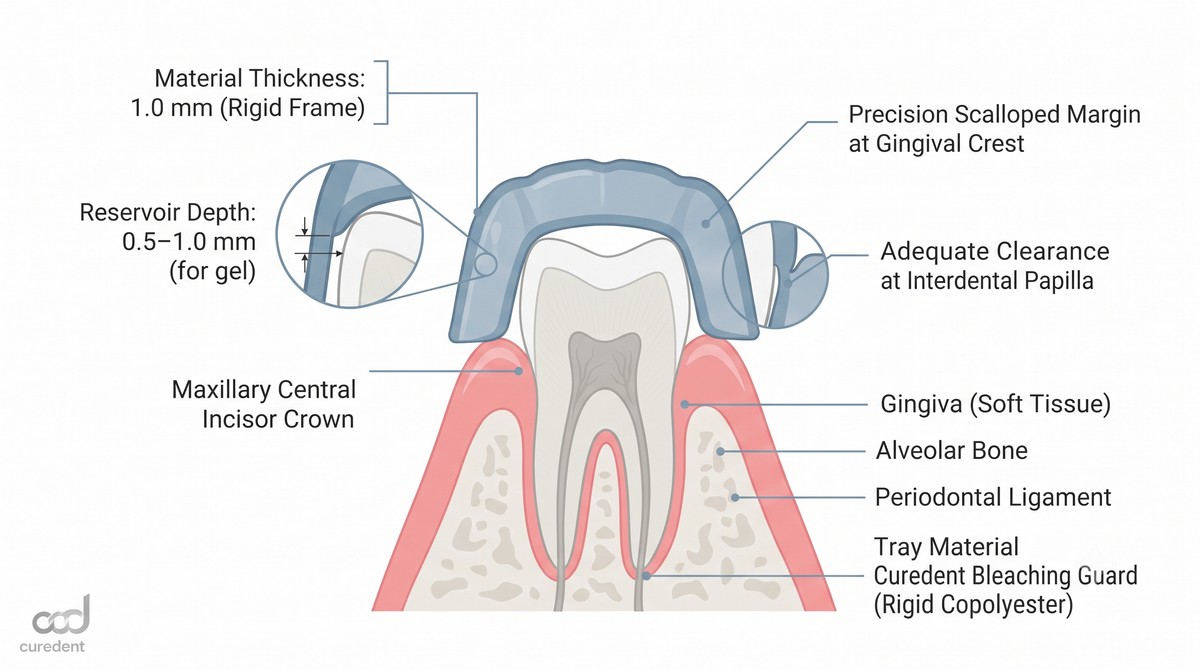
A defining feature of both variants is the precision-scalloped margin that follows the gingival contour. Unlike straight-edged trays that can impinge on the interdental papillae or extend onto the gingiva, the Curedent scalloped margin is digitally designed to sit precisely at the gingival crest, with gentle scallops that accommodate each interdental papilla. This scalloped geometry serves three critical functions:
- Chemical Burn Prevention: By keeping the tray edge at the gingival crest, the scalloped margin prevents bleaching gel from contacting the marginal gingiva, eliminating the risk of chemical burns.
- Papilla Protection: The scalloped indentations accommodate the interdental papillae without pressure, preserving tissue health and patient comfort.
- Gel Containment: The scalloped margin forms a more effective seal against the tooth surface than a straight edge, improving gel retention at the cervical margin.
Block-Out Resin Reservoir and Controlled Gel Space
Both variants incorporate a controlled reservoir space on the facial surface of the tray. This space is created during the digital design phase using a block-out resin reservoir spacer, which is a digitally modeled offset that establishes a uniform gel reservoir over the facial surfaces of the teeth. The reservoir serves two purposes:
- Uniform Gel Distribution: The reservoir allows the bleaching gel to spread evenly across the facial surface of each tooth, ensuring uniform shade development.
- Gel Retention: The reservoir holds the gel in place during wear, improving the efficiency of the bleaching process and reducing the amount of gel that escapes the tray margin.
Surface Finish and Marginal Adaptation
Both variants are fabricated with smooth, polished intaglio surfaces that seat comfortably against the teeth and gingiva. The margins are precisely trimmed—either by laser or by hand—to follow the scalloped contour without sharp edges or burrs. The result is a comfortable, stable appliance that seats passively and maintains gel contact without irritating the soft tissues.
Digital Workflow and Fabrication Precision
[Intraoral Optical Scan (STL/PLY)] ──┐
├─► [Digital CAD Design] ──► [Pressure-Thermoformed Bleaching Guard]
[Block-Out Reservoir Parameters] ┘
The bleaching guards are designed from the patient’s optical intraoral scan, with the CAD model defining the scalloped margin position, the block-out reservoir space, and the overall tray configuration. The design is executed through high-pressure thermoforming over a 3D-printed model, producing a precisely fitted carrier with a smooth scalloped margin and a uniform reservoir space. The clinician reviews and approves the virtual design before fabrication.
How Scalloped Margins Protect Soft Tissue
Scalloped margins are a critical design feature for at-home bleaching carriers. Because bleaching gels contain peroxide compounds that can irritate or burn soft tissue on prolonged contact, the tray margin must sit precisely at the gingival crest without extending onto the gingiva. A straight-edged margin cannot follow the scalloped contour of the gingival margin, so it either falls short of the margin (allowing gel leakage onto the gingiva) or extends onto the gingiva (causing direct chemical irritation). The Curedent scalloped margin follows the gingival contour precisely, protecting the soft tissue from chemical burns while maintaining effective gel containment at the cervical margin of each tooth.
Section 3: Indications & Clinical Applications
Material Selection Framework
Choosing between the Soft EVA and Rigid PETG variants depends on the patient’s gingival sensitivity, bleaching history, and clinical priorities:

The Soft EVA Bleaching Tray: Comfort-First Cases
The soft EVA bleaching tray is indicated for the following clinical scenarios:
- First-Time Bleaching Patients: Patients who have never used a custom bleaching tray before and who may be sensitive to the sensation of a rigid appliance.
- Patients with Sensitive Gingiva: Patients with thin gingival biotype, marginal gingival sensitivity, or a history of irritation from prior bleaching trays.
- Patients with Gag Reflex: Patients who experience a gag reflex with rigid intraoral appliances. The soft, flexible EVA material is generally easier to tolerate.
- Deep Undercuts and Complex Anatomy: Patients with significant cervical undercuts, irregular tooth contour, or complex interdental anatomy where a flexible tray is easier to insert and remove.
The Rigid PETG Bleaching Tray: Maximum Gel Control
The rigid PETG bleaching tray is indicated for the following clinical scenarios:
- Maximal Gel Retention Cases: Patients completing a more intensive bleaching protocol where effective gel retention is critical to shade development.
- Complex Dental Anatomy: Patients with deep cervical margins, complex restorative work, or irregular tooth surface topography where a rigid tray provides better marginal sealing.
- Patients with High Cervical Sensitivity to Gel: Patients who require precise gel containment at the cervical margin to prevent gel migration onto sensitive root surfaces or gingival tissues.
- Patients Who Prefer Firmer Seating: Some patients find the more rigid seating of a PETG tray more secure and predictable than a flexible EVA tray, particularly during longer wear periods.
Gingival Margin Scalloping and Its Role in Soft Tissue Protection
The gingival margin scalloping engineered into both Curedent bleaching guards is central to their clinical safety and efficacy. The scalloped margin follows the natural contour of the gingival crest, with gentle indentations that accommodate the interdental papillae and prevent the tray from extending onto the gingival tissue. This design provides three key benefits:
- Chemical Burn Prevention: By keeping the tray margin precisely at the gingival crest, the scalloped design prevents peroxide gel from contacting the marginal gingiva, eliminating the most common cause of bleaching-related soft-tissue injury.
- Papilla Preservation: The interdental papilla is a delicate structure that is easily irritated by poorly fitting trays. The scalloped design accommodates the papilla without pressure, preserving tissue health.
- Improved Seal: The scalloped margin conforms more precisely to the tooth-gingiva junction than a straight margin, creating a better seal that contains the gel at the cervical margin.
Chemical Burn Prevention and Patient Safety
Chemical burn prevention is a primary concern in at-home bleaching. Bleaching gels typically contain hydrogen peroxide or carbamide peroxide at concentrations ranging from 10% to 35% hydrogen peroxide equivalent. Prolonged contact with gingival tissue can produce significant chemical burns, including mucosal sloughing, white lesions, and patient discomfort. The Curedent Bleaching Guard’s scalloped margin, combined with its precisely fitted reservoir space, minimizes the risk of chemical burns by keeping the gel contained against the tooth surfaces and away from the gingival tissue.
Typical Clinical Scenarios
- Aesthetic Smile Enhancement: Patients seeking to brighten their smile before a wedding, graduation, or other significant event.
- Pre-Restorative Shade Matching: Patients undergoing veneer or crown treatment where the natural tooth shade is bleached to match the planned restoration shade.
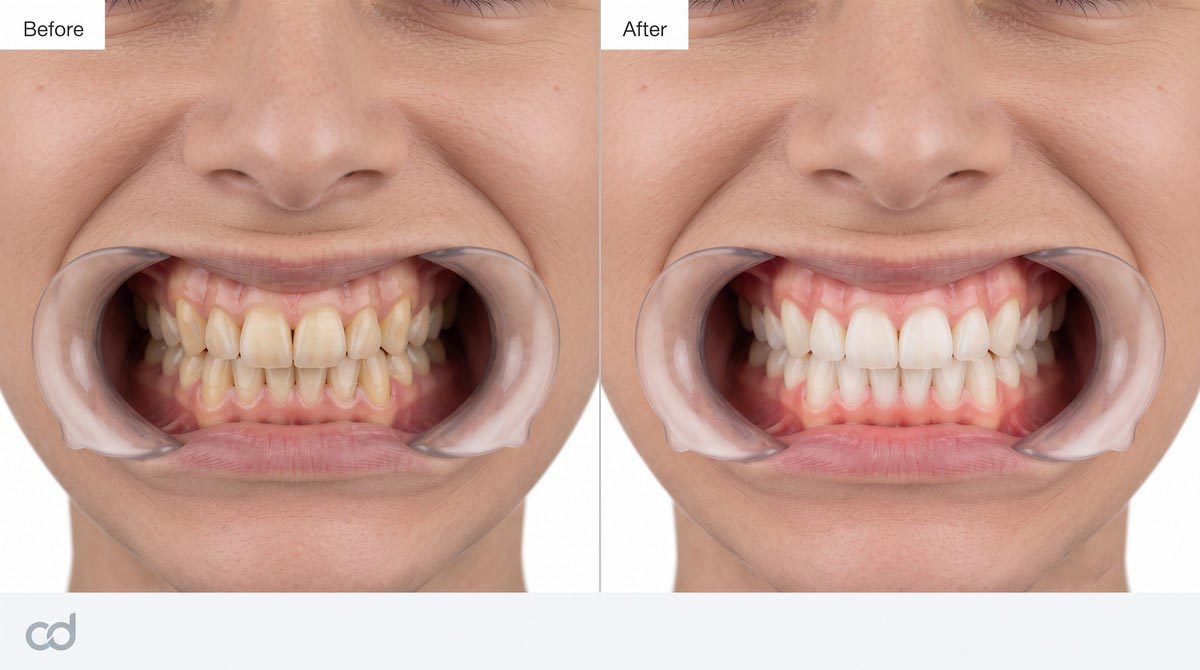
- Age-Related Shade Reversal: Patients with yellowing or discoloration from aging, coffee, tea, or tobacco use.
- Post-Orthodontic Shade Refresh: Patients completing orthodontic treatment who wish to brighten their newly aligned smile.

Section 4: Clinical Workflow & Bleaching Protocol

Step 1: Data Acquisition
Acquire a high-resolution optical intraoral scan of the maxillary and mandibular arches with accurate soft-tissue margin capture. Record the patient’s baseline tooth shade using a shade guide under standardized lighting conditions. Document any history of prior bleaching, gingival sensitivity, or restorative work in the smile zone.
Step 2: Digital CAD Design
Curedent digital engineers design the bleaching guards within a CAD environment. The scalloped margin is positioned at the gingival crest, with gentle scallops accommodating each interdental papilla. The block-out resin reservoir spacer is digitally modeled over the facial surfaces of the teeth, establishing a uniform reservoir space of approximately 0.5–1.0 mm depth. The clinician reviews and approves the virtual design before thermoforming.
Step 3: Pressure Thermoforming
The approved design is executed through high-pressure thermoforming over a 3D-printed model. The selected material—soft EVA or rigid PETG—is heated to its optimal forming temperature and adapted over the model under positive pressure. The finished guard is trimmed along the scalloped margin and polished to a smooth, comfortable finish before dispatch.
Step 4: Delivery Verification
Upon receiving the bleaching guards, inspect them on the master model: confirm that the scalloped margins match the gingival contour, verify that the reservoir space is uniform across all facial surfaces, check that the tray seats passively without rocking, and ensure that the margins are smooth and free of burrs.
Step 5: Chairside Seating and Fit Verification
- Seat the bleaching guard on the patient’s arch using gentle finger pressure.
- Verify passive seating: the guard should seat without rocking and remain stable when the patient opens and closes.
- Check the scalloped margin: the margin should sit at the gingival crest without extending onto the gingival tissue or exposing the cervical tooth surface.
- Confirm papilla accommodation: the interdental papillae should be visible through the scallops without blanching or pressure.
- Verify retention: the guard should remain seated when the patient speaks and moves the jaw gently, releasing smoothly without catching on undercuts.

Step 6: Patient At-Home Bleaching Protocol
Instruct the patient on the at-home bleaching protocol:
- Gel Loading: Place a small bead of bleaching gel into each reservoir of the tray, approximately one-third to one-half of the reservoir volume. Avoid overfilling, which can cause gel overflow and soft-tissue contact.
- Tray Insertion: Seat the tray gently over the arch, pressing it into place with even finger pressure. Wipe away any excess gel that extrudes from the tray margin using a clean tissue or cotton swab.
- Wear Duration: Follow the gel manufacturer’s recommended wear duration. Typically, this is 30 minutes to 2 hours per session for in-office strength gels, or overnight for lower-concentration at-home gels.
- Wear Frequency: Most at-home bleaching protocols involve daily wear for 10–14 days, followed by a maintenance schedule. Follow the manufacturer’s recommendations.
- Removal and Cleaning: After each wear session, remove the tray and rinse thoroughly with cool water. Brush gently with a soft toothbrush and cool water or a specialized tray cleaner. Store dry in the provided ventilated case.
Step 7: Follow-Up and Shade Assessment
Schedule a follow-up appointment at the midpoint of the bleaching protocol (typically 7 days) to assess shade change, gingival tissue health, and patient tolerance. At the completion of the bleaching protocol, record the final shade and provide guidance on maintenance whitening to preserve the result. Patients who wish to maintain their shade long-term may benefit from periodic touch-up sessions using the same custom trays.
Reservoir Design and High-Viscosity Gel Retention
The high-viscosity gel retention provided by the Curedent reservoir design is a key factor in the appliance’s clinical performance. High-viscosity bleaching gels are preferred for at-home use because they remain in contact with the tooth surface rather than running out of the tray. The Curedent reservoir space is calibrated to accommodate high-viscosity gels with a uniform depth and consistent surface contact across all facial surfaces. This design maximizes gel contact time, improves shade development, and reduces the amount of gel that escapes the tray margin.
Gel Handling, Gingival Protection, and Wear Duration
Proper gel handling is essential to prevent chemical burns and achieve predictable results. Instruct patients to avoid overfilling the tray, which can force gel onto the gingival tissue. If the patient experiences gingival burning or whitening during wear, they should remove the tray immediately, rinse with cool water, and contact the practice. Wear duration should follow the gel manufacturer’s recommendations—over-wearing does not accelerate bleaching and increases the risk of sensitivity and soft-tissue irritation. Patients with a history of significant tooth sensitivity should be started on a lower-concentration gel and monitored closely during the first few wear sessions.

Section 5: Technical Specifications & Manufacturing Standards
Certified Technical Specifications
The Curedent Bleaching Guards are manufactured to strict biomedical and dimensional tolerances to ensure reliable gel containment, soft-tissue protection, and predictable shade development.
| Parameter | Specification | Clinical Relevance |
|---|---|---|
| Soft variant material | Biocompatible EVA sheet | Flexible, comfortable, patient-friendly |
| Hard variant material | Biocompatible PETG sheet | Rigid, maximum sealing and gel retention |
| Fabrication method | Pressure thermoforming over 3D printed model | Precise adaptation and reservoir control |
| Margin design | Precision laser-scalloped gingival margin | Chemical burn prevention and papilla protection |
| Reservoir spacer | Block-out resin spacer for uniform gel retention | Uniform shade development and gel containment |
| Fit tolerance | Engineered for stable seating on natural dentition | Passive seating without rocking |
| Material thickness | Case-dependent (soft vs rigid) | Balances flexibility against gel retention |
| Gel compatibility | Compatible with standard at-home bleaching gels | Supports both low and high-viscosity gels |
| Retention type | Full-coverage removable bleaching tray | Stable during wear sessions |
| Sterilization | Delivered ready for clinical use | Cleaned and packaged for immediate patient use |
Margin Precision and Reservoir Depth Accuracy
The clinical performance of the Curedent Bleaching Guards depends on precise margin and reservoir tolerances:

- Scalloped Margin Position: The gingival margin position is maintained within ± 0.10 mm of the intended gingival crest location, ensuring precise soft-tissue protection.
- Reservoir Depth: The block-out reservoir space is calibrated to a uniform 0.5–1.0 mm depth across all facial surfaces, ensuring consistent gel distribution and predictable shade development.
- Material Thickness: The material thickness is calibrated to the selected variant—soft EVA for flexibility or rigid PETG for maximum sealing—balancing comfort against gel containment.
At-Home Vital Tooth Bleaching and Its Clinical Value
At-home vital tooth bleaching is a well-established cosmetic dental procedure that allows patients to achieve significant shade improvement within the comfort of their home, under professional supervision. Compared to in-office bleaching, at-home bleaching offers:
- Lower Cost: At-home bleaching is generally less expensive than in-office bleaching.
- Greater Patient Control: Patients control the wear schedule and can adjust the pace of the bleaching to their sensitivity tolerance.
- More Stable Results: Multiple shorter sessions can produce more stable shade results than a single prolonged in-office session.
- Wider Applicability: At-home bleaching is suitable for most patients with vital teeth and healthy gingiva.
The Curedent Bleaching Guard is designed specifically to support the at-home bleaching process by providing a precisely fitted, soft-tissue-protective carrier that maximizes gel contact and minimizes side effects.
Section 6: Clinical Benefits & Practice Impact

Patient-Level Clinical Benefits
- Comfortable At-Home Bleaching: The soft EVA variant provides a comfortable, flexible carrier for sensitive patients, while the rigid PETG variant offers maximum sealing for patients who prefer firmer seating.
- Uniform Shade Development: The uniform reservoir space ensures that bleaching gel contacts every facial surface with the same consistency, producing predictable, even shade improvement across the smile zone.
- Reduced Sensitivity Risk: Precise gel containment at the cervical margin reduces gel contact with root surfaces and gingival tissue, lowering the risk of sensitivity and soft-tissue irritation.
- Protected Gingival Tissue: The precision-scalloped margin keeps the tray edge at the gingival crest, protecting the marginal gingiva and interdental papillae from chemical burns and pressure.
Practice-Level Operational Advantages
- Routine Adoption of At-Home Bleaching Programs: Integrating the Curedent Bleaching Guards into the cosmetic dental workflow standardizes the at-home bleaching process and reduces variability in patient outcomes.
- Reduced Chairside Time: Precise fabrication with scalloped margins and reservoir space means minimal intraoral adjustment at delivery, freeing chair time for shade assessment and patient education.
- Standardization Across Cosmetic Cases: A structured bleaching guard protocol allows clinical teams to manage at-home bleaching cases with consistent, repeatable workflows, improving patient satisfaction and practice efficiency.
- Enhanced Cosmetic Treatment Integration: Custom bleaching guards integrate seamlessly into restorative and cosmetic treatment plans, enabling pre-restorative shade matching and post-restorative maintenance.
Custom Bleaching Guards as the Modern Standard for Professional At-Home Bleaching
Retail over-the-counter bleaching products and ill-fitting stock trays cannot match the precision and safety of a custom-fitted bleaching guard. Analog custom tray fabrication improves fit but introduces variability through hand-fabrication steps. The Curedent Bleaching Guards combine the accuracy of custom fabrication with the reproducibility of digital design and precision thermoforming. By using Curedent Bleaching Guards for professional at-home bleaching, clinicians can deliver predictable shade improvement with confidence, minimizing the risk of chemical burns and patient discomfort.

Integrating Bleaching Guards with Other Curedent Appliances
For patients undergoing comprehensive smile design, the Curedent Bleaching Guards pair effectively with Curedent Clear Retainers for post-bleaching retention and with the Curedent Occlusal Splint for bruxism management during and after bleaching. For patients requiring whitening before restorative work, the Curedent Bleaching Guards support pre-restorative shade matching prior to veneer or crown preparation.
Section 7: Ordering, FAQ & Call to Action
Simple Three-Step Ordering Workflow
Ordering the Curedent Bleaching Guards through the doctor portal is designed to be efficient:
[Step 1: Upload Scan Data] ──► [Step 2: Select Variant] ──► [Step 3: Receive Guards]
Intraoral STL/PLY Soft EVA / Rigid PETG Delivered Ready for Patient
- Upload Case Records: Access the Curedent portal and upload the patient’s optical intraoral scan (maxillary and mandibular arches in STL or PLY format). Record the patient’s baseline shade and any history of gingival sensitivity or prior bleaching.
- Select Material Variant: Choose the material variant (Soft EVA or Rigid PETG) based on the patient’s gingival sensitivity, bleaching history, and clinical priorities. Review the CAD design via the interactive web viewer and approve before fabrication.
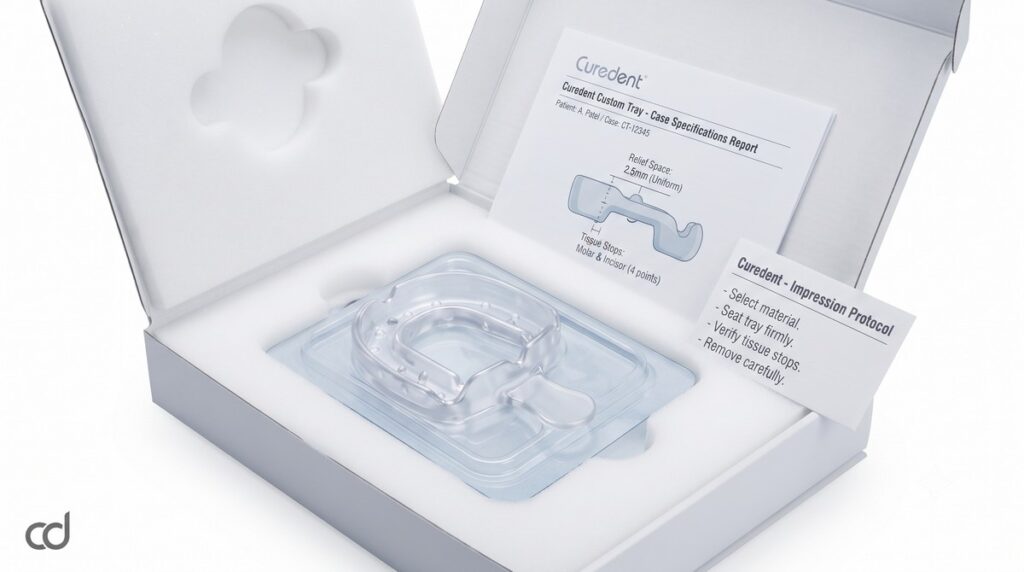
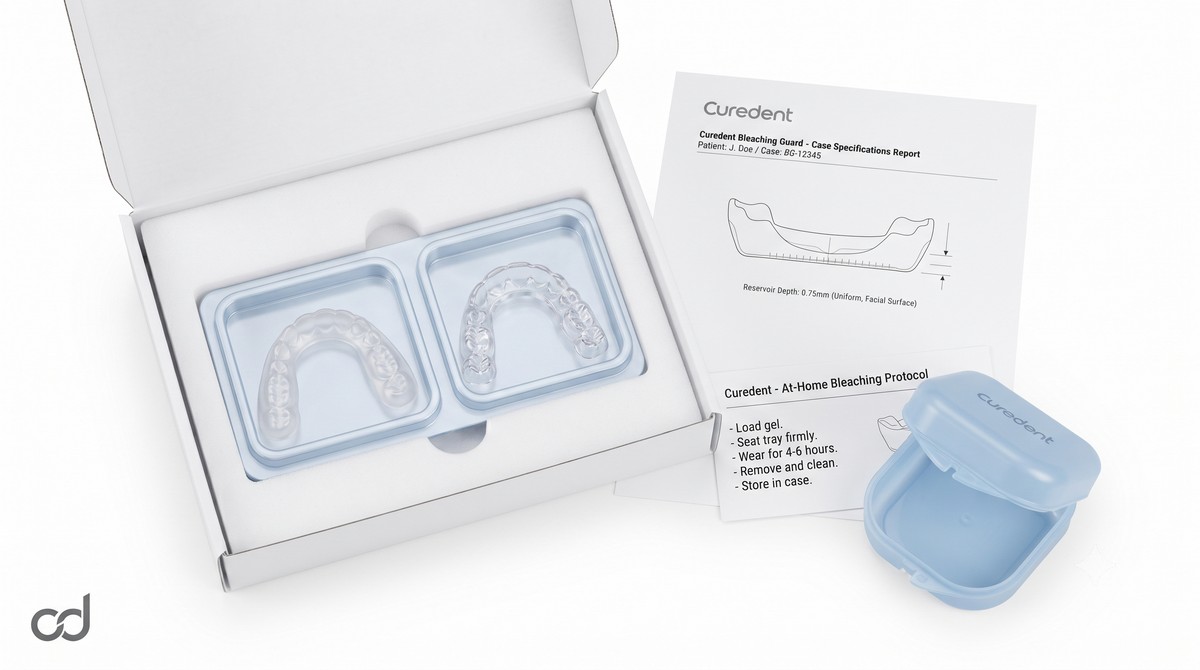
- Receive and Deliver: Curedent thermoforms the guards, trims the scalloped margins, verifies the reservoir space, packages the guards in protective clinical casing, and dispatches them directly to your practice along with the patient protocol card.
Standard Shipment Package Contents:

Frequently Asked Questions
Which variant should I choose—Soft EVA or Rigid PETG?
Prescribe the Soft EVA bleaching tray for first-time bleaching patients, patients with sensitive gingiva or a gag reflex, and cases with deep undercuts or complex anatomy. Choose the Rigid PETG bleaching tray for patients requiring maximal gel retention, patients with complex dental anatomy, or intensive bleaching protocols where precise cervical margin gel control is critical.
Can the patient use their own bleaching gel with Curedent Bleaching Guards?
The Curedent Bleaching Guards are compatible with standard at-home bleaching gels, including both low-viscosity and high-viscosity formulations. The reservoir space is calibrated for high-viscosity gels, which are generally preferred for at-home use. Follow the gel manufacturer’s recommended wear duration and frequency.
How long should the patient wear the bleaching trays each day?
Wear duration depends on the gel concentration. Typical at-home bleaching protocols involve wear sessions of 30 minutes to 2 hours for higher-concentration gels, or overnight wear for lower-concentration gels. Follow the gel manufacturer’s recommended wear duration. Over-wearing does not accelerate bleaching and increases the risk of sensitivity and soft-tissue irritation.
How should the patient clean and care for the bleaching trays?
Rinse the trays thoroughly with cool water after each wear session. Brush gently with a soft toothbrush and cool water or a specialized tray cleaner. Avoid hot water, alcohol-based mouthwash, and abrasive denture cleansers, all of which can degrade the EVA or PETG material. Store the trays dry in the provided ventilated case when not in use.
Can I order refills or replacement trays?
Yes. The patient’s digital records are retained in the Curedent portal, so replacement bleaching guards can be ordered directly from the existing case record without the need for a new scan, provided the patient’s dentition has not changed significantly.
Suggested Clinical Solutions
- Maintain post-bleaching alignment and protect shade results with Curedent Clear Retainers.
- Manage nocturnal bruxism during and after bleaching with the Curedent Occlusal Splint.
- Protect restorations and enamel with Curedent Night Guards.