Section 1: Product Introduction & Clinical Purpose
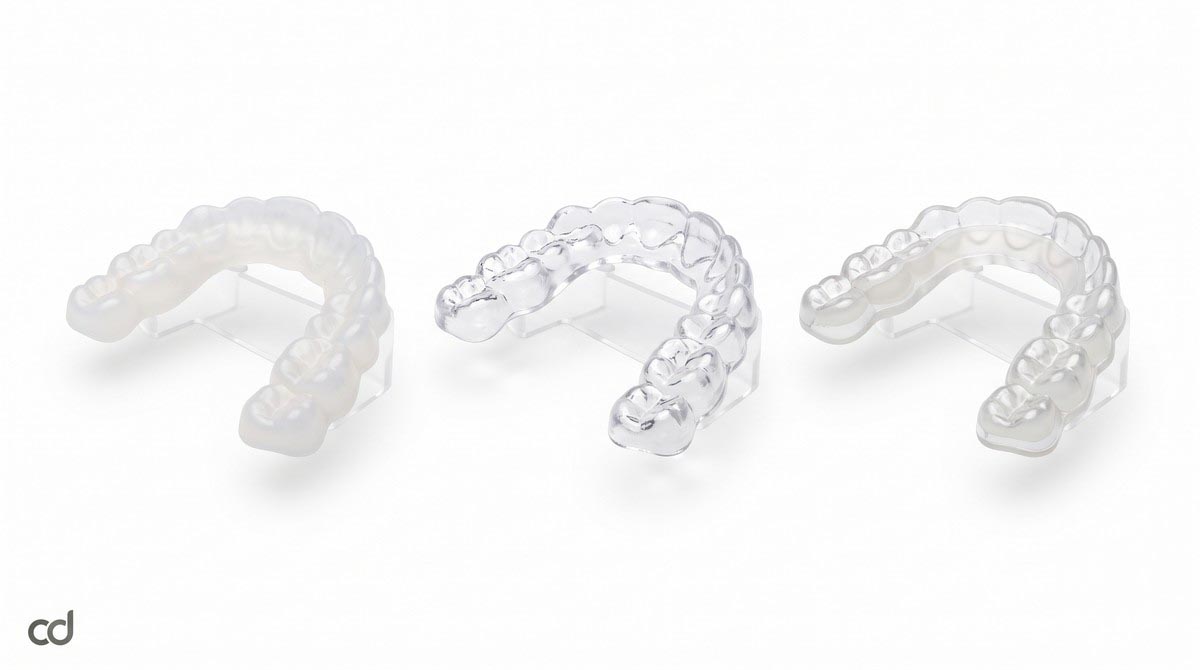
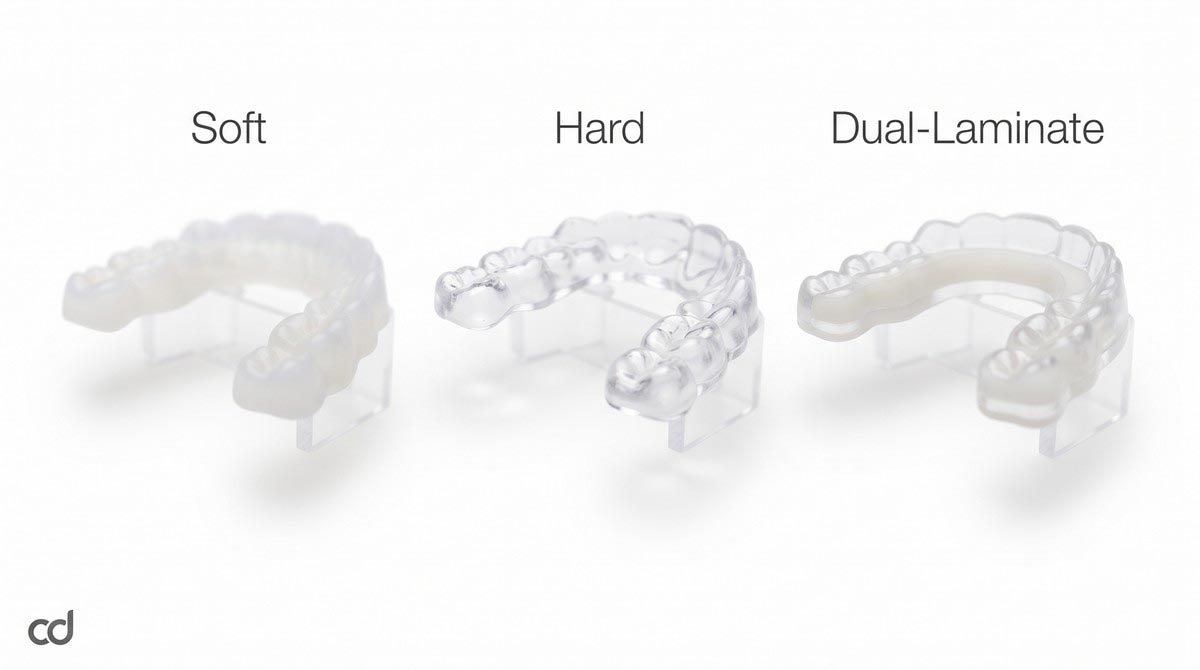
The Curedent Night Guard Series is a calibrated family of custom-engineered oral appliances comprising three distinct material configurations: Soft (pure elastomeric), Hard (rigid polymer), and Dual-Laminate (soft cushioning interior paired with an abrasion-resistant exterior). Developed for general dental practitioners, prosthodontists, and orofacial pain specialists, this tiered system addresses nocturnal clenching, parafunctional grinding, and destructive occlusal friction across diverse patient profiles.
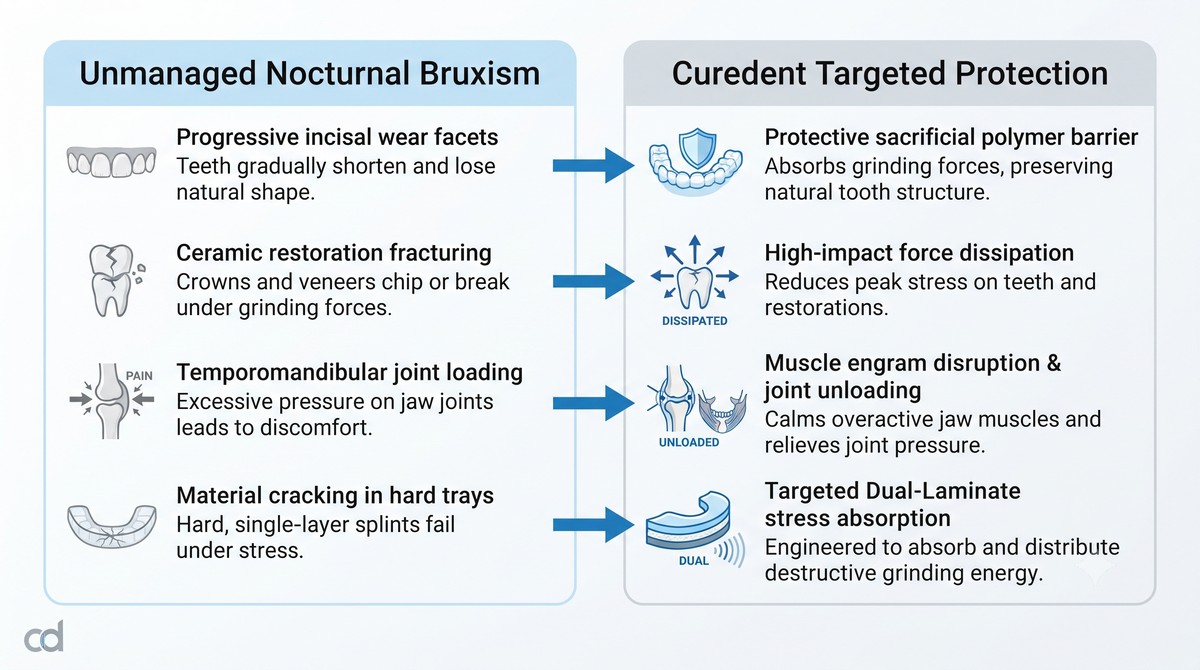
Nocturnal masticatory muscles generate parafunctional bite forces that frequently exceed maximum voluntary daytime clenching limits. Without an engineered barrier, these repetitive vector forces lead to progressive enamel attrition, abfraction lesions, cracked tooth syndrome, and fatigue failure of high-value ceramic and implant restorations. Prescribing an individualized bruxism night guard prevents direct tooth-to-tooth contact, cushions elevator muscle impact, and preserves physiological mandibular mechanics throughout sleep cycles.
Key Clinical Advantages
- Targeted Pathology Matching: Matches specific polymer densities directly to patient grinding severity, preventing premature tray perforation or muscular discomfort.
- Prosthetic Investment Shielding: Protects multi-unit crowns, veneers, and implant-supported bridges from non-axial shear and micro-fractures.
- Musculoskeletal Tension Relief: Provides smooth interocclusal contact that reduces elevator muscle hyperactivity and morning myofascial soreness.
- Precision Additive Fit: Pressure-molded over 50-micron 3D-printed master models to guarantee stable, click-fit retention without rocking.
Section 2: Product Anatomy & Physical Construction
Soft Variant: Elastomeric Impact Damping
The Soft Night Guard is manufactured exclusively from high-grade ethylene-vinyl acetate (EVA). This medical-grade thermoplastic elastomer delivers a soft, resilient physical texture designed for patient comfort. The uniform polymer network absorbs impact forces through elastic deformation, providing an internal cushion that adapts comfortably around tooth contours without requiring high retention forces.

Hard Variant: Rigid Occlusal Guidance
The Hard Night Guard is constructed from high-density polyethylene terephthalate glycol (PETG) or cross-linked medical-grade hard acrylic. The rigid, non-yielding occlusal surface allows opposing cusps to glide freely during lateral excursions without catching or locking. This unhindered glide interrupts the neuromuscular feedback loop that drives intense clenching cycles, preventing lateral torque on the dentition.

Dual-Laminate Splint: Stratified Hybrid Engineering
The dual-laminate splint combines the advantages of both soft and hard materials through a thermal molecular-bonding process:
- Internal Intaglio Layer: A 1.0 mm soft EVA inner lining seats gently against enamel and undercut margins, eliminating tight pressure spots and providing immediate comfort for sensitive teeth.
- External Occlusal Shield: A 2.0 mm dense PETG or rigid polymer exterior provides a durable, flat surface that resists grinding wear and prevents opposing teeth from biting through.
- Molecular Interfacial Bond: The two polymers are bonded without chemical adhesives, eliminating the risk of delamination or bubbling under nocturnal salivary exposure.

Section 3: Indications & Clinical Applications
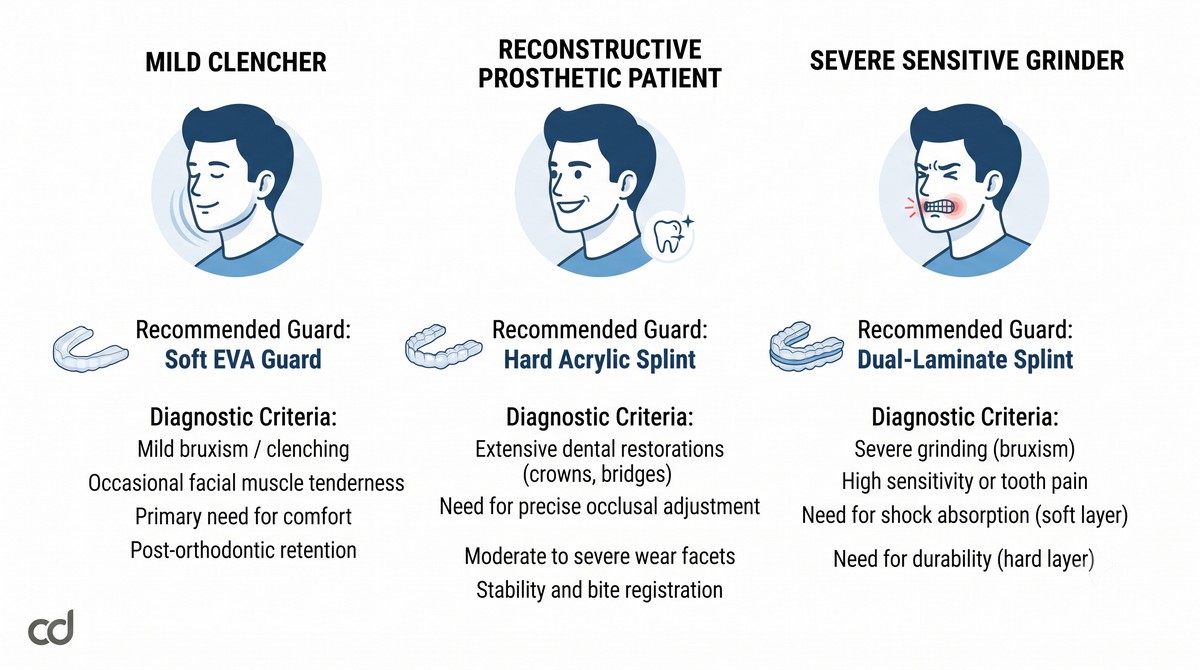
Variant Selection Framework
Prescribing the appropriate night guard requires evaluating the patient’s grinding intensity, muscle tenderness, and existing restorations:

The Soft EVA Guard: Gentle Short-Term Buffering
A soft EVA guard is indicated for specific, limited clinical scenarios:
- Mild or Acute Stress Clenchers: Patients who experience localized, temporary clenching without destructive lateral grinding.
- Sensitive or Compromised Dentition: Teeth with exposed root surfaces, cervical abfractions, or generalized dentin hypersensitivity where a rigid appliance causes insertion discomfort.
- Adolescent Dentition: Growing arches where rigid appliances might restrict natural dental eruption and alveolar growth.
- Clinical Precaution: Soft guards can stimulate increased chew-reflex activity in certain chronic bruxers, potentially worsening masseter hypertrophy. They should be monitored and avoided in patients with destructive parafunctional patterns.
The Hard Acrylic Splint: Long-Term Reconstructive Defense
The hard acrylic splint provides dependable, long-term protection for complex cases:
- Severe Nocturnal Grinders: Patients with audible nighttime grinding, visible enamel loss, and flattening of canine and molar anatomy.
- Full-Mouth Reconstructions: Cases with extensive porcelain veneers, crowns, or implant-supported fixed bridges requiring total protection against destructive lateral shear forces.
- Temporomandibular Joint (TMJ) Decompression: Rigid splints provide predictable occlusal stops that allow the condyles to seat passively in centric relation, reducing joint loading.
The Dual-Laminate Splint: Maximum Comfort with Rigid Durability
The dual-laminate configuration is the ideal solution when a patient requires the wear resistance of a hard guard but cannot tolerate its rigidity:
- Severe Grinders with High Dental Sensitivity: Patients who report waking with aching anterior teeth when wearing traditional hard appliances.
- Pronounced Anatomical Undercuts: Arches with bony exostoses, tilted molars, or deep undercut line angles where rigid plastic binds during removal.
- Long-Term Preventive Wear: Provides a durable protective barrier that patients can wear comfortably night after night without discomfort.
Section 4: Clinical Workflow & Biomechanical Function
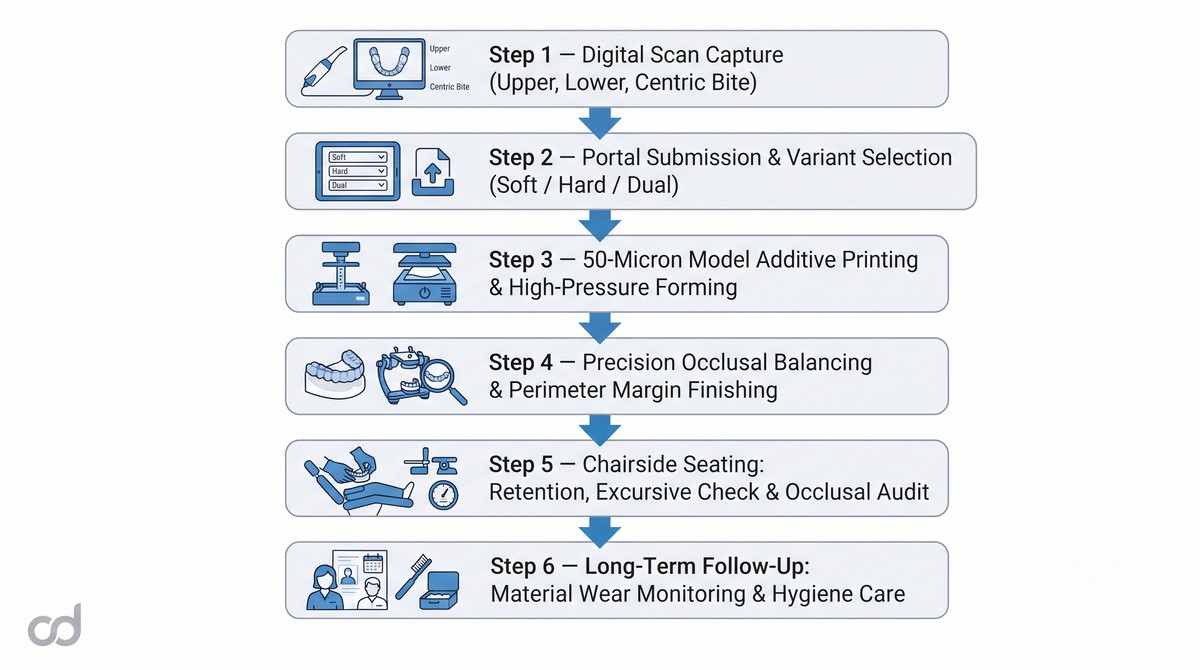
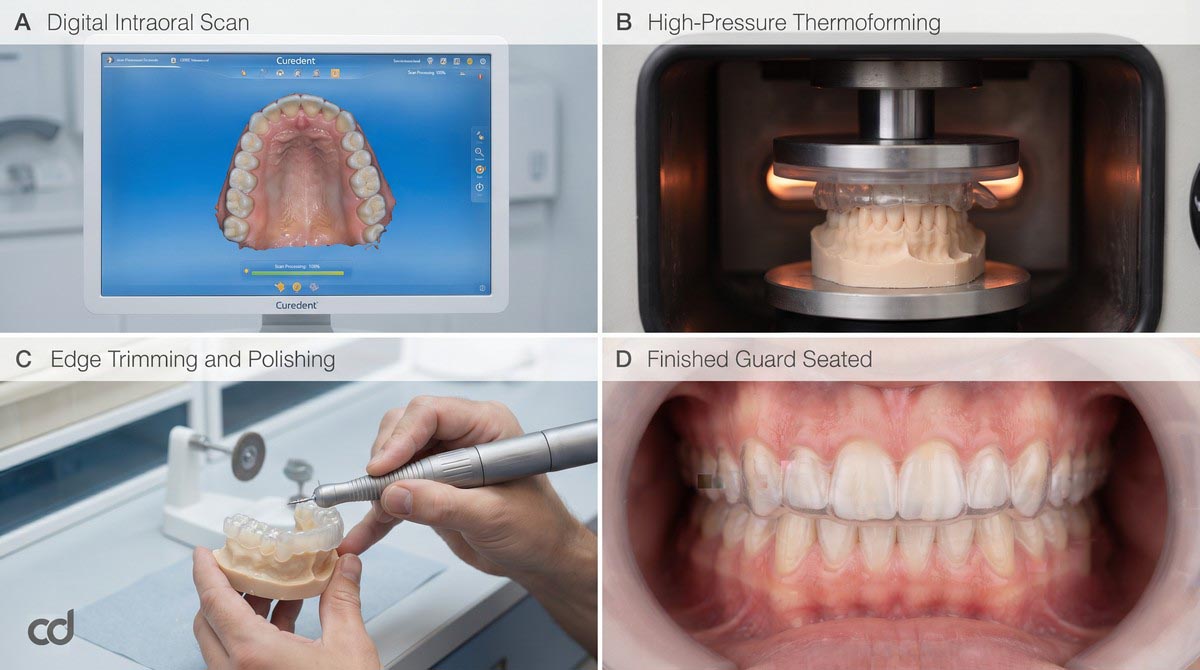
Step 1: Digital Record Ingestion
Acquire high-resolution optical intraoral scans of the maxillary and mandibular arches. Record the patient’s bite registration in centric relation or comfortable maximum intercuspation, ensuring adequate interocclusal clearance (2.0–3.0 mm) is captured for the appliance body.
Step 2: Prescription and Configuration Selection
Log in to the Curedent doctor portal and upload the scan files. Designate the desired arch (maxillary is standard, mandibular for patients with deep bites or missing upper teeth) and select the material variant: Soft, Hard, or Dual-Laminate.
Step 3: Precision Laboratory Fabrication
Curedent prints the master model at 50-micron resolution using high-strength dental resin. The designated polymer sheet is adapted over the model inside positive-pressure forming chambers operating at 4 to 6 bars.
Step 4: Finishing and Delivery
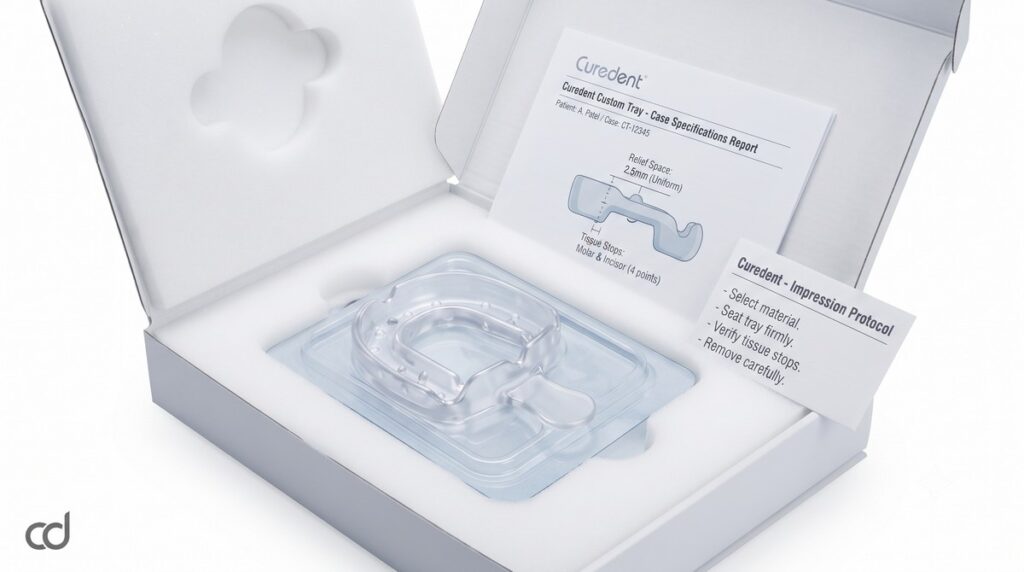
The guard is trimmed along the gingival line, margins are smoothed and polished to prevent soft-tissue irritation, and the appliance is packaged in clinical casing.
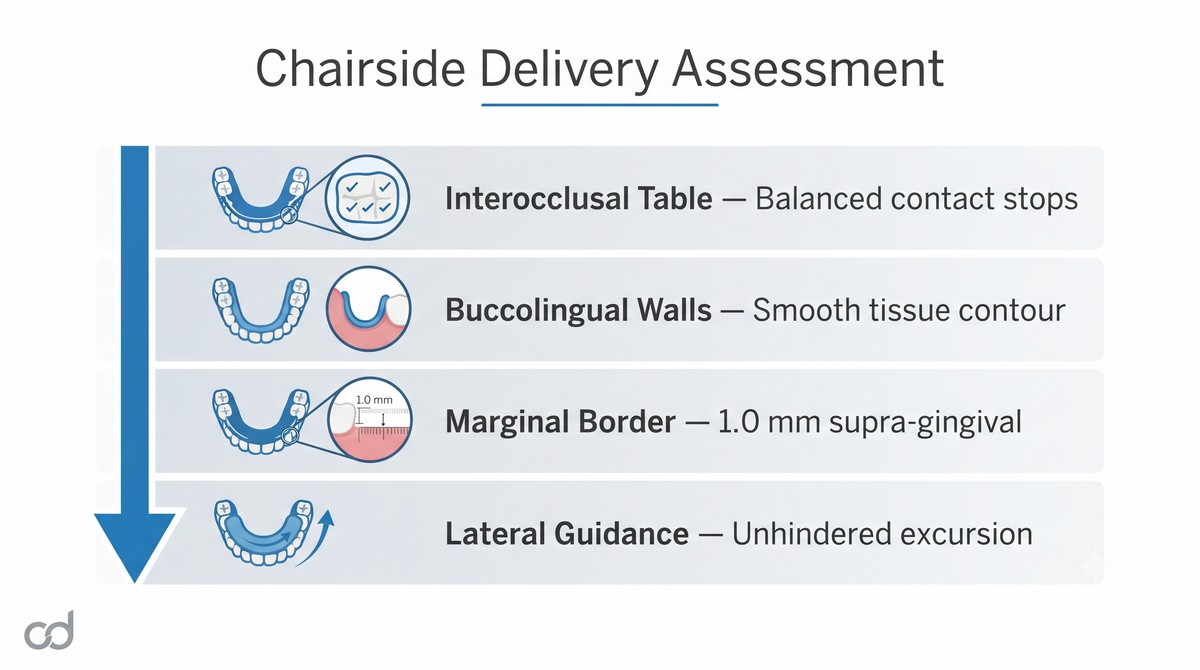
Step 5: Chairside Seating and Occlusal Verification
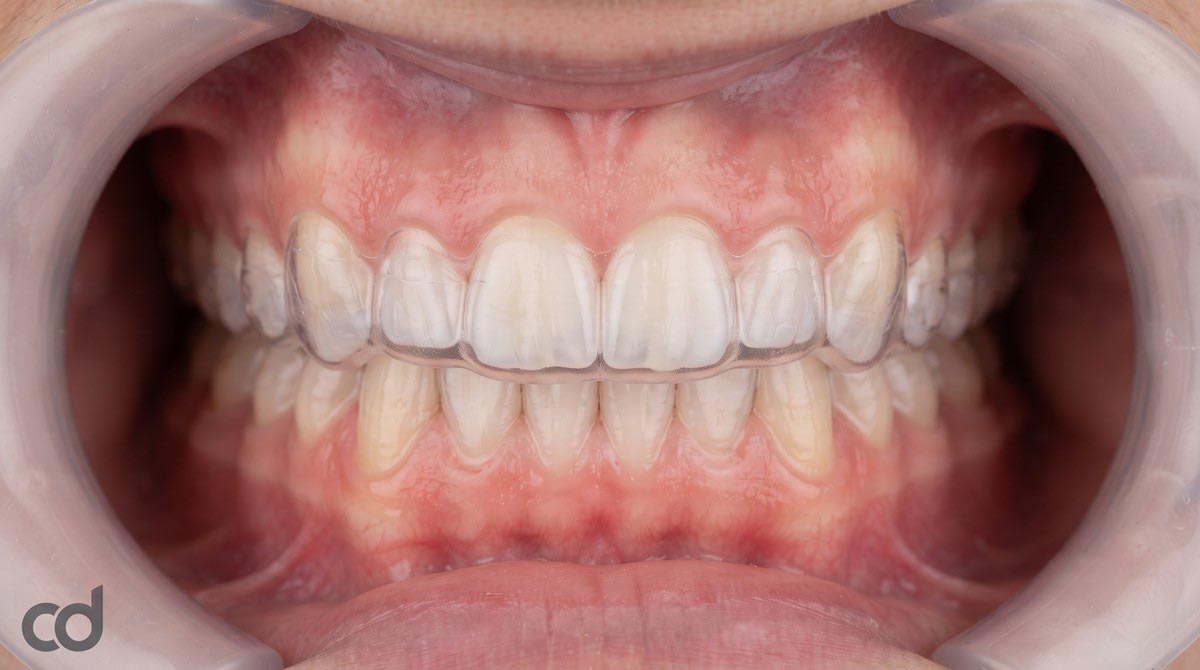
- Seat the appliance over the arch using gentle, even finger pressure across the posterior occlusal surfaces.
- Confirm passive seating without lateral rocking or loose borders.
- Test retention: the guard should remain securely seated when the patient speaks or opens wide, releasing smoothly without catching on undercut line angles.
- Verify the bite using 8-micron articulating paper:
- For Hard and Dual-Laminate Guards: Adjust the occlusal table to ensure light, bilateral contacts across all posterior centric cusps, with smooth anterior guidance that immediately discludes posterior teeth during lateral excursions.
- For Soft Guards: Confirm that opposing teeth contact the surface evenly without isolated heavy impact spots.
Biomechanical Loading and Cyclic Fatigue Resistance
During nocturnal bruxism cycles, masticatory forces generate cyclic compressive and shear stresses across the appliance. The Curedent manufacturing process ensures high cyclic fatigue resistance:
- Soft EVA Guards: Disperse energy through elastic deformation, distributing peak vector forces across the entire arch.
- Hard PETG Guards: Maintain a flat occlusal surface that allows teeth to glide smoothly, preventing jaw locking and reducing transverse lever forces on teeth and roots.
- Dual-Laminate Guards: Combine both mechanisms—the rigid exterior allows smooth excursive glide, while the inner elastomeric liner cushions deep compressive loads.
Wear Monitoring, Patient Care, and Oral Hygiene
Instruct patients to rinse the guard with cool water immediately upon waking and clean it gently using a soft toothbrush with non-abrasive liquid soap. Avoid hot water, boiling, or harsh alcohol-based mouthwashes, which can distort or degrade thermoplastic sheets. Patients should inspect the appliance regularly for wear facets, cracks, or thinning, and bring the guard to regular recall visits for clinical evaluation.
Section 5: Technical Specifications & Manufacturing Standards
Certified Technical Specifications
The Curedent Night Guard Series is manufactured to strict biomedical standards to ensure dependable intraoral protection and patient safety.
| Parameter | Specification | Clinical Relevance |
| Soft variant material | Ethylene-vinyl acetate (EVA) | High elastic impact absorption; comfort-focused |
| Hard variant material | Hard acrylic or PETG-based rigid sheet | Rigid occlusal table; unhindered lateral glide |
| Dual-Laminate structure | Soft EVA inner layer + hard PETG/acrylic outer layer | Internal cushioning paired with wear-resistant exterior |
| Fabrication method | Pressure thermoforming / lamination | 4–6 bar pressure ensures intimate anatomical fit |
| Occlusal surface | Smooth, polished, uniform | Prevents cuspal interference during excursions |
| Fit tolerance | Engineered for stable full-coverage seating | Snug, click-fit retention without binding |
| Material safety | MMA-free, BPA-free biocompatibility | Non-toxic, non-irritating, zero chemical leaching |
| Thickness | Case-dependent (single or dual-laminate: 2.0–3.0 mm) | Balances vertical dimension against fracture strength |
| Retention type | Full-coverage removable occlusal guard | Prevents supraeruption or migration of teeth |
| Sterilization | Delivered ready for clinical use | Cleaned and packaged for immediate chairside fitting |
Biocompatibility Standards and MMA-Free Manufacturing
Patient safety depends on clean polymer chemistry. Traditional cold-cure acrylic night guards use liquid methyl methacrylate (MMA) monomers, which can leave residual unreacted monomer that leaches into saliva, causing mucosal irritation, allergic contact stomatitis, and tissue inflammation.
All Curedent night guards provide certified MMA-free biocompatibility:
- 100% Monomer-Free Construction: Thermoformed under pressure from pre-polymerized, fully cured medical-grade sheets, eliminating residual chemical monomers.
- BPA- and Phthalate-Free Formulations: Complies with strict medical-grade plasticizer regulations to prevent endocrine-disrupting leaching.
- Low Water Sorption: Resists salivary enzyme absorption, preventing intraoral odor buildup, clouding, and bacterial biofilm colonization.

Section 6: Clinical Benefits & Practice Impact

Patient-Level Clinical Benefits
- Preservation of Natural Enamel: Placing a durable polymer barrier between dental arches prevents destructive enamel-on-enamel attrition and abfraction progression.
- Restoration Protection: Cushions high-value ceramic veneers, crowns, and implants from catastrophic fracture under sudden clenching spikes.
- Relief from Morning Muscle Fatigue: Balancing occlusal contacts reduces hyperactivity in masseter and temporalis muscles, relieving morning headaches and jaw soreness.
- Restful Sleep: Eliminates the physical tension and acoustic disturbance of nocturnal grinding, supporting deeper, more restful sleep.
Practice-Level Operational Advantages
- High Workflow Cost-Efficiency: Utilizing a structured digital workflow with pre-calibrated polymer options reduces lab transit delays and eliminates the unpredictable fits common in hand-poured stone models.
- Lower Remake Rates: Matching patient grinding intensity to the proper material prevents early failures—such as heavy bruxers chewing through soft guards or sensitive patients rejecting rigid acrylic appliances.
- Fast Chairside Delivery: Accurate pressure molding over 50-micron 3D-printed master models ensures clean initial seating, requiring minimal chairside adjustment.
- Effective Nocturnal Bite Force Absorption: Deploying appliances optimized for nocturnal bite force absorption protects completed restorative and cosmetic cases, safeguarding your practice’s clinical results.
The Value of a Graded Night Guard Protocol
Prescribing a single, generic night guard material for every patient overlooks fundamental differences in grinding force, joint health, and tooth sensitivity. Soft guards can stimulate clenching in heavy bruxers, while purely rigid guards can feel uncomfortable for patients with sensitive dentition. A modern, tiered night guard protocol allows clinicians to prescribe the exact physical properties needed to protect every patient’s smile safely and predictably.

Section 7: Ordering, FAQ & Call to Action
Simple Three-Step Ordering Workflow
Ordering Curedent Night Guards through the doctor portal is fast and efficient:
[Step 1: Upload Scan Data] ──► [Step 2: Select Variant] ──► [Step 3: Receive Guard]
Upper, Lower, Centric Bite Soft / Hard / Dual-Laminate Delivered Ready for Delivery
- Upload Case Records: Access the Curedent portal and upload the patient’s optical intraoral scans (upper, lower, and bite registration in STL or PLY format).
- Select Material Configuration: Choose your preferred variant (Soft EVA, Hard Acrylic, or Dual-Laminate) based on the patient’s grinding habits and restorative needs.
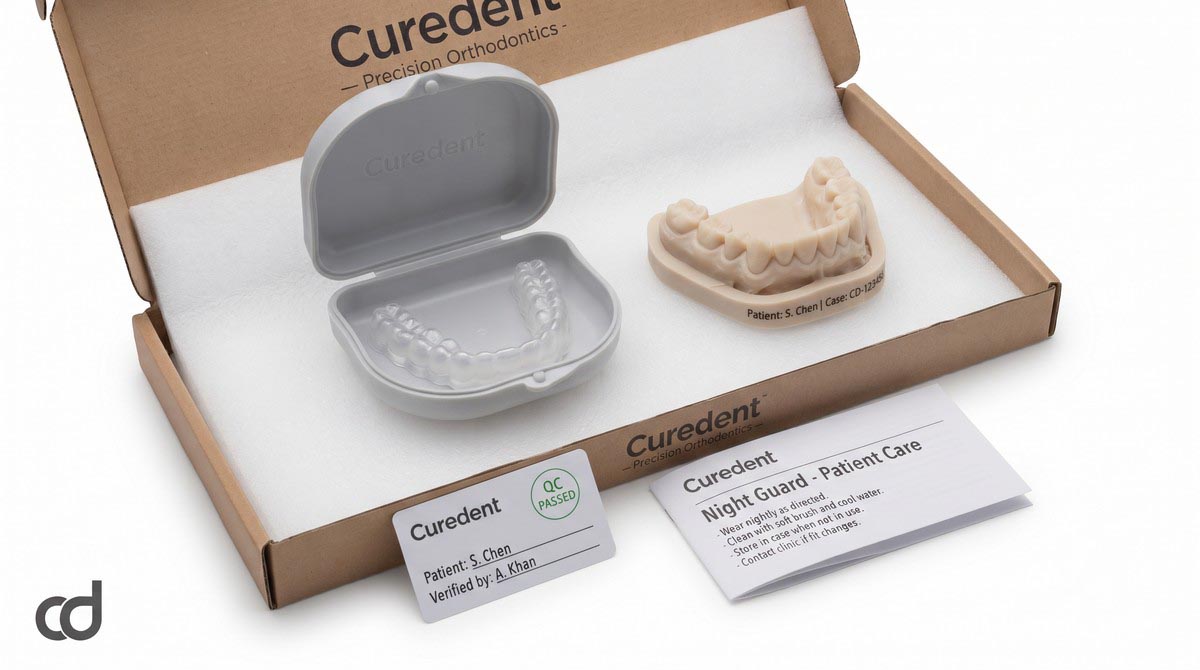
- Receive and Seat: Curedent prints the master model at 50-micron resolution, pressure-forms the appliance, hand-finishes margins, and ships the finished guard in protective clinical packaging.
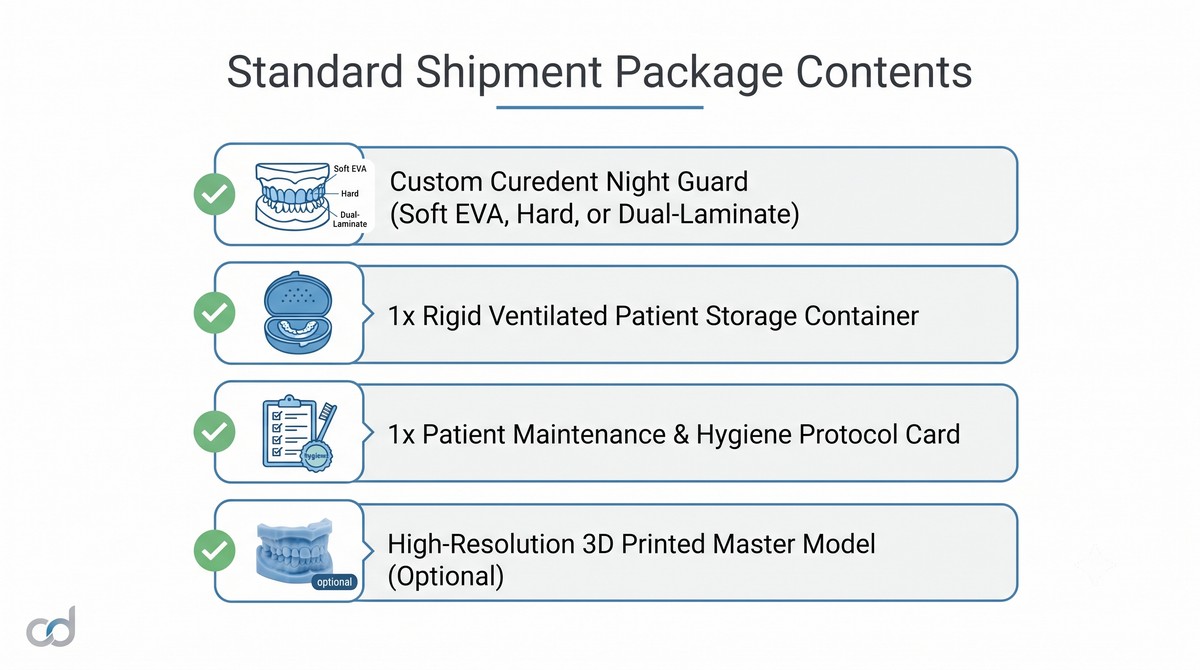
Standard Shipment Package Contents:
Frequently Asked Questions
How do I choose between Soft, Hard, and Dual-Laminate for my patient?
Prescribe the Soft EVA guard for mild clenchers or sensitive teeth requiring gentle cushioning. Select the Hard guard for severe bruxers, full-mouth reconstructions, or patients requiring smooth lateral guidance. Choose the Dual-Laminate splint for moderate-to-severe grinders who need a hard exterior for wear resistance combined with a soft inner liner for comfort.
Can I transition a patient from a Soft guard to a Dual-Laminate splint later?
Yes. If a patient initially prescribed a soft guard begins grinding more heavily or shows signs of chewing through the elastomeric material, you can use their stored digital records to order a Dual-Laminate or Hard replacement directly through the portal.
How long should a custom night guard typically last?
With proper daily cleaning, a Hard or Dual-Laminate night guard typically lasts 2 to 5 years depending on grinding intensity. Pure Soft EVA guards are softer by nature and generally require replacement every 12 to 24 months in active clenchers.
Does the patient need to wear the night guard every single night?
Yes. Nocturnal bruxism is an involuntary central nervous system activity that occurs intermittently throughout the night. Consistent nightly wear ensures that teeth, restorations, and jaw muscles remain protected at all times.
Are the materials certified free of BPA and methyl methacrylate (MMA)?
Yes. All Curedent night guards are thermoformed from medical-grade polymers that are 100% free of BPA, phthalates, and methyl methacrylate (MMA) monomers, eliminating the risk of chemical leaching or mucosal irritation.
Suggested Clinical Solutions
- Manage acute temporomandibular joint pain with the Curedent Occlusal Splint.
- Stabilize tooth positions following orthodontic therapy with Curedent Clear Retainers.
- Support natural bite settling using Curedent Hawley Retainers.