

Section 1: Product Introduction & Clinical Purpose
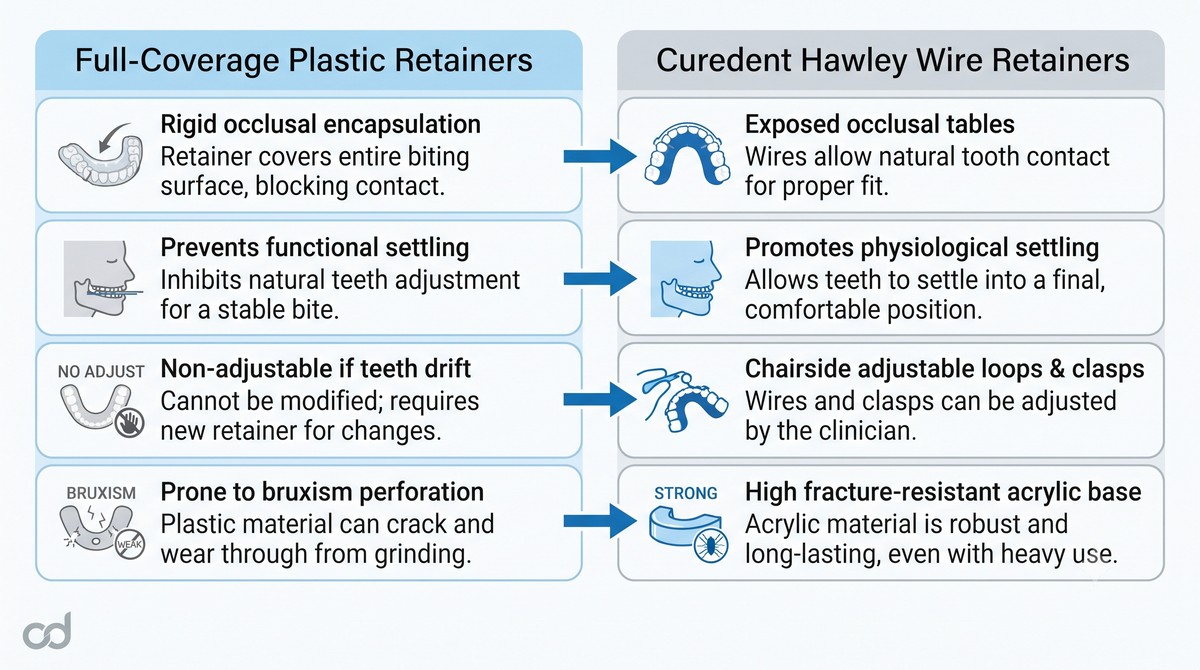
The Curedent Hawley Retainer System is a professional series of removable orthodontic retention appliances comprising three distinct wire-and-acrylic configurations: Classic Adams Clasps, Welded Adams Clasps, and the continuous Wraparound design. Engineered specifically for orthodontists, restorative dental practitioners, and orthodontic laboratory managers, this appliance family provides reliable mechanical retention while accommodating natural vertical settling that full-coverage vacuum-formed thermoplastic retainers physically restrict.
Post-orthodontic stabilization demands more than passive immobilization; it requires an intraoral environment where individual teeth can seat into solid intercuspation under functional masticatory loads. While clear thermoplastic retainers encapsulate the complete coronal anatomy and create an artificial bite block, classic wire-and-acrylic appliances leave the occlusal surfaces largely uncovered. Executing standardized Hawley retainer fabrication allows clinicians to maintain arch perimeter integrity, prevent anterior relapse, and support functional occlusal settling during the critical post-debonding phase.
Key Clinical Advantages
- Enables Natural Occlusal Settling: Allows posterior teeth to erupt vertically into solid, tripodized intercuspation under functional chewing forces.
- Chairside Wire Adjustability: Features adjustable U-loops that allow clinicians to close minor spacing gaps or tighten labial contact chairside.
- High Long-Term Durability: Combines medical-grade stainless steel wire with cross-linked acrylic to withstand heavy grinding and clenching.
- Targeted Anchor Selection: Offers three clasp configurations to fit specific anchor tooth anatomies and extraction patterns.

Section 2: Product Anatomy & Physical Construction
Medical-Grade Stainless Steel Framework
Every Curedent Hawley retainer is constructed from medical-grade, cold-worked austenitic stainless steel wire. This orthodontic alloy provides a balanced combination of high tensile yield strength and controlled springback. It resists deformation under cyclic masticatory forces while allowing precise, permanent adjustments with three-prong or bird-beak orthodontic pliers.

High-Density Acrylic Palatal Baseplate
The tissue-bearing core consists of a pressure-cured, cross-linked acrylic palatal baseplate. Polymerized under controlled pneumatic pressure to eliminate microscopic air voids, the baseplate is trimmed to a uniform 2.0–2.5 mm thickness. The tissue surface matches palatal rugae and cervical tooth margins with high accuracy, while the lingual surface is hand-polished to a smooth finish that resists bacterial adhesion and minimizes tongue interference.
Classic Adams Clasps Retention
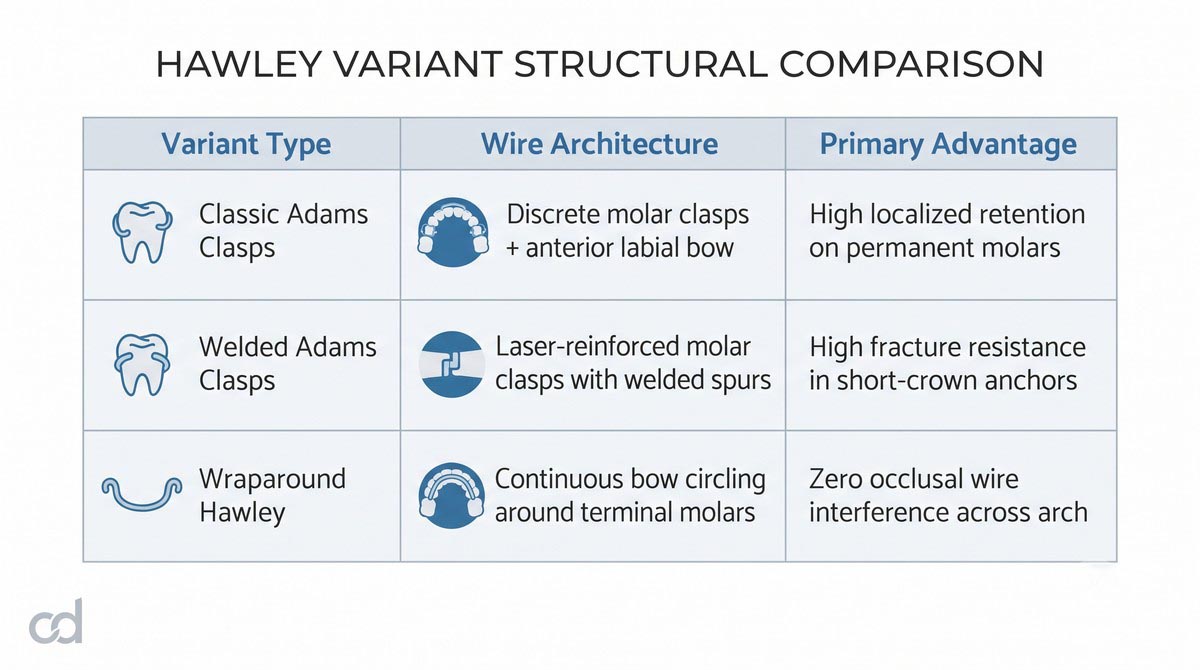
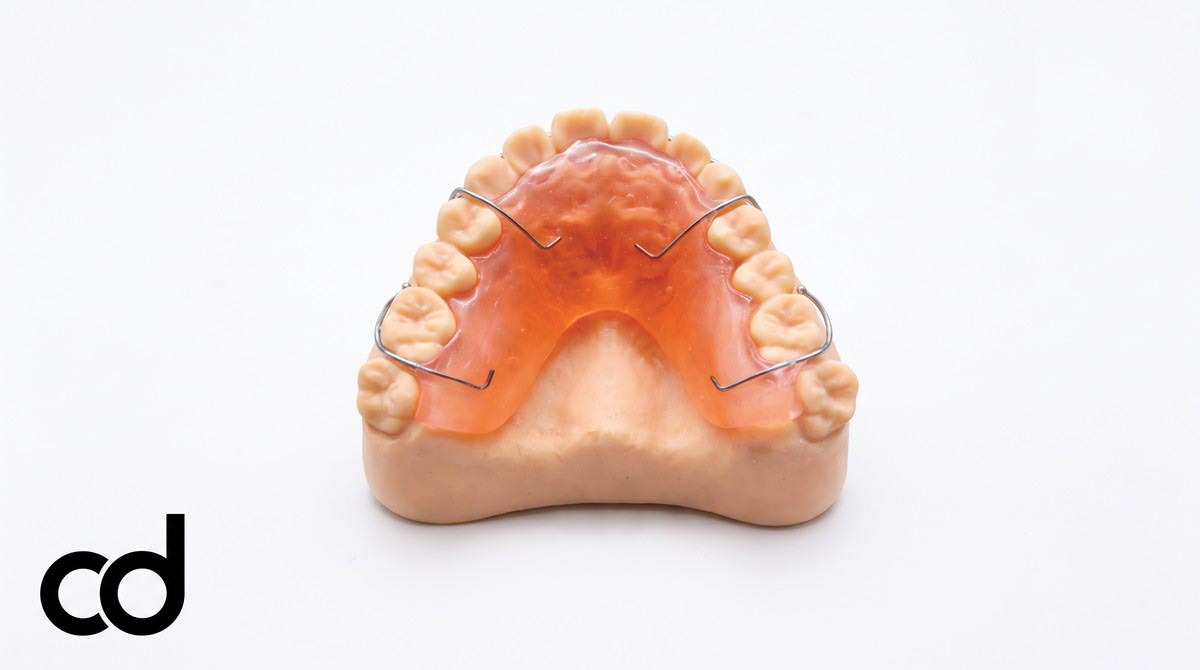
The standard retention mechanism uses the time-tested Adams clasps retention system positioned on the first permanent molars. Engineered to engage the mesiobuccal and distobuccal cervical undercuts:
- Two rectangular arrowheads seat into natural anatomical undercuts without impinging on marginal gingival tissues.
- The horizontal bridge provides a convenient platform for patient removal, preventing bending or distortion of the labial wire.
- Retentive tags cross the occlusal embrasures passively, avoiding interference with centric occlusal contacts.
Welded Adams Clasps: Reinforced Architecture
For clinical presentations requiring elevated retention or repair reinforcement, Curedent produces welded Adams clasps. In this configuration, supplementary auxiliary components—such as interproximal extension spurs or lingual seating tags—are permanently joined to the primary Adams frame using micro-pulse laser or resistance welding. This creates a unified clasp unit that resists fracture under heavy removal forces and prevents clasp detachment in tight retention spaces.
Wraparound Hawley Retainer: Continuous Arch Encapsulation
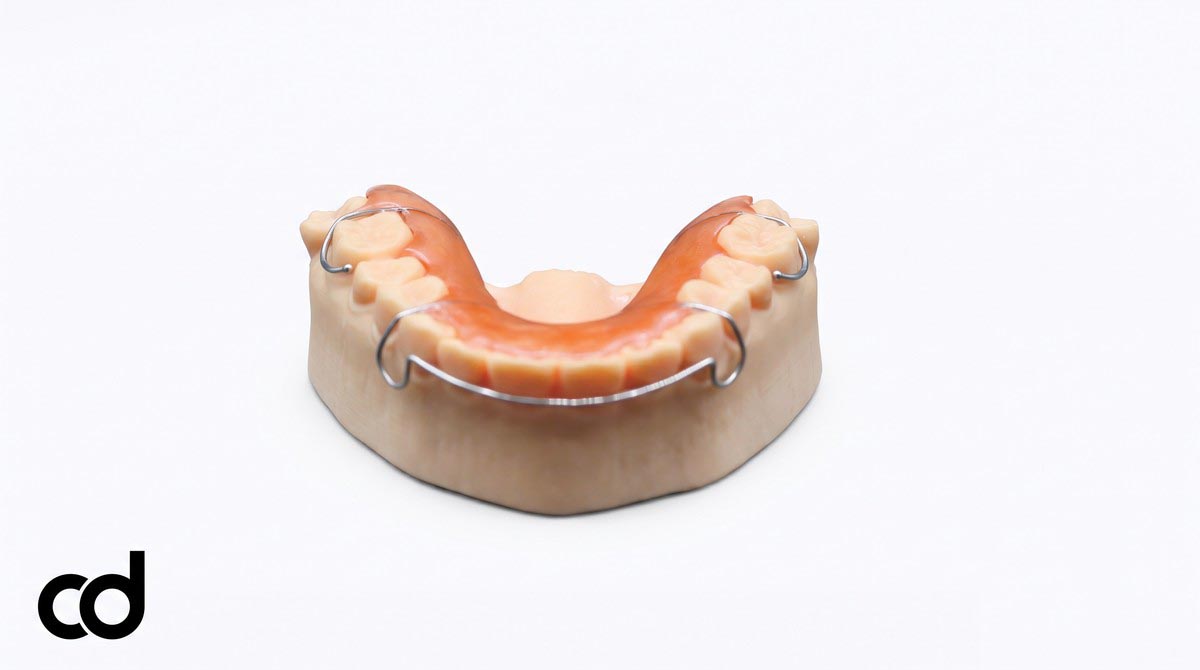
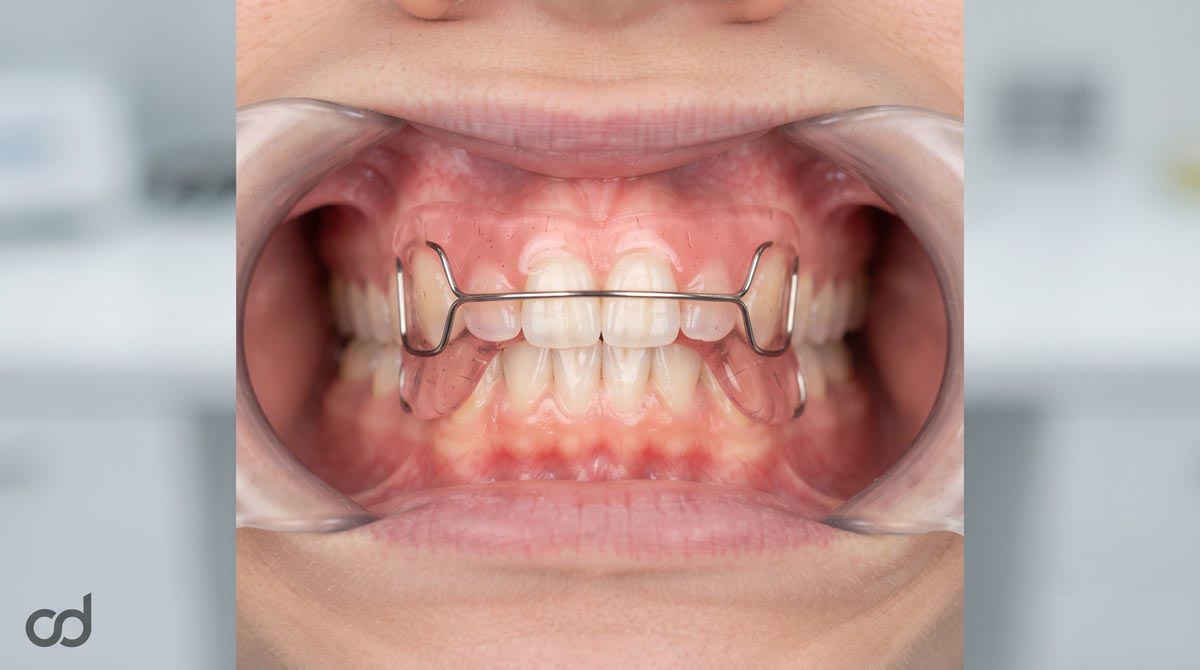
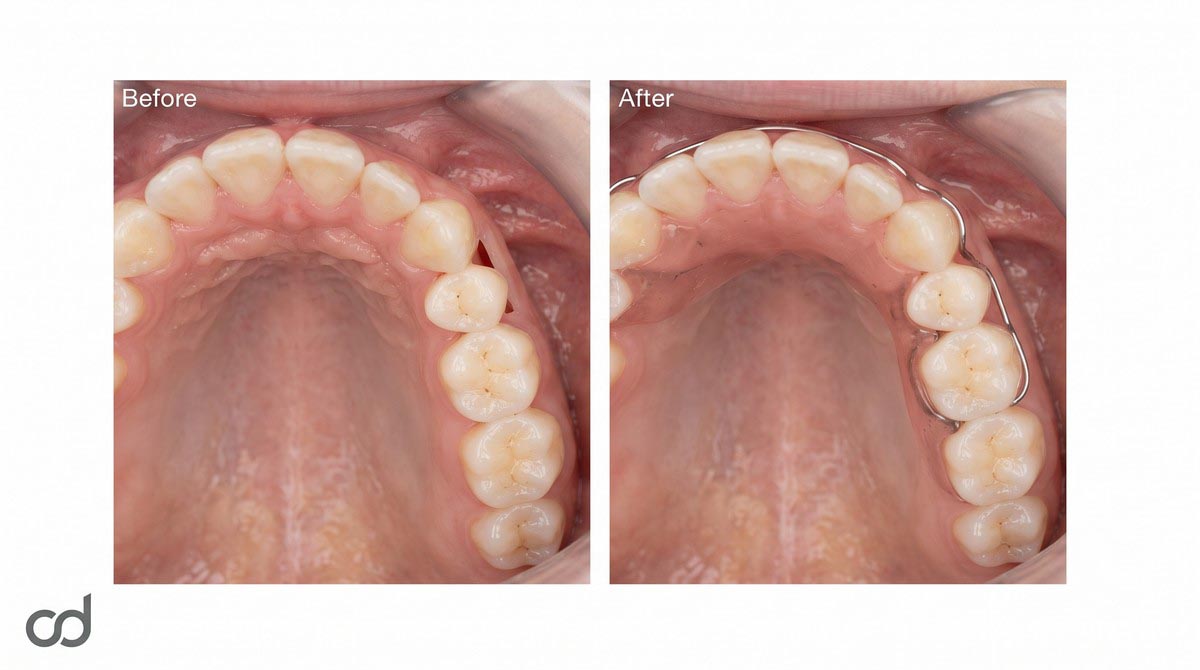
The wraparound Hawley retainer (also known as the circumferential Hawley) eliminates clasp crossover wires across the occlusal table. A continuous stainless steel labial bow spans the entire dental arch, extending from the anterior teeth across premolars and circling around the terminal molars before entering the acrylic baseplate:
- Zero Occlusal Interference: Leaves the entire occlusal surface completely open, making it ideal for cases requiring unrestricted bite settling.
- Extraction Space Stabilization: Holds closed extraction spaces tightly together without wire loops opening the contact.
- Circumferential Grip: Distributes retention evenly across the full dental arch.
Physical Comparison of the Three Variants
Section 3: Indications & Clinical Applications
Variant Selection Framework
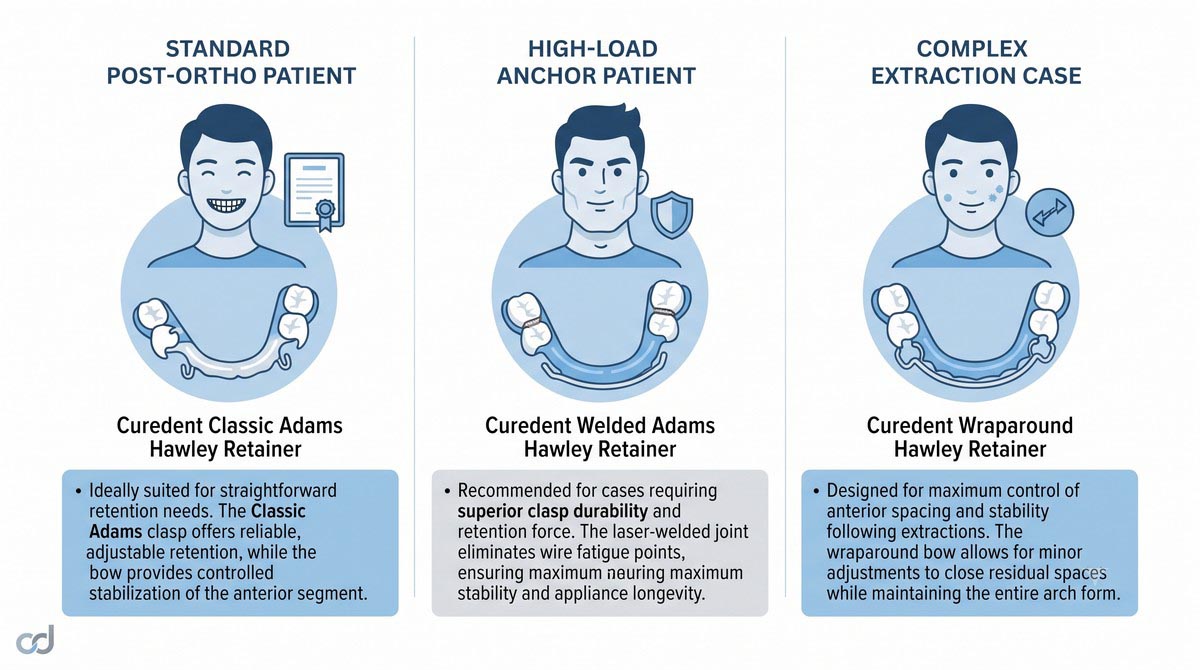
Choosing the proper Hawley configuration depends on the patient’s original malocclusion, the presence of closed extraction spaces, and specific occlusal settling goals:

The Biology of Physiological Occlusal Settling
At the conclusion of fixed bracket or clear aligner therapy, minor discrepancies in vertical tooth position and occlusal contact distribution frequently remain. While full-coverage plastic retainers lock these minor discrepancies in place, Hawley appliances allow natural physiological occlusal settling:
- Vertical Micro-Eruption: Free from occlusal plastic coverage, posterior teeth undergo minor vertical eruption guided by chewing forces, establishing stable cusp-to-fossa contacts.
- Transverse Intercuspation: Unhindered teeth settle into stable Class I interdigitation within 8 to 12 weeks post-debonding.
- Periodontal Reorganization: The periodontal ligament reorganizes under natural axial loading, reinforcing alveolar bone support around root apices.
Managing Extraction Space Stabilization
In cases involving premolar extractions, closed contact points carry an inherent tendency to reopen due to transseptal fiber elasticity. The wraparound design provides effective extraction space stabilization:
- The continuous outer wire encircles the buccal surfaces of canine, premolar, and molar crowns, acting as a physical barrier against space opening.
- Because no clasp crossover wires cross interproximal contacts between premolars and molars, the retainer prevents inadvertent contact wedging.
- The rigid palatal acrylic maintains arch perimeter width, holding anterior teeth back against the labial bow.
Clinical Use Scenarios Across Variants
- Deep Bite Post-Correction Cases: Using an anterior bite ramp on a Classic Adams Hawley maintains incisor disclusion and supports posterior vertical stability.
- Short Clinical Crown Presentations: Prescribing Welded Adams Clasps with auxiliary retentive tips ensures secure retention on difficult, partially erupted molar anchors.
- Post-Expansion Transverse Maintenance: Rigid palatal baseplates prevent maxillary arch collapse following rapid palatal expansion (RPE) or clear aligner arch expansion.
Section 4: Clinical Workflow & Retention Protocol

Step 1: Record Acquisition and Digital Capture
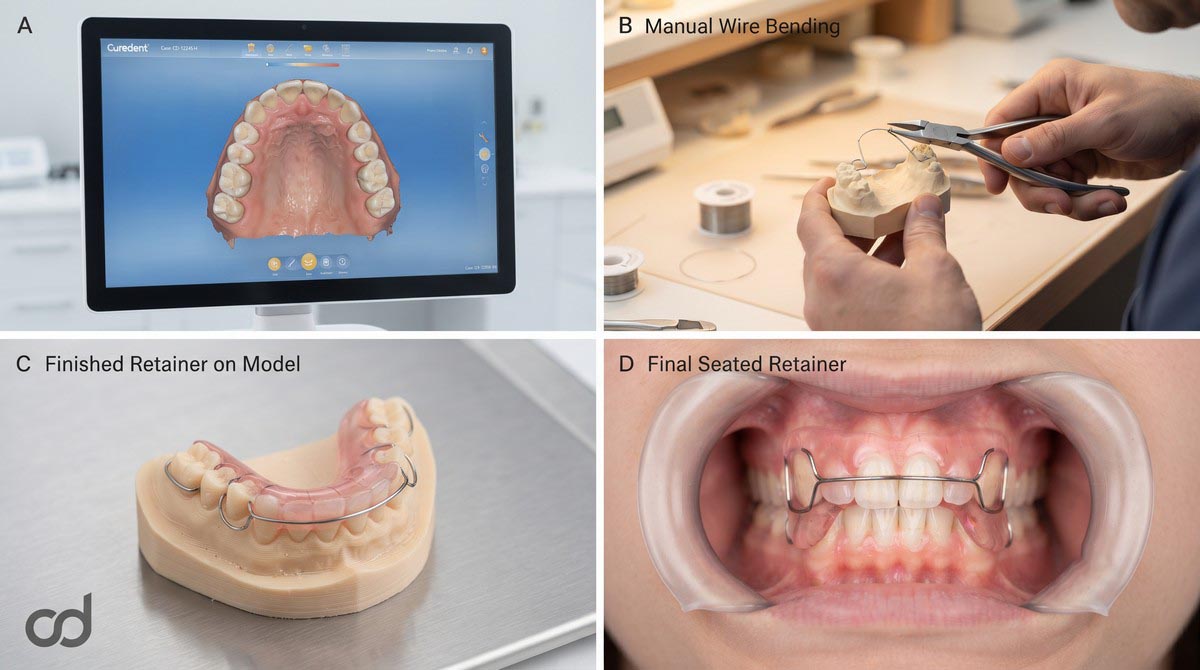
Upon debonding brackets or completing final aligner stages, capture a high-resolution optical intraoral scan of the maxillary and mandibular arches, including palatal vault contours and terminal molars. Conventional alginate or PVS impressions may also be submitted.
Step 2: Prescription and Variant Selection
Upload the digital records to the Curedent doctor portal. Specify the target variant (Classic Adams, Welded Adams, or Wraparound), select wire gauges, designate whether an anterior bite plane is needed, and submit the prescription.
Step 3: Precision Laboratory Fabrication
Curedent prints high-strength master models at ~50-micron resolution. Master technicians hand-bend the stainless steel components, adapt the acrylic baseplate under controlled pneumatic pressure, and finish the appliance with high-luster polishing.
Step 4: Unboxing and Pre-Delivery Inspection
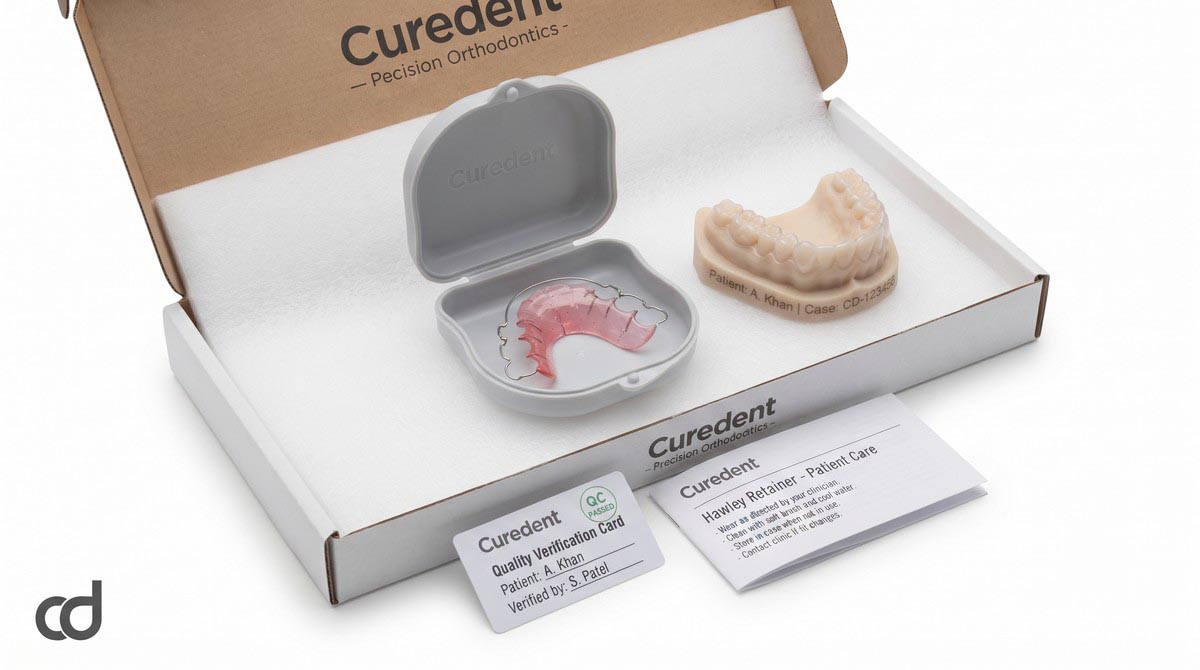
The appliance arrives sealed in dedicated clinical packaging. Prior to seating, inspect the retainer on its master model: verify complete palatal seating, check that arrowheads engage model undercuts passively, and ensure that acrylic margins are smooth and rounded.
Step 5: Chairside Delivery and Fitting Protocol
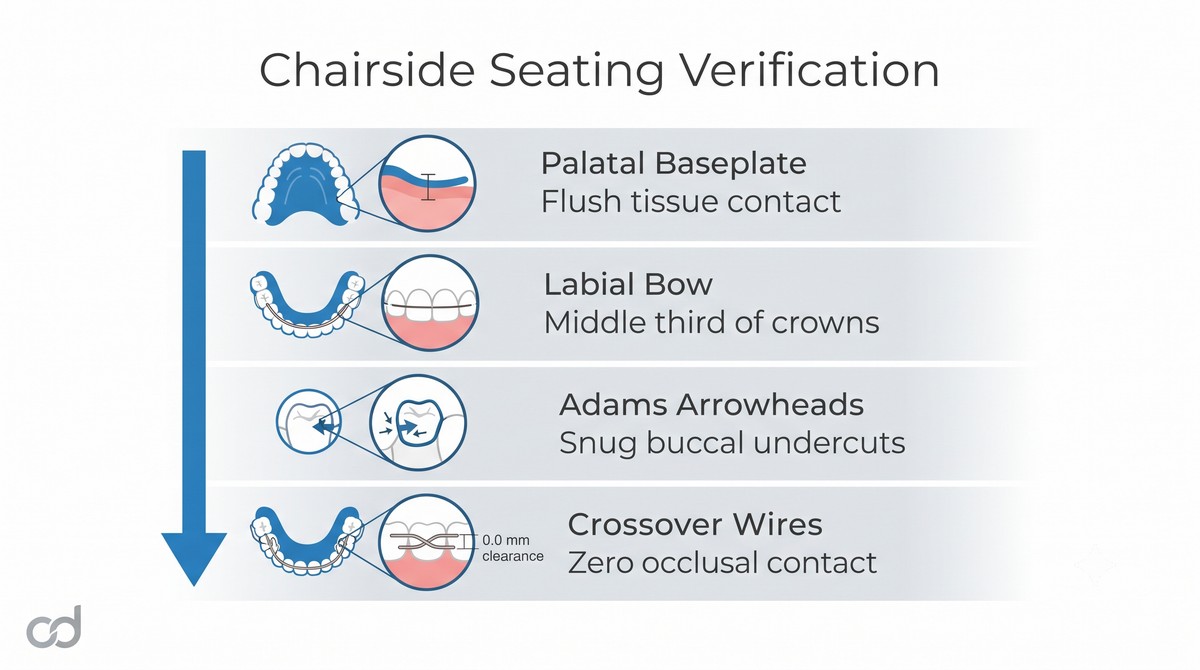
- Seat the Hawley retainer onto the patient’s palate using gentle, upward finger pressure along the palatal baseplate.
- Confirm that the acrylic adapts flush against the palatal tissue without rocking or air gaps.
- Check the labial bow position: the wire should span horizontally across the middle third of the anterior crowns without impinging on the gingival margin.
- Evaluate clasp tension: confirm that Adams arrowheads engage buccal undercuts with an audible, secure click.
- Check the occlusion with articulating paper. Ensure that crossover wires passing through occlusal embrasures do not cause premature contacts during centric occlusion or excursive jaw movements.
Step 6: Chairside Labial Bow Contouring and Clasp Adjustment
If the retainer requires minor adjustment at chairside, perform targeted labial bow contouring using bird-beak or three-prong pliers. Squeezing the base of the U-loops tightens the bow against retroclined incisors, while opening the loops increases anterior clearance. Clasp tension is adjusted by slightly bending the arrowhead stems gingivally to increase undercut engagement.
Wear Protocols, Patient Hygiene, and Handling
Prescribe full-time wear (20–22 hours per day) for the initial 3 to 6 months post-debonding to allow periodontal fiber reorganization and physiological settling. Patients should remove the appliance during meals, contact sports, and hot liquid consumption. Clean daily with a soft toothbrush and mild liquid soap; avoid hot water, which can warp acrylic baseplates. Store the retainer dry in a rigid ventilated case when not in the mouth.
Section 5: Technical Specifications & Fabrication Standards
Certified Technical Specifications
The Curedent Hawley Retainer System is manufactured to strict dimensional and metallurgical standards, ensuring dependable post-treatment stabilization.
| Parameter | Specification | Clinical Relevance |
| Frame material | Medical-grade stainless steel wire | High tensile strength and elastic recovery |
| Baseplate material | Medical-grade acrylic (palatal coverage) | Dimensionally stable, low porosity, biocompatible |
| Variants | Classic Adams Clasps / Welded Adams Clasps / Wraparound | Targets specific clinical retention demands |
| Labial bow wire gauge | Standard orthodontic stainless steel gauge (0.028″–0.032″) | Balances anterior control with adjustability |
| Adams clasp wire gauge | Standard orthodontic stainless steel gauge (0.028″) | Flexible undercut engagement without fatigue failure |
| Acrylic baseplate thickness | Rigid, palate-adapted, polished (2.0–2.5 mm) | Resists flexural deformation without excessive bulk |
| Fit tolerance | Engineered for stable seating on natural dentition | Passive tissue contact without pressure necrosis |
| Adjustability | Wire components adjustable chairside | Facilitates long-term micro-settling adjustments |
| Retention type | Removable wire-and-acrylic retainer | Accommodates physiological settling |
| Sterilization | Delivered ready for clinical use | Cleaned and packaged for immediate chairside fitting |
Adherence to Strict Wire Bending Standards
Consistent clinical performance depends on strict wire bending standards:

- Notch-Free Contour Radii: All wire bends are executed using smooth-jawed orthodontic pliers to avoid microscopic surface notches that create stress concentrations and cause wire fatigue fractures.
- Crossover Clearance: Occlusal crossover wires are adapted tightly through interproximal embrasures below the contact point, preventing occlusal interferences that can displace the appliance during biting.
- Pneumatic Pressure Curing: Baseplates are cured in warm pressure pots under 2.0–2.5 bars of compressed air, eliminating internal porosity, reducing residual monomer content, and maximizing surface hardness.

Section 6: Clinical Benefits & Practice Impact

Patient-Level Clinical Benefits
- Natural Functional Intercuspation: Leaving occlusal tables uncovered allows teeth to settle into solid, comfortable interdigitation under natural chewing forces.
- Long-Term Durability: Heavy grinders who bite through plastic retainers benefit from the durable stainless steel wire and reinforced acrylic baseplate.
- Long-Term Adjustability: If minor tooth movement occurs over time, the appliance can often be tightened chairside with simple wire adjustments rather than requiring an entirely new scan and remake.
Practice-Level Operational Advantages
- Lower Long-Term Replacement Rates: Hawley retainers deliver a multi-year lifespan, reducing the frequent remake cycles often associated with thin plastic retainers in heavy bruxers.
- Efficient Chairside Adjustments: Minor rotational relapses or small contact gaps can be addressed immediately in the operatory by adjusting U-loops with three-prong pliers, saving chair time and lab fees.
- Effective Deep Bite Retention: Incorporating an anterior acrylic bite plate provides reliable vertical control, maintaining overbite correction and preventing incisor intrusion relapse.
- Dependable Post-Orthodontic Stabilization: Establishing a reliable retention protocol that balances tooth position with functional settling protects your practice’s long-term clinical outcomes.
Hawley Retainers in Contemporary Digital Orthodontics
Clear plastic retainers offer high aesthetics, but they cannot replace the unique functional mechanics of wire-and-acrylic appliances. Clear trays isolate the dental arches, preventing posterior settling and wearing through in heavy clenchers. Modern post-orthodontic retention recognizes Hawley retainers as a vital, adjustable appliance that supports natural occlusal settling and withstands heavy masticatory loads.
Section 7: Ordering, FAQ & Call to Action
Simple Three-Step Ordering Workflow
Ordering Curedent Hawley Retainers through the doctor portal is fast and straightforward:
[Step 1: Upload Records] ──► [Step 2: Select Variant] ──► [Step 3: Receive Retainer]
Digital Scans or Impressions Classic / Welded / Wraparound Ready for Chairside Seating
- Upload Case Scans: Log into the Curedent portal and upload the patient’s optical intraoral scans (upper, lower, and bite registration in STL or PLY format) or submit conventional impressions.
- Select Hawley Configuration: Choose your preferred variant (Classic Adams, Welded Adams, or Wraparound), designate any acrylic modifications (e.g., anterior bite plane), and submit the prescription.
- Receive and Seat: Curedent prints the master model, hand-bends the wire framework, cures and polishes the acrylic baseplate, and ships the finished appliance in protective clinical packaging.
Standard Shipment Package Contents:

Frequently Asked Questions
Which Hawley variant should I prescribe for routine post-orthodontic retention?
Prescribe the Classic Adams Clasps variant for routine non-extraction cases with fully erupted permanent first molars. Select the Wraparound Hawley for premolar extraction cases or when you want zero occlusal wire crossover, and choose Welded Adams Clasps when anchor teeth are short or require reinforced retention.
Can I mix clasp configurations on the same retainer?
Yes. Curedent supports custom wire prescriptions. You can request Adams clasps on one side and circumferential or ball clasps on the opposite side to navigate unique crown anatomies or erupting teeth.
How long does a well-maintained Hawley retainer typically last?
With proper daily cleaning and periodic chairside wire checks, a medical-grade acrylic and stainless steel Hawley retainer routinely lasts 5 to 10 years, outlasting thin vacuum-formed clear retainers.
Can the clasps and labial bow be tightened chairside if teeth shift slightly?
Yes. Using bird-beak or three-prong pliers, you can gently squeeze the U-loops to tighten the labial bow against the incisors, or adjust the Adams arrowheads to increase retention in buccal undercuts.
Does the patient need to remove the Hawley retainer when eating?
Yes. Patients should always remove their Hawley retainer during meals to avoid bending the labial bow, dislodging clasps, or fracturing the acrylic baseplate under masticatory loads.
Suggested Clinical Solutions
- Offer aesthetic retention options with Curedent Clear Retainers (1.0mm, 1.5mm, 2.0mm).
- Address severe nocturnal grinding and protect teeth with the Curedent Occlusal Splint.
- Fine-tune minor residual spacing prior to retention using Curedent Orthodontic Refinement.


