

Section 1: Service Introduction & Clinical Purpose
The Curedent Orthodontic Refinement Service is a targeted digital manufacturing and secondary staging protocol designed to eliminate residual positional variances following primary clear aligner therapy. Built specifically for orthodontists, general dentists integrating aligners into restorative workflows, and clinical coordinators, this service provides a structured framework to navigate biological variance, expression ceilings, and minor tracking discrepancies that emerge during treatment.
Clear aligner therapy rarely concludes as an entirely linear biological event. Even meticulously planned digital setups encounter individual physiological constraints, including variations in bone density, periodontal ligament (PDL) elasticity, crown morphology, and patient wear compliance. A targeted orthodontic refinement addresses these subtle differences, bridging the gap between initial digital predictions and final clinical reality without requiring a complete case rebuild.
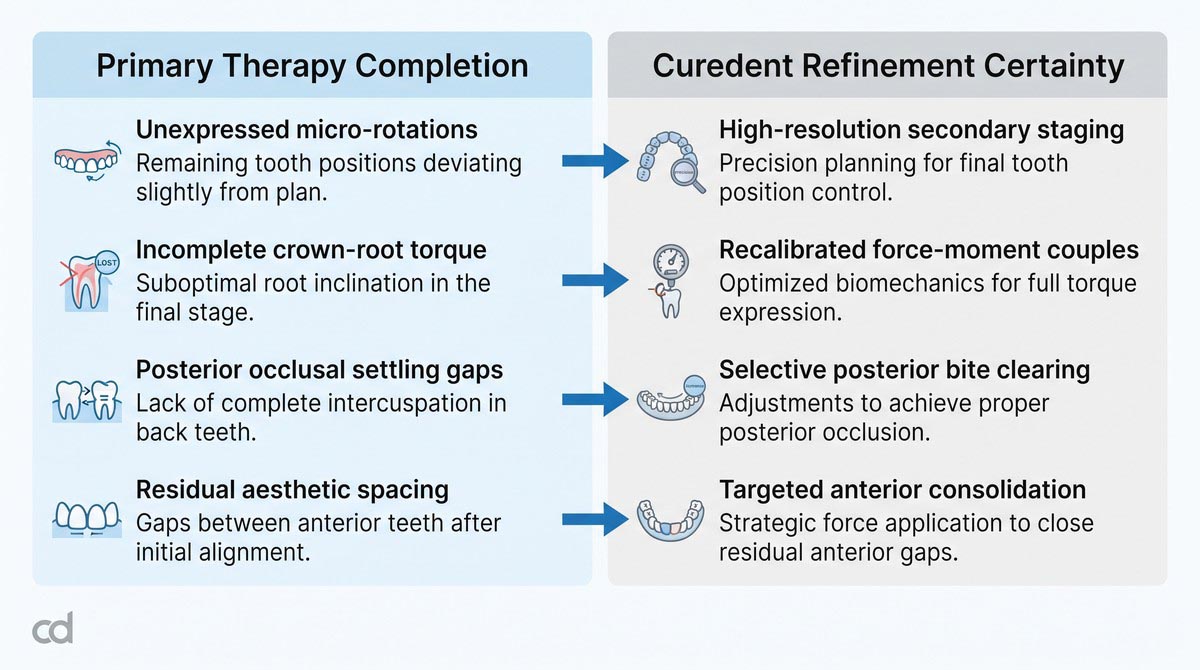
Key Clinical Advantages
- Eliminates Aesthetic Compromises: Corrects persistent minor anterior rotations, incisal edge steps, and midline discrepancies.
- Optimizes Functional Occlusion: Closes unwanted posterior settling gaps to establish solid intercuspation and canine guidance.
- Recalibrates Biomechanical Tracking: Introduces fresh, optimized attachment geometry to express movements that stalled during primary stages.
- Standardizes Practice Workflows: Establishes a predictable, streamlined protocol for secondary aligner delivery that minimizes unbilled clinical chair time.
Section 2: Service Scope & Physical Workflow
Clinical Triggers for Secondary Staging
A refinement request is triggered whenever the clinical outcome at the end of primary aligner wear shows discrepancies relative to the approved digital setup. Primary triggers include:

- Unexpressed Crown-Root Torque: Incomplete palatal or labial root torque, often leaving incisors slightly more upright or retroclined than intended.
- Persistent Rotational Lags: Axial rotations—especially on round anterior teeth such as maxillary lateral incisors or mandibular premolars—that express only partially due to aligner slippage.
- Posterior Settling Voids: Transient disclusion or light posterior contacts caused by prolonged interposition of thermoplastic material between occlusal surfaces during primary wear.
- Residual Contact Point Spacing: Incomplete consolidation across previous extraction or interproximal reduction (IPR) spaces.
Technical Workflow and Engineering Protocols
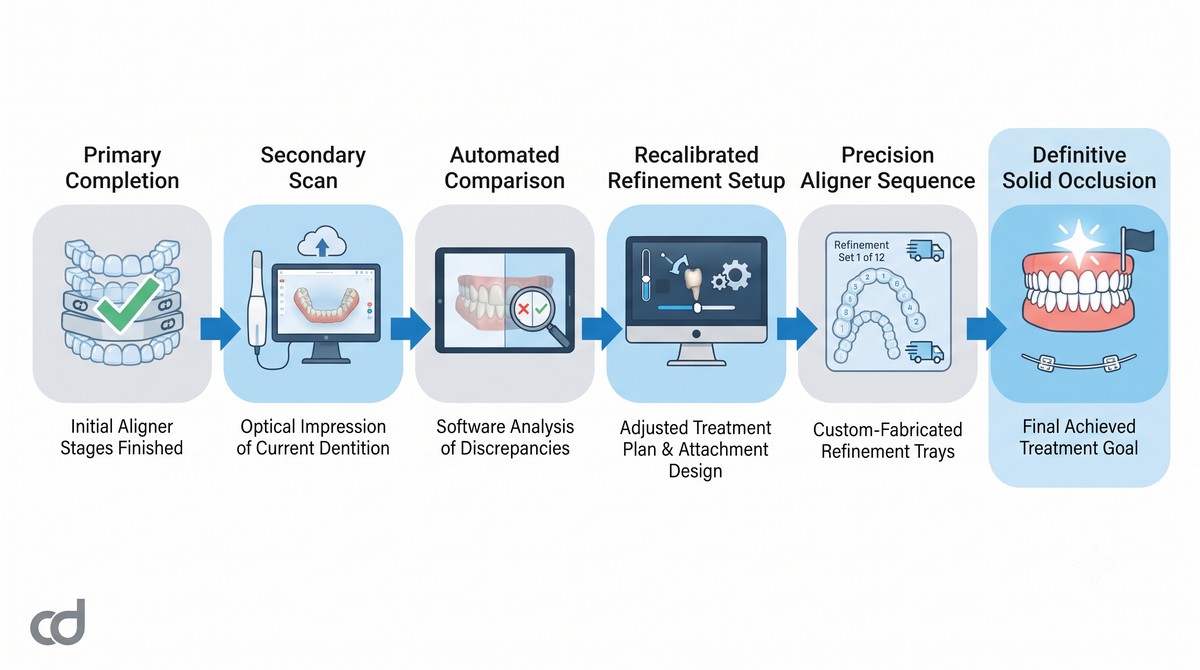
When a refinement request is submitted, Curedent digital setup engineers do not start from scratch. Instead, they run an automated point-cloud comparison that registers the patient’s new intraoral rescan against the final stage of the original plan. This isolates the precise teeth that lagged during primary therapy.
The digital team then applies a targeted precision adjustment to the movement parameters:
- Movement velocity is lowered (typically limited to 0.10–0.15 mm translation or 1.0 rotation per stage) to encourage biological remodeling in stubborn sites.
- Attachment positions, bevels, and surface areas are re-engineered to deliver improved moment-to-force couples.
- Aligner margins are trimmed along smooth, scalloped contours to maximize retention.
Physical Deliverables to the Operatory
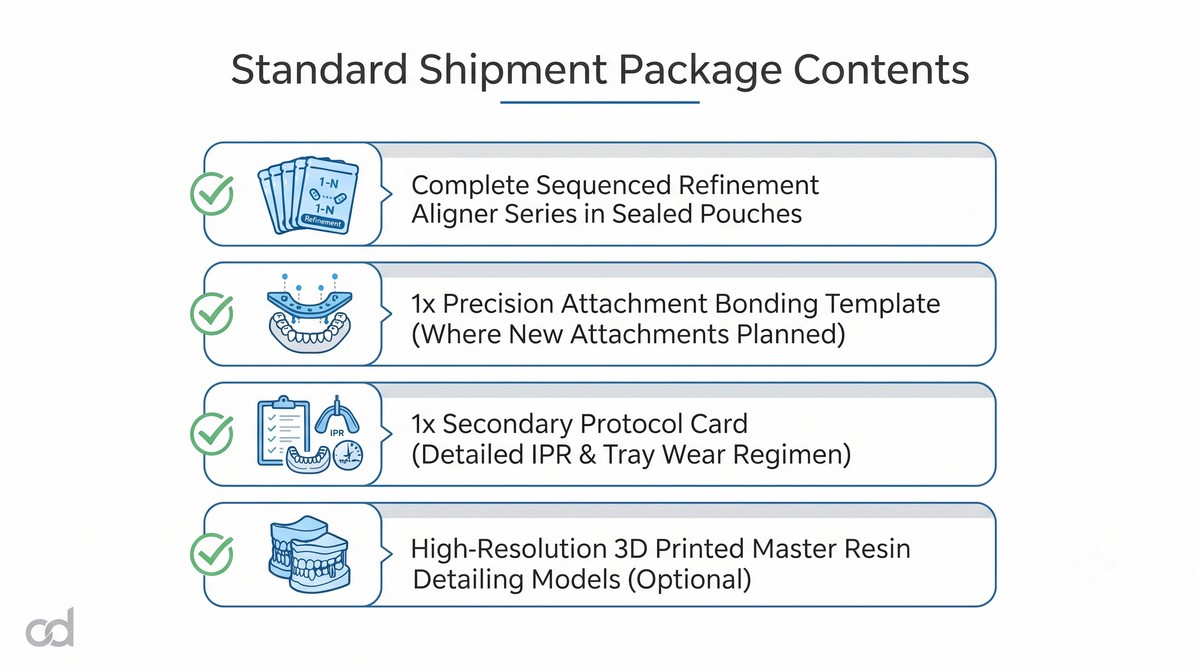
Following digital approval by the clinician, Curedent manufactures and delivers:
- A sequential series of secondary aligners individually labeled and sealed in clinical pouches.
- A new, flexible attachment bonding template if attachment changes or additions were planned.
- A comprehensive secondary protocol card detailing IPR requirements, attachment maps, and recommended patient wear schedules.
- High-resolution 3D printed reference models for chairside verification where requested.
Section 3: Clinical Scenarios Requiring Refinement
Managing Incomplete Biomechanical Expression
Even with high patient compliance, certain complex tooth movements consistently show lower clinical expression rates than virtual setups predict:

- Incisor Torque and Inclination Discrepancies: Translating a crown while simultaneously torqueing its root through dense cortical bone requires continuous, rigid reciprocal forces. Without refinement, incisors often end up slightly under-torqued, leaving an edge-to-edge tendency or an uneven overjet.
- Rotational Deficits on Conical Crowns: Maxillary lateral incisors and mandibular canines have rounded cross-sections that provide minimal natural purchase for thermoformed plastic. These teeth frequently express only 60–75% of their planned rotation, leaving subtle line-angle discrepancies.
- Vertical Intrusion and Extrusion Lags: Extruding an anterior tooth or intruding a posterior unit without adjacent anchorage support frequently stalls near the end of primary treatment, requiring secondary traction mechanics.
The Posterior Settling Void Dilemma
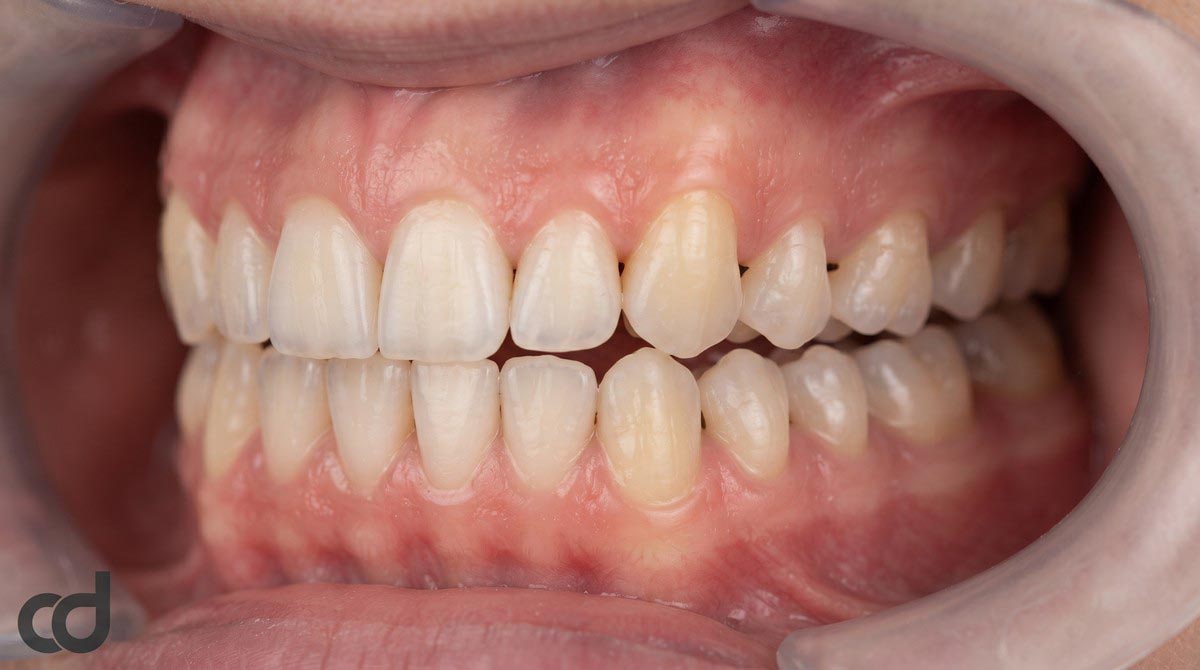
A common presentation at the conclusion of primary aligner therapy is a light posterior open bite or transient lack of solid intercuspation. Because the patient has worn twin layers of plastic polymer over their occlusal tables for 20–22 hours a day across several months, natural biting forces produce mild intrusive depression on molars while anterior teeth retain interocclusal contact.
An engineered refinement addresses this by programming clear anterior disclusion or incorporating posterior sectional trimlines, allowing posterior teeth to erupt into solid, tripodized occlusion before long-term retainers are delivered.
Strategic Execution of Mid-Course Corrections
Refinement protocols are not limited strictly to the end of treatment. When tracking loss is identified early (for instance, at tray 14 of a 28-tray series where an incisal air gap exceeds 1.5 mm), continuing with subsequent trays will only introduce erratic tipping forces. Initiating a timely mid-course correction allows the clinician to pause, capture a fresh scan, and reset the staging path from the current position, preventing unwanted anchorage loss.
Section 4: Clinical & Technical Protocol
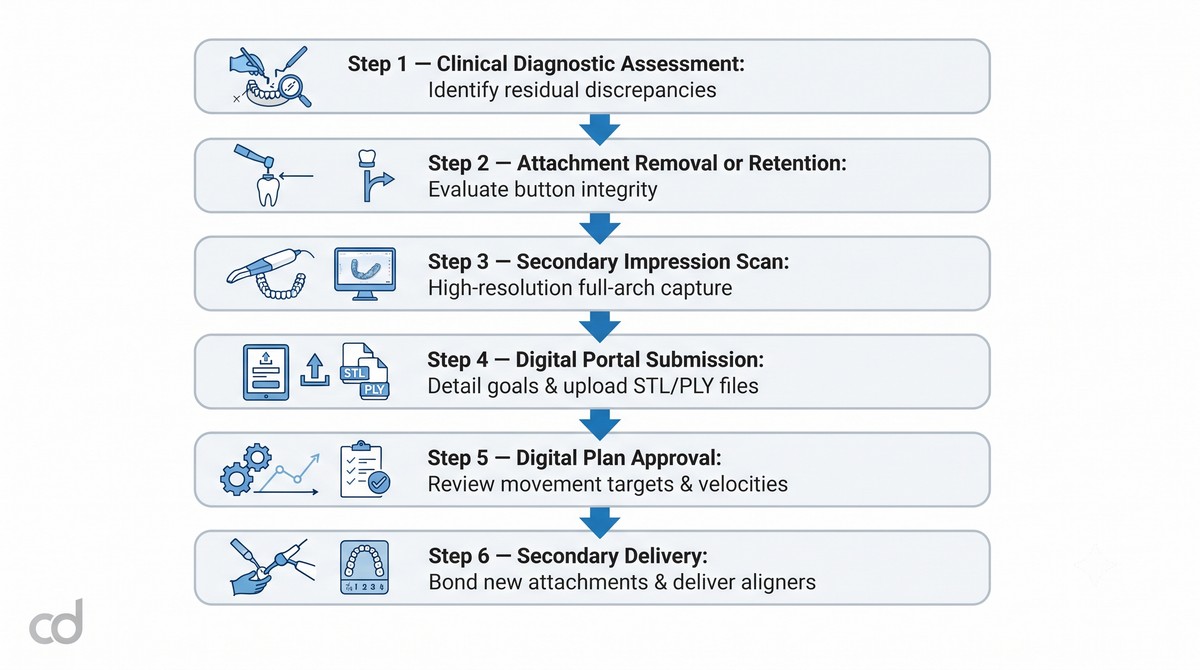
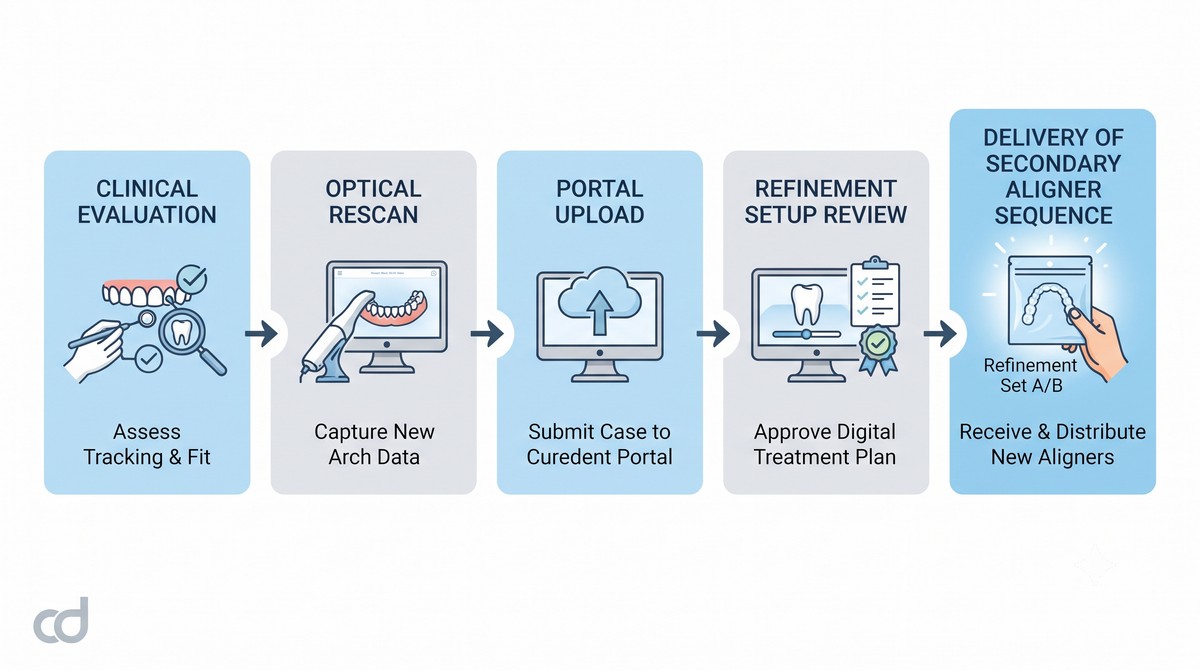
Step 1: Clinical Diagnostic Assessment
At the scheduled completion visit, perform a comprehensive occlusal and aesthetic audit:
- Articulate teeth with 8-micron articulating ribbon in centric occlusion and excursive movements to map dynamic contacts.
- Examine anterior tooth margins, midline harmony, and torque inclination from profile and frontal angles.
- Determine whether the residual discrepancy requires active secondary tooth movement or simply passive occlusal settling.
Step 2: Attachment Review and Surface Preparation
Decide whether to keep or remove existing composite attachments prior to scanning:
- If current attachments are chipped, worn, or poorly contoured, remove them using a high-speed carbide finishing bur and polish the enamel.
- If you plan to retain specific attachments, leave them intact and scan over them. Note on the prescription which attachments are to be preserved versus replaced.
Step 3: Acquiring the Secondary Impression Scan
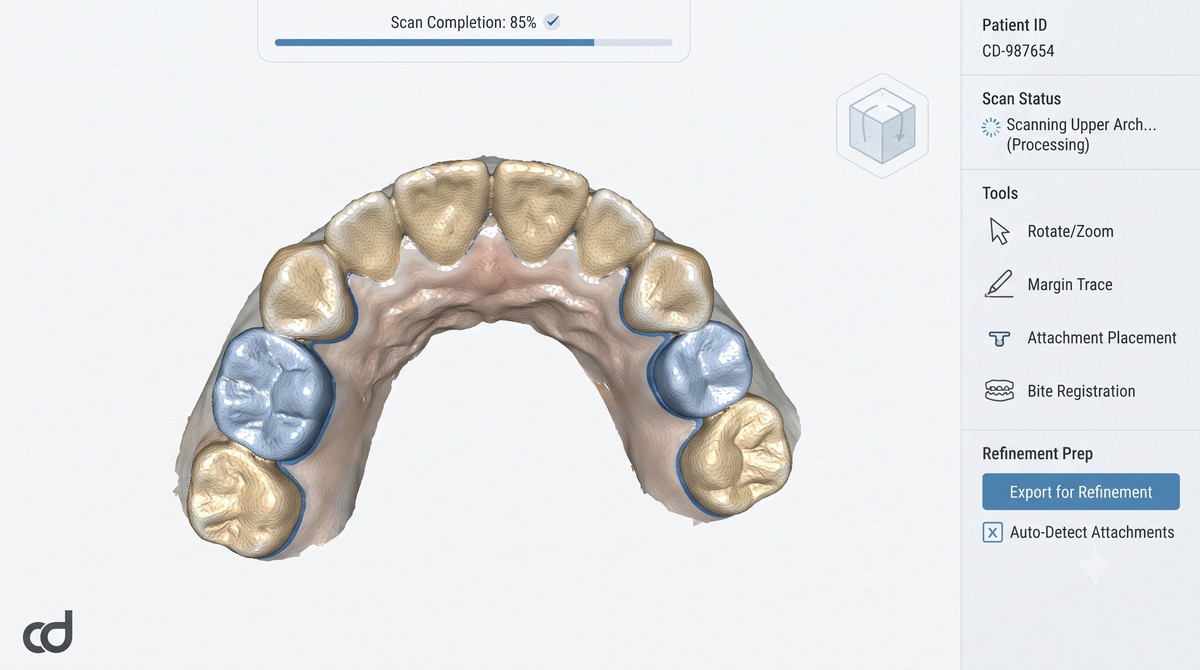
Capture a fresh optical scan of the upper arch, lower arch, and dynamic bite registration. Cleanly record all clinical crowns, undercut line angles, cervical gingival contours, and terminal molars. Ensure the patient bites firmly into centric relation without soft-tissue distortion.
Step 4: Digital Portal Submission
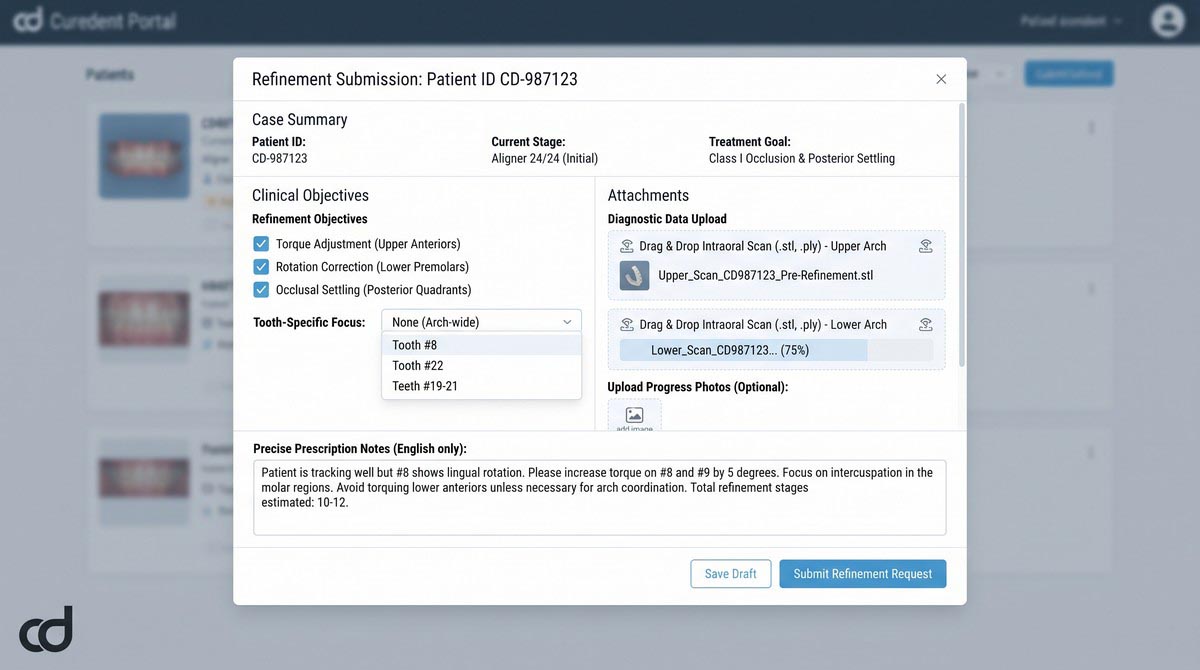
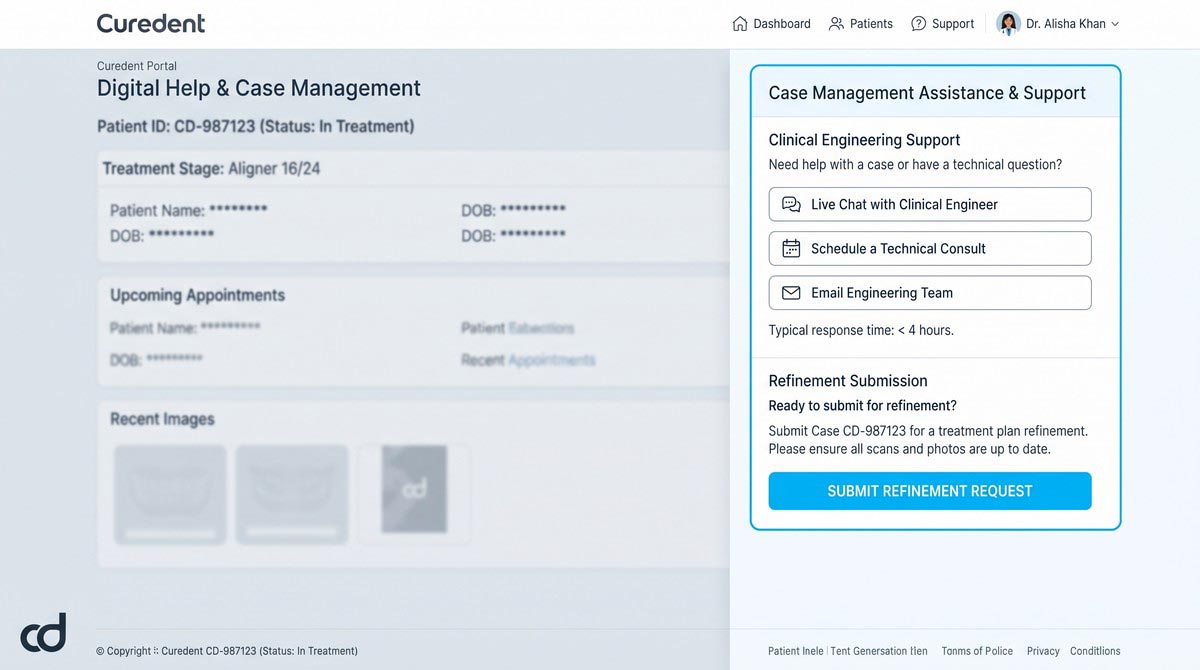
Log in to the Curedent portal, open the patient’s existing case profile, and select “Submit Refinement”:
- Attach the newly captured secondary impression scan files (STL or PLY format).
- Detail your specific clinical objectives (e.g., “Derotate tooth #12 by 8, close 0.5 mm interproximal space distal to #22, establish firm bilateral molar contacts”).
- Indicate any interproximal reduction (IPR) preferences or restrictions for the secondary phase.
Step 5: Engineering and Tracking Optimization
Curedent’s digital setup team designs the secondary sequence focusing on tracking optimization:
- Moving teeth are programmed with slower, more deliberate staging velocities (<0.15 mm translation per tray) to overcome localized biological resistance.
- Reciprocal anchorage blocks are applied to teeth that have reached their target positions, keeping them stationary while adjacent teeth finish moving.
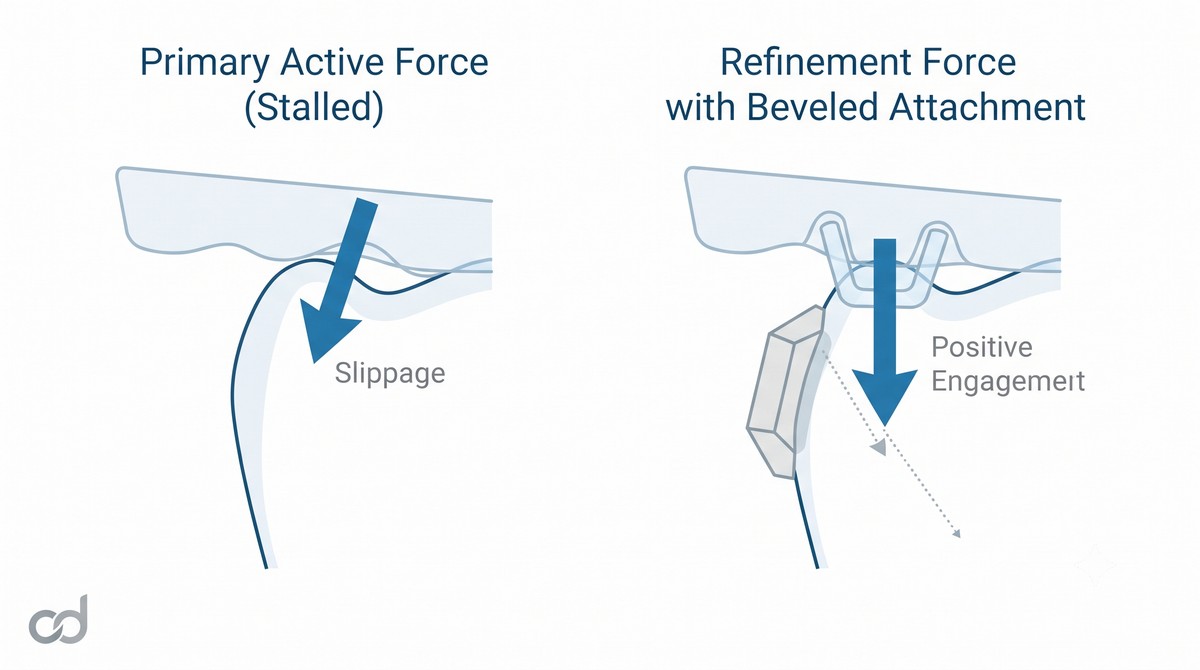
- Custom, optimized attachments with defined active bevel angles are introduced to direct force vectors toward the center of resistance.
Step 6: Chairside Delivery and Patient Management
Bond any newly planned attachments using the provided template, verify the fit of Refinement Aligner #1, confirm that interproximal contacts allow smooth floss clearance, and review daily wear compliance with the patient.
Attachment Integrity and Tracking Verification Checks
During the delivery of refinement aligners, always confirm that composite attachments seat completely within their corresponding aligner bubbles without internal air gaps. If an attachment is underfilled or flash prevents full seating, the tray will not express its planned force. Inspect aligner borders to ensure they do not impinge on movable alveolar mucosa or frenal attachments, which could cause patient discomfort and reduce compliance during this final detailing phase.

Section 5: Technical Specifications & Staging Standards
Technical Production Standards
Curedent refinement aligners are engineered to tight manufacturing tolerances, ensuring that even minor tooth adjustments express predictably during this final treatment phase.
| Item | Detail |
| Refinement request channel | Curedent case management portal |
| Clinical documentation required | Reason for refinement, rescan, clinical notes |
| Required data | Secondary impression scan (intraoral optical scan) |
| Aligner material | Biocompatible thermoplastic polyurethane sheet |
| Model material | High-resolution 3D printed dental resin |
| Staging basis | Original case data + new rescan |
| Attachment system | Case-dependent, digitally planned for refinement |
| Outcome target | Final occlusion detailing and post-treatment alignment polish |
Staging Limits and Detailing Metrics
Refinement staging follows tighter movement increments than initial primary series to maximize accuracy:

- Staging Limits: Linear displacement is capped at 0.10–0.15 mm per tray, and axial rotation is limited to 1.0-1.5, ensuring the plastic maintains continuous surface contact on stubborn units.
- Final Occlusion Detailing: Setups incorporate targeted final occlusion detailing, adjusting posterior contact points to establish bilateral, simultaneous contacts on centric cusps while eliminating lateral working and non-working interferences.
- Laser-Scalloped Margins: Edge margins are cut using automated CNC laser trimming along the gingival line, maintaining high rigidity and optimal retention during torque expression.
Section 6: Clinical Benefits & Practice Impact

Patient-Level Clinical Benefits
- High Aesthetic Satisfaction: Eliminates subtle rotations and incisal line mismatches that patients notice after initial alignment, delivering a truly finished smile.
- Functional Chewing Stability: Closing settling gaps and establishing solid intercuspation ensures the patient can chew comfortably without premature anterior contacts or food impaction.
- Long-Term Periodontal Stability: Level marginal ridges and parallel roots simplify daily flossing and home care, reducing plaque retention and protecting long-term periodontal health.
Practice-Level Operational Advantages
- Predictable Finishing Protocols: Standardizing refinement as a routine finishing step eliminates clinical hesitation when a case needs subtle adjustment, turning finishing into a predictable, repeatable process.
- Workflow Cost-Efficiency: Utilizing a structured digital refinement pipeline reduces chairside adjustments, prevents emergency visits for loose aligners, and keeps finishing within planned clinical windows.
- Controlled Clinical Overhead: Uploading an intraoral rescan for a targeted 4- to 8-tray secondary series provides a rapid finishing phase, avoiding the delays of broad re-treatment cycles.
- High-Level Post-Treatment Alignment Polish: Delivering a refined, well-settled occlusion provides the ultimate post-treatment alignment polish, protecting your practice’s clinical reputation and encouraging positive word-of-mouth patient referrals.
Refinement as Modern Clinical Best Practice
Expecting biological systems to match a computer algorithm on the first pass ignores the realities of tissue remodeling and individual patient biology. Refinement is not a correction of failure; it is the modern orthodontic equivalent of finishing bends on a stainless steel archwire. Establishing a structured, predictable digital refinement process allows dental teams to deliver high-quality orthodontic care with clinical and financial confidence.
Section 7: Requesting a Refinement, FAQ & Call to Action
Simple Three-Step Submission Workflow
Submitting an orthodontic refinement through the Curedent doctor portal follows an efficient three-step process:
- Capture Intraoral Rescan: Take a high-resolution optical scan of the patient’s dental arches and centric bite registration on your intraoral scanner.
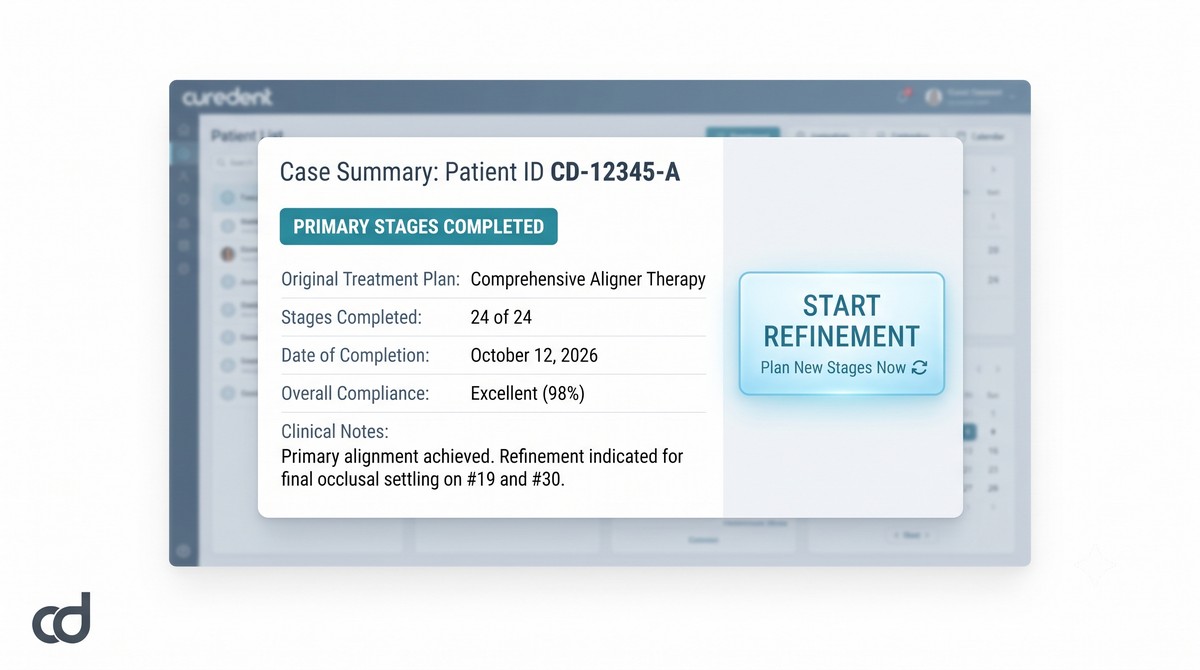
- Submit via Case Portal: Navigate to the patient’s active file in the Curedent portal, click “Start Refinement”, upload the scan files, and note your specific occlusal and aesthetic goals.
- Approve and Deliver: Review and approve the 3D secondary setup in the interactive web viewer. Curedent fabricates the refinement aligners at ~50-micron model resolution, packs the kit in sterile pouches, and ships directly to your practice.
Standard Shipment Package Contents:
Frequently Asked Questions
When is the ideal clinical time to request an orthodontic refinement?
Request a refinement when the patient finishes their final scheduled primary aligner, has worn it for the full recommended interval, and an intraoral evaluation reveals persistent micro-rotations, incomplete torque, or light posterior contacts.
Is a new intraoral scan required for every refinement case?
Yes. Accurate secondary staging requires an updated optical scan that captures the exact current position of teeth, soft tissue margins, and any intact composite attachments.
How many aligners are typically required for a refinement sequence?
Most refinements require between 4 and 10 aligners per arch, depending on whether the primary goal is minor anterior aesthetic alignment, torque correction, or posterior occlusal settling.
Do I need to remove all existing composite attachments before taking the rescan?
Not necessarily. If existing attachments are undamaged and positioned on teeth that require further movement, you can scan over them and indicate in your notes to retain them. If attachments are chipped, worn, or on teeth that have reached their target positions, remove and polish the enamel before scanning.
Can the refinement phase be combined directly with final retention?
Yes. If only minor settling is needed, the final stage of the refinement sequence can be worn as a temporary passive retainer while final clear or Hawley retainers are being fabricated.
Suggested Clinical Solutions
- Ensure lasting stability after refinement with Curedent Clear Retainers.
- Manage complex initial malocclusions using Curedent Tiered Aligner Packages.
- Relieve acute bruxism wear and protect restorations with Curedent Night Guards.


