
Section 1: Product Introduction & Clinical Purpose
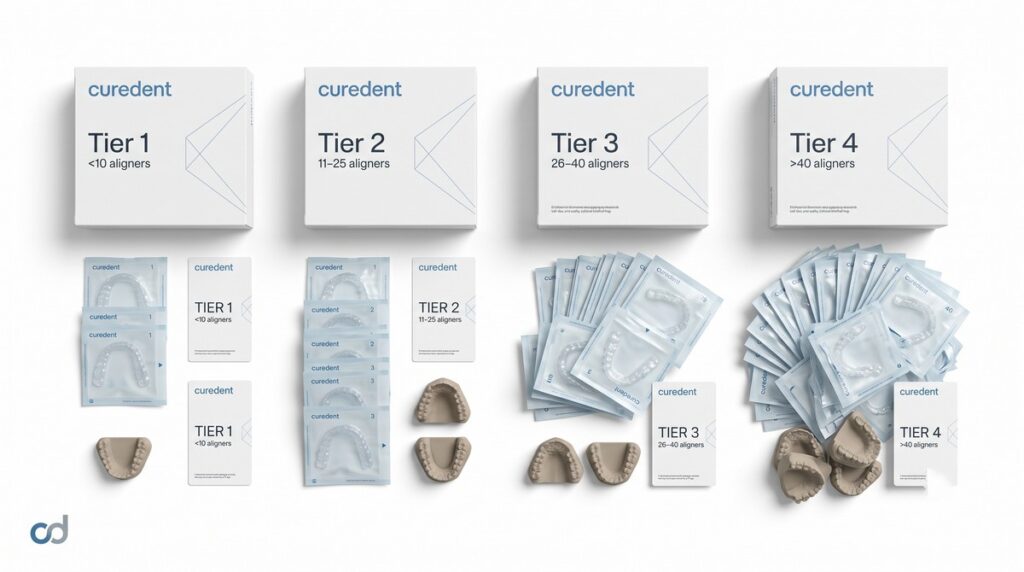
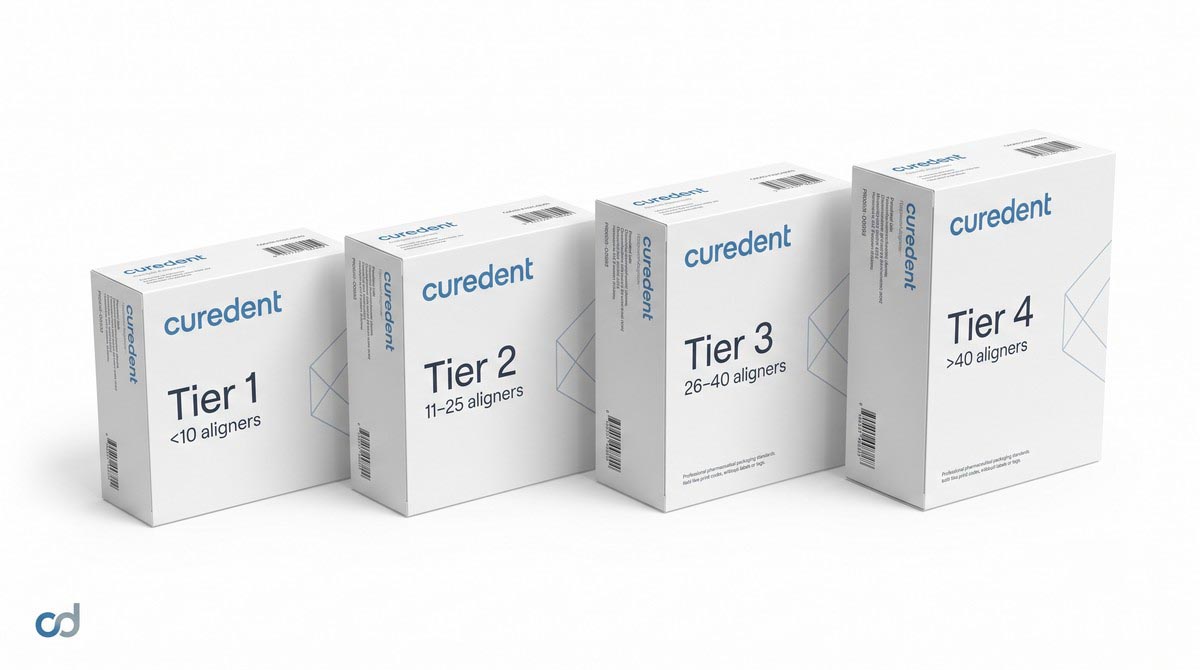
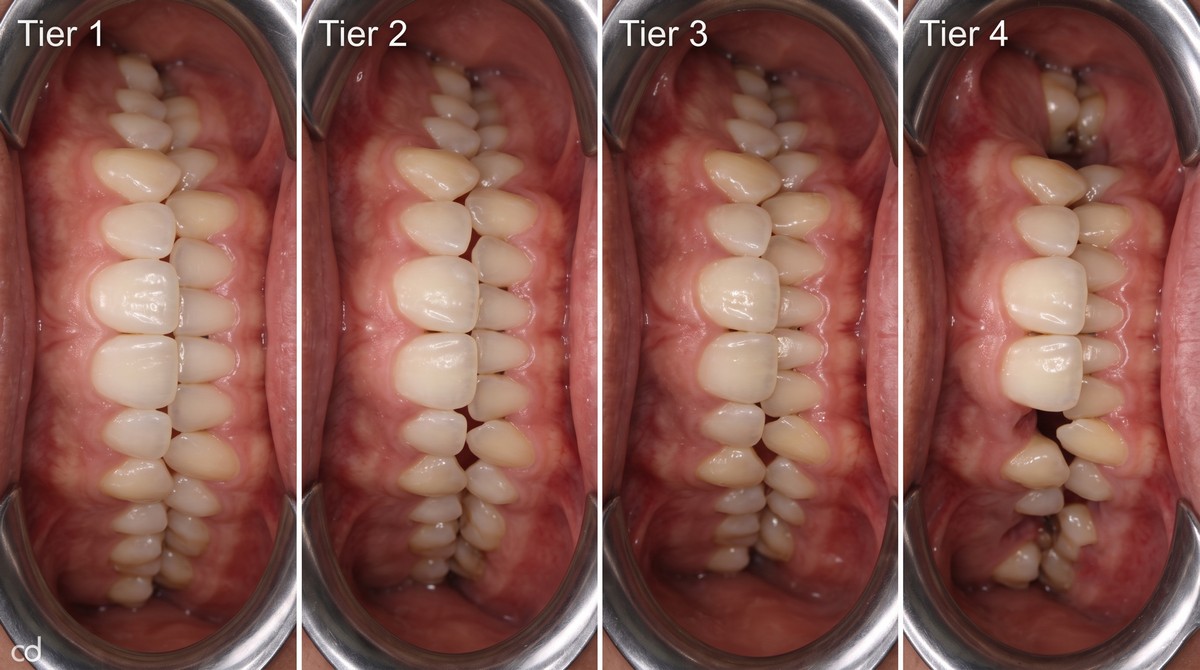
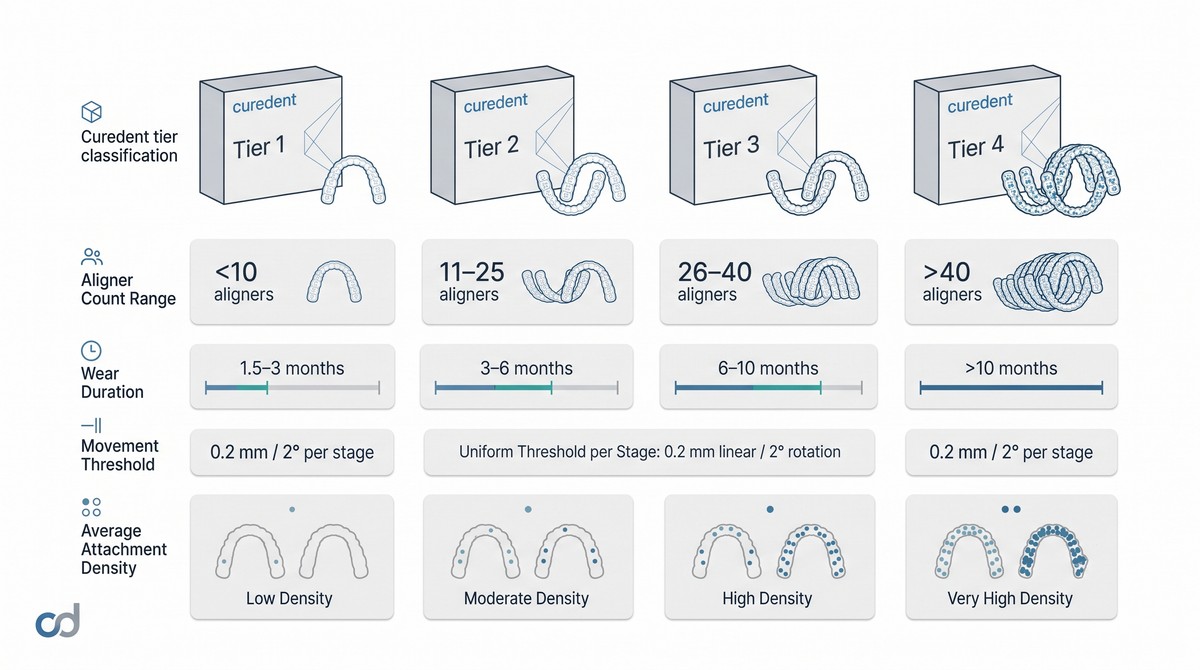
The Curedent Tiered Aligner Packages provide an engineered, stage-calibrated aligner delivery system categorizing clear aligner therapy into four progressive therapeutic volumes: Tier 1 (<10 aligners), Tier 2 (11–25 aligners), Tier 3 (26–40 aligners), and Tier 4 (>40 aligners). Developed for orthodontists and general dental practitioners integrating digital tooth movement into everyday practice, this tiered system aligns clinical case complexity with the precise tray volume required to achieve predictable tooth tracking.
A frequent clinical breakdown in aligner therapy stems from miscalculating the biological boundaries of tooth movement—either underestimating complex root control by forcing severe cases into short aligner series, or over-prescribing excessive tray volumes for minor relapse cases. An engineered clear aligner treatment plan must balance force magnitude, anchorage distribution, and movement velocity. Curedent eliminates staging discrepancies by pairing digital tooth setups directly with biomechanically calibrated aligner tiers.

Key Clinical Advantages
- Complexity-Calibrated Staging: Matches clinical malocclusion severity with mathematically verified tray counts, preventing biomechanical tracking failure.
- Optimized Anchorage Preservation: Incorporates multi-tooth anchor units to execute complex rotational, intrusion, and bodily translation vectors predictably.
- Engineered Polymer Construction: Delivers continuous, gentle orthodontic forces using advanced thermoplastic polyurethane sheets with superior stress-retention properties.
- Minimized Mid-Course Tracking Loss: Calibrates tooth displacement per stage to biological remodeling thresholds, significantly lowering refinement rates.
Section 2: Product Anatomy & Physical Construction
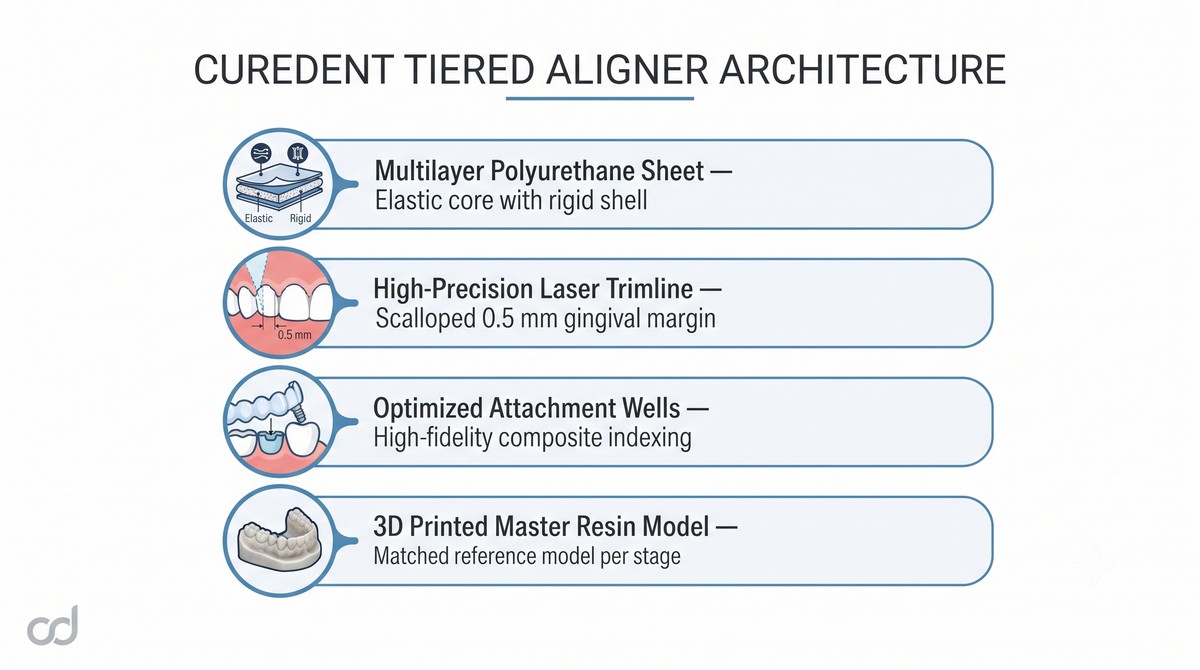
Medical-Grade Thermoplastic Polyurethane Sheets
Curedent clear aligners are thermoformed from premium multilayer thermoplastic polyurethane sheets engineered specifically for continuous orthodontic force application. The material features an elastomeric core encapsulated within durable outer shells. This composite geometry provides high initial flexibility for ease of patient insertion over composite attachments, paired with superior resistance to intraoral stress relaxation, tear propagation, and occlusal wear over standard 7- to 14-day wear cycles.
High-Resolution 3D Printed Dental Models
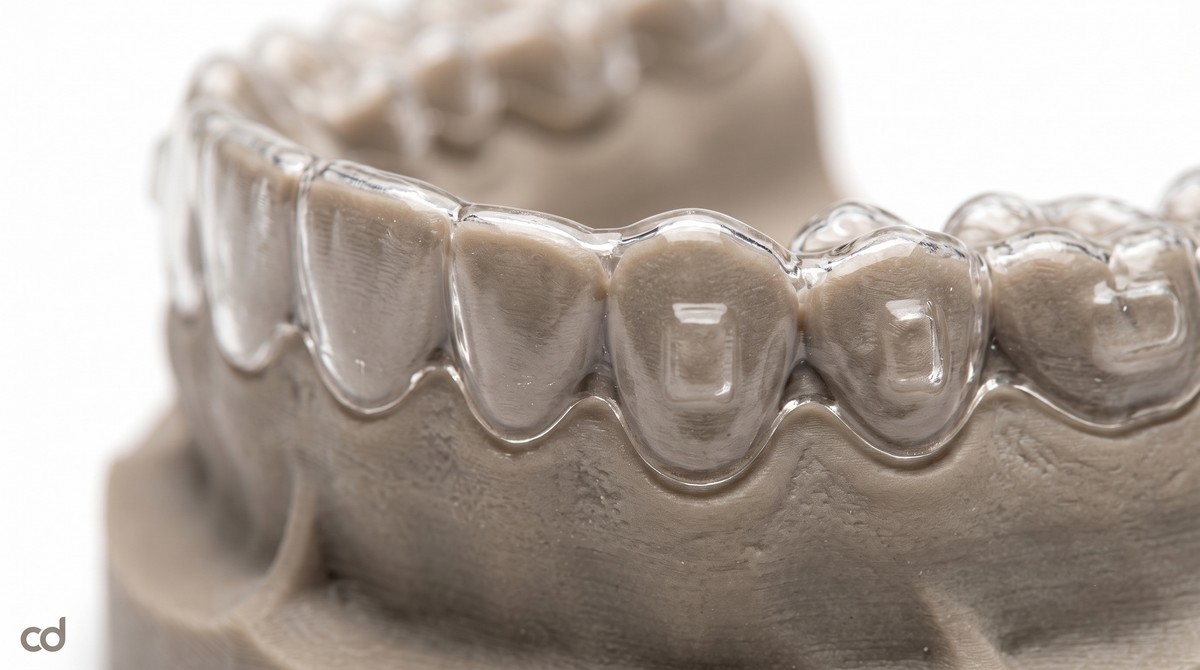
Every aligner is pressure-thermoformed over an individualized master model 3D-printed using high-definition stereolithography (SLA) or Digital Light Processing (DLP) systems. Printed in medical-grade model resin at ~50-micron layer resolution, these models replicate cervical margins, undercut line angles, and attachment geometries with micron-level accuracy. The physical models are archived or co-packaged based on clinical preference to support chairside seating validation.
Tier Architecture and Staging Sequence
The Curedent system categorizes manufacturing and staging across four distinct clinical tiers:
- Tier 1 (<10 Aligners): Formulated for limited movement objectives, single-arch cosmetic alignment, or post-orthodontic minor relapse.
- Tier 2 (11–25 Aligners): Engineered for moderate crowding, arch coordination, transverse expansion, and mild sagittal corrections.
- Tier 3 (26–40 Aligners): Structured for complex crowded arches, premolar space closures, deep bite leveling, and multi-plane rotations.
- Tier 4 (>40 Aligners): Built for comprehensive skeletal/dental discrepancies, severe bimaxillary protrusion, premolar extraction cases, and surgical-orthodontic coordination.
Engineered Movement Progression
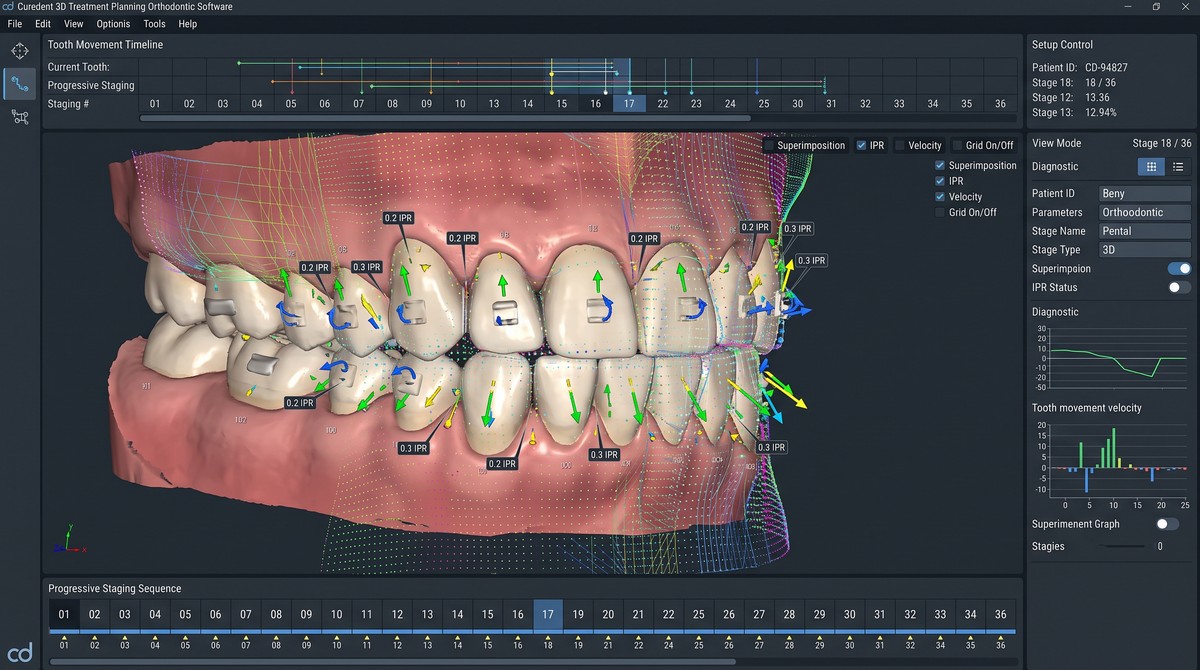
To avoid overloading the periodontal ligament (PDL) and causing hyalinization or root resorption, the aligners adhere to a strict SmartStage staging pattern. Instead of moving all teeth concurrently, movement vectors are segmented chronologically: anchor teeth remain stationary or undergo minor counter-tipping while target teeth receive precise tipping, torque, or rotational forces. Aligner trimlines are precisely laser-cut along a smooth scalloped margin 0.5 mm above the gingival crest to maximize retentive force and optimize clinical moment-to-force ratios.

Section 3: Indications & Clinical Applications
Clinical Tier Selection Matrix
Predictable clinical success depends on matching clinical presentations to the appropriate staging volume:

Mild to Severe Malocclusion Staging
Curedent provides systematic mild to severe malocclusion staging to help clinicians establish clear boundaries for case progression:
- Tier 1 (Minor Relapse & Fine Detailing): Corrects localized anterior discrepancies without altering posterior interdigitation. Ideal for post-retention relapse or pre-restorative anterior alignment before veneer preparation.
- Tier 2 (Moderate Malocclusion & Arch Development): Addresses moderate arch constrictions and crowding where symmetric transverse expansion and mild incisor proclination create necessary arch perimeter space.
- Tier 3 (Complex Multi-Plane Discrepancies): Treats significant anterior-posterior and vertical challenges, including severe deep bites requiring systematic incisor intrusion paired with premolar extrusion.
- Tier 4 (Comprehensive & Extraction Mechanics): Coordinates challenging tooth movements, including bodily translations across premolar extraction spaces, severe rotations, and high-angle vertical control.
Deep Bite Leveling and Overbite Correction
Achieving predictable overbite correction requires precise vertical control. Rather than attempting pure incisor intrusion—which often exhibits low clinical expression—Curedent digital treatment plans incorporate bite ramps on the palatal surfaces of maxillary incisors. These bite ramps disclude the posterior teeth, allowing the aligner to extrude premolars while simultaneously delivering targeted apical intrusion forces along the long axis of the lower anterior teeth.
Section 4: Clinical Workflow & Biomechanical Control
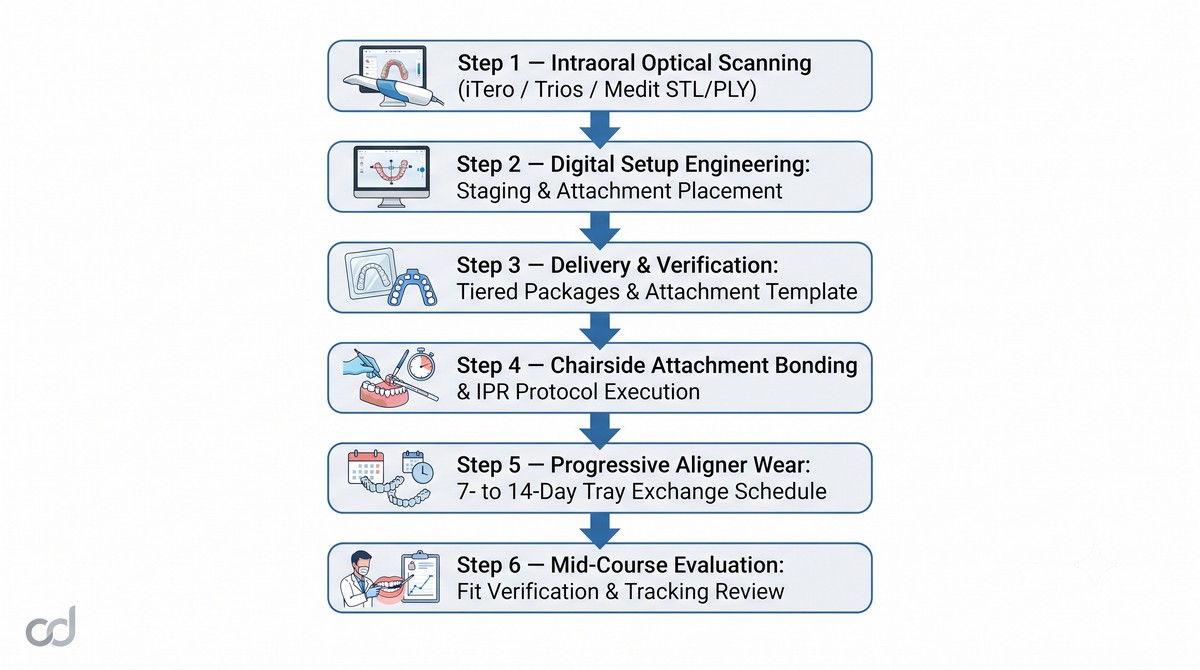
Step 1: Digital Impression Capture
Acquire high-resolution intraoral optical scans capturing the complete dental arches, terminal molars, and interocclusal records in maximum intercuspation. Verify that gingival margins and interproximal contact zones are cleanly rendered without scan stitching distortions.
Step 2: Digital Setup and Biomechanical Calibration
Upload scan files to the Curedent portal and designate the clinical objectives and targeted tier. Curedent digital planners construct the virtual diagnostic setup, establishing movement velocities, rotational caps, and anchorage setups tailored to the selected tier. The clinician reviews the web-based setup and approves the stage progression.
Step 3: Unboxing and Verification
The case arrives organized in clear, step-by-step packaging. Inspect the contents to confirm:
- Individual sterile-sealed aligner pouches labeled sequentially by tier and stage.
- 1x Precision attachment template (clear, flexible bonding template).
- 1x Comprehensive clinical protocol card outlining scheduled Interproximal Reduction (IPR) stages, attachment configurations, and wear intervals.
- Archival 3D printed reference models (where requested).
Step 4: Chairside Attachment Bonding and IPR Execution
- Polish enamel surfaces using non-fluoridated pumice, isolate the arch, and etch the designated attachment sites with 37% phosphoric acid.
- Apply bonding adhesive, load the attachment template wells with high-viscosity flowable composite, seat the template firmly, and light-cure completely.
- Remove the template and clear flash around composite buttons to ensure clean aligner seating.
- Execute scheduled interproximal reduction (IPR) using calibrated diamond strips or oscillating diamond discs, verifying reduction dimensions with mechanical thickness gauges.
Biomechanical Principles: Expansion, Tipping, and Space Closure
Achieving predictable outcomes requires an understanding of aligner biomechanics:
- Arch Expansion Mechanics: Transverse expansion is planned with buccal crown tipping compensated by palatal root torque to prevent buccal cortical bone fenestration. Arch expansion mechanics are staged at a maximum velocity of 0.20 mm per tray, moving posterior teeth in an alternating, wave-like sequence to prevent aligner slippage.
- Extraction Space Closure: Uncontrolled tipping during space closure can lead to crown tipping into the space with unparallel roots. To achieve true bodily translation during extraction space closure, Curedent designs incorporate optimized vertical rectangular attachments on teeth adjacent to the extraction site, paired with anti-tipping moments that maintain root uprighting.
- Anchorage Management Principles: Similar to the clinical objectives of the Invisalign G6/G6e anchorage engine, Curedent treatment setups employ multi-tooth anchorage blocks. Posterior segments are kept stationary or consolidated with passive aligner engagement to serve as rigid anchorage units while anterior retraction forces are applied.

Tracking Assessment and Attachment Maintenance
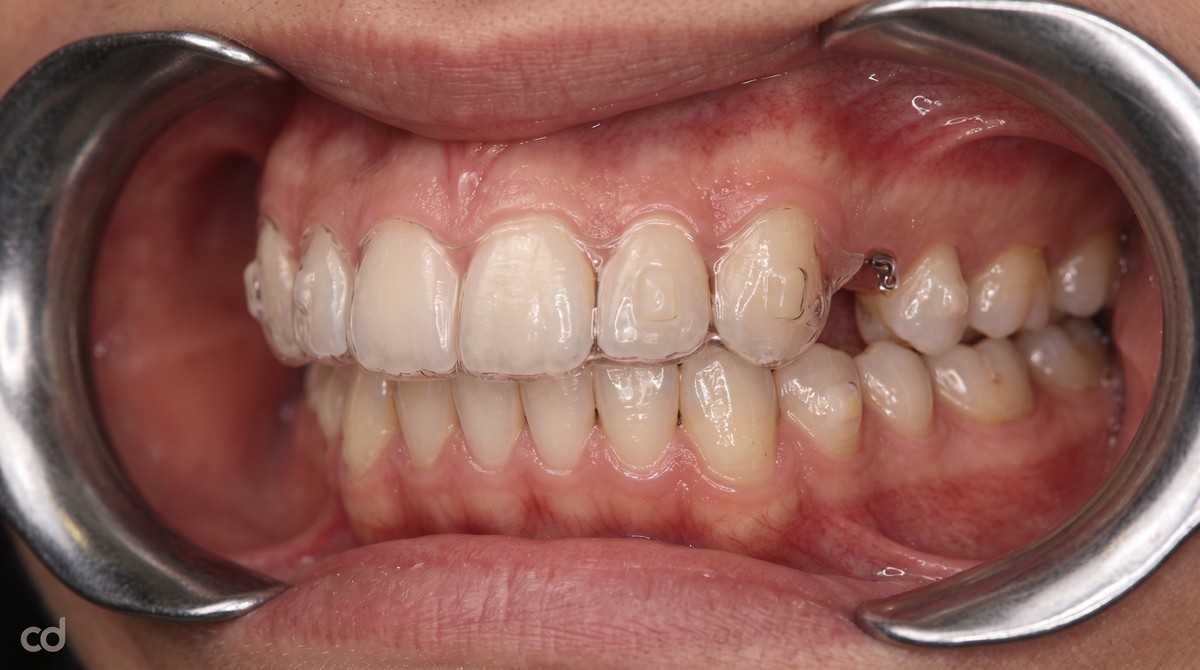
At each clinical review (typically every 6 to 8 weeks), inspect the aligner fit intraorally. Ensure the thermoplastic sheet sits flush against incisal edges without air gaps (>0.5 mm). Check that composite attachments remain intact, unchipped, and securely engaged within their corresponding aligner wells. If tracking lag is detected, prescribe aligner chewies and consider extending tray wear intervals from 7 to 14 days before advancing to the next stage.
Section 5: Technical Specifications & Staging Standards
Certified Staging Specifications
Curedent Tiered Aligner Packages are manufactured to precise orthodontic movement standards, ensuring predictable biological expression across all clinical stages.

| Parameter | Specification | Clinical Relevance |
| Material | Biocompatible thermoplastic polyurethane sheet | High elastic recovery; continuous force delivery |
| Aligner fabrication | Pressure thermoforming over 3D printed model | Ensures intimate fit and sharp attachment engagement |
| Model material | High-resolution 3D printed dental resin | Captures micron-level anatomical tooth detail |
| Tier 1 | < 10 aligners (mild cases) | Targeted minor tooth alignment and relapse correction |
| Tier 2 | 11–25 aligners (moderate cases) | Arch expansion and moderate rotation correction |
| Tier 3 | 26–40 aligners (complex cases) | Premolar space closure, deep bite leveling, root torque |
| Tier 4 | > 40 aligners (severe cases) | Comprehensive extraction cases and skeletal corrections |
| Staging pattern | SmartStage staged movement | Prevents PDL hyalinization; manages anchorage load |
| Attachment system | Case-dependent, digitally planned | Delivers optimized moments for complex movements |
| Digital workflow | Fully digital from scan to aligner delivery | Seamless integration with modern intraoral scanners |
Movement Velocity and Staging Thresholds
The Curedent digital orthodontic workflow operates within conservative biological movement limits per aligner stage:

- Linear Translation Limits: Maximum tooth translation is calibrated to 0.15–0.20 mm per stage, respecting the biological remodeling rate of the alveolar bone.
- Rotational Caps: Canines and premolars are limited to 1.5-2.0 of axial rotation per stage to prevent aligner slipping.
- Attachment Fit Tolerances: Attachment well depths match composite button dimensions within a 15–30 micron tolerance, ensuring positive force transfer without seating interference.
Section 6: Clinical Benefits & Practice Impact

Patient-Level Clinical Benefits
- Comfortable, Gradual Force Application: Multi-layer polyurethane sheets deliver gentle, sustained physiological forces, significantly reducing post-insertion soreness compared to rigid single-layer plastics.
- High Optical Clarity and Stain Resistance: Advanced polyurethane resists intraoral staining and micro-cracking, preserving an aesthetic, virtually invisible appearance throughout the wear cycle.
- Predictable Treatment Timelines: Complexity-matched staging minimizes unexpected tracking stalls, helping patients complete their treatment on schedule.
Practice-Level Operational Advantages
- Streamlined Practice Workflow: Clear tier classifications allow clinicians to evaluate clinical complexity immediately, match treatment plans to appropriate fee structures, and prevent case scope creep.
- Reduced Refinement Rates: Respecting biological movement limits and incorporating verified anchorage principles lowers mid-course tracking failure rates and minimizes unbilled refinement phases.
- Standardized Team Execution: Structured digital treatment plans and clear IPR/attachment protocol cards streamline chairside delivery, allowing clinical teams to manage appointments with high consistency.
- High Workflow Cost-Efficiency: Standardized tiers eliminate the need to purchase open-ended, expensive unlimited aligner licenses for mild-to-moderate cases, optimizing inventory and operational margins.
The Modern Standard for Aligner Therapy
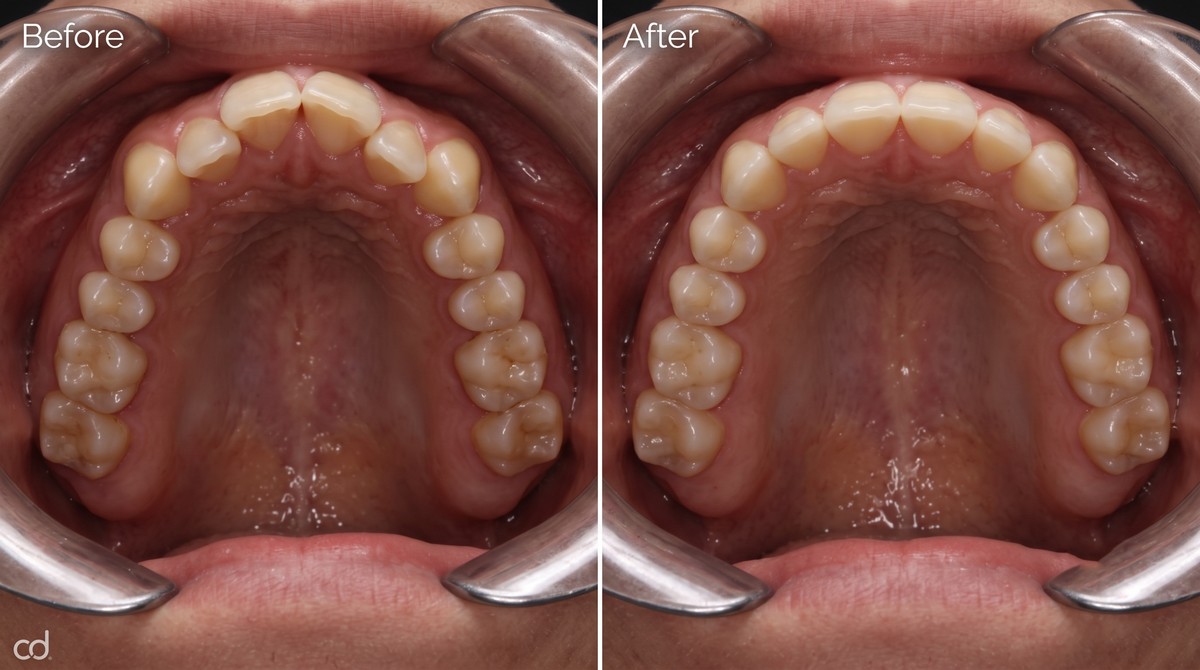
Clear aligner therapy is no longer an all-or-nothing clinical proposition. Treating every malocclusion with a uniform aligner strategy frequently leads to clinical inefficiencies. Curedent’s tiered approach bridges the gap between digital diagnostics and biological tooth movement. By categorizing cases into calibrated staging packages, practices can treat everything from minor anterior relapse to complex multi-plane malocclusions with clinical and operational confidence.
Section 7: Ordering, FAQ & Call to Action
Simple Three-Step Ordering Workflow
Submitting and managing tiered aligner cases through the Curedent digital portal follows a clear, efficient sequence:
[Step 1: Upload Scans & Rx] ──► [Step 2: Setup Review] ──► [Step 3: Tray Delivery]
Intraoral STL/PLY Datasets Interactive Web Viewer Sterile Tiered Aligner Kit
- Upload Case Records: Access the Curedent portal and upload the patient’s optical intraoral scans (upper, lower, and bite registration in STL or PLY format) along with facial and intraoral photographic series. Select your target tier based on clinical objectives.
- Review Digital Plan: Curedent digital setup engineers segment the dental models, design the staging sequence, place optimized attachments, and post the 3D plan to the interactive web viewer. Review the movement trajectory, request modifications if desired, and confirm approval.
- Receive Aligner Package: Curedent prints the master models at 50-micron resolution, pressure-thermoforms the aligner series, precision-trims the margins, packages the trays in sterile pouches, and ships the complete tier kit directly to your office.
Standard Shipment Package Contents:


Frequently Asked Questions
How do I choose the correct tier for my patient?
Evaluate the case’s primary movement goals and malocclusion severity. Minor alignment and post-orthodontic relapse fit Tier 1 (<10 aligners); moderate crowding and arch expansion fit Tier 2 (11–25 aligners); deep bite leveling and premolar rotations fit Tier 3 (26–40 aligners); and severe crowding or extraction cases require Tier 4 (>40 aligners). If you are uncertain, Curedent digital planners will recommend the appropriate tier following initial setup analysis.
Can I upgrade a case to a higher tier if mid-treatment needs change?
Yes. If complex anatomical factors require additional aligners beyond the original tier allotment, you can submit an intraoral rescan and upgrade to the next tier through the portal.
What intraoral scanner file formats does Curedent accept?
The Curedent portal accepts open-format STL and PLY surface scan files from all major intraoral scanner systems, including iTero, 3Shape TRIOS, Medit, Carestream, and Dentsply Sirona.
Are attachment bonding templates included with every tier?
Yes. Every tiered case that includes planned composite attachments ships with a dedicated, flexible attachment bonding template designed for fast, accurate chairside placement.
What corrective steps should be taken if an aligner begins to lose tracking?
First, verify that all composite attachments are intact and unchipped. Instruct the patient to use silicone chewies for 10–15 minutes daily to fully engage the tray. If an incisal gap (>0.5 mm) persists, extend wear of the current tray by an additional 7–10 days before evaluating whether an intraoral rescan and setup adjustment are needed.
Suggested Clinical Solutions
- Ensure long-term post-treatment stability with Curedent Clear Retainers.
- Relieve acute temporomandibular joint tension during or after aligner therapy with the Curedent Occlusal Splint.
- Protect aligner setups from severe bruxism damage with Curedent Night Guards.


