
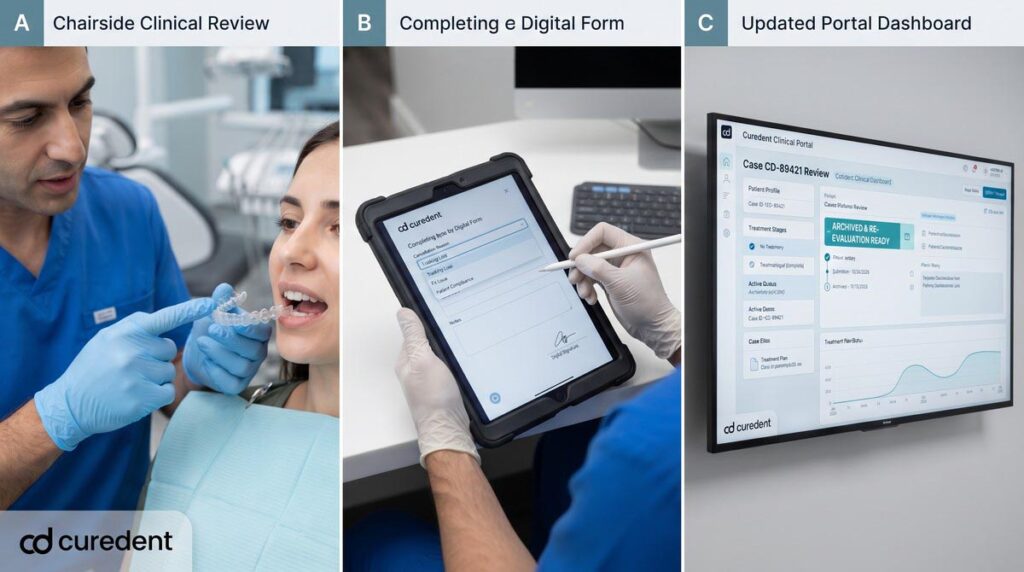
Section 1: Service Introduction & Clinical Purpose
The Curedent Cancel Orthodontic Treatment Plan service is an administrative and digital case management protocol designed to transition active clear aligner cases out of active production and into a secure, re-evaluation-ready status. Tailored for orthodontists, general dentists offering aligner therapy, and practice clinical coordinators, this service establishes a structured mechanism to halt aligner sequencing when clinical reality diverges from the initial virtual setup.
Clinical trajectories during clear aligner therapy are subject to biological variation, unpredictable cellular turnover, and patient lifestyle shifts. Continuing to manufacture and seat trays according to an obsolete digital model introduces cumulative force errors, periodontal risks, and patient frustration. Executing a timely treatment plan cancellation allows the dental team to regain diagnostic control, freeze active lab queues, preserve captured records, and prepare an alternative therapeutic path without losing case continuity.
Core Clinical & Operational Advantages
- Immediate Manufacturing Interruption: Halts laboratory production instantly to prevent the fabrication of clinically obsolete aligner stages.
- Comprehensive Record Archiving: Preserves all baseline diagnostic scans, intermediate setups, and clinical notes within a secure digital repository.
- Streamlined Case Re-Evaluation: Establishes a clean baseline for mid-course adjustments, secondary impressions, or comprehensive therapy overhauls.
- Traceable Clinical Governance: Generates an unalterable audit log that documents the clinical justification and timeline for treatment modification.
Section 2: Service Scope & Physical Workflow
Triggers for Case Cancellation
A cancellation request is initiated whenever clinical assessment indicates that the existing aligner setup no longer serves the patient’s biological or functional interests. Common triggers fall into three defined categories:
- Clinician-Identified Biological Ceilings: Progressive marginal bone loss, unanticipated apical blunting, or non-responsive ankylosed teeth that invalidate planned force vectors.
- Diagnostic & Biomechanical Deviations: Loss of tracking across multi-plane movements that cannot be recovered through attachment replacement or auxiliary seating aids.
- Patient-Driven Circumstances: Acute systemic illness, sudden geographic relocation, unexpected pregnancy, or persistent wear non-compliance requiring an indefinite clinical hold.
Technical Lockdown and Lab Protocol
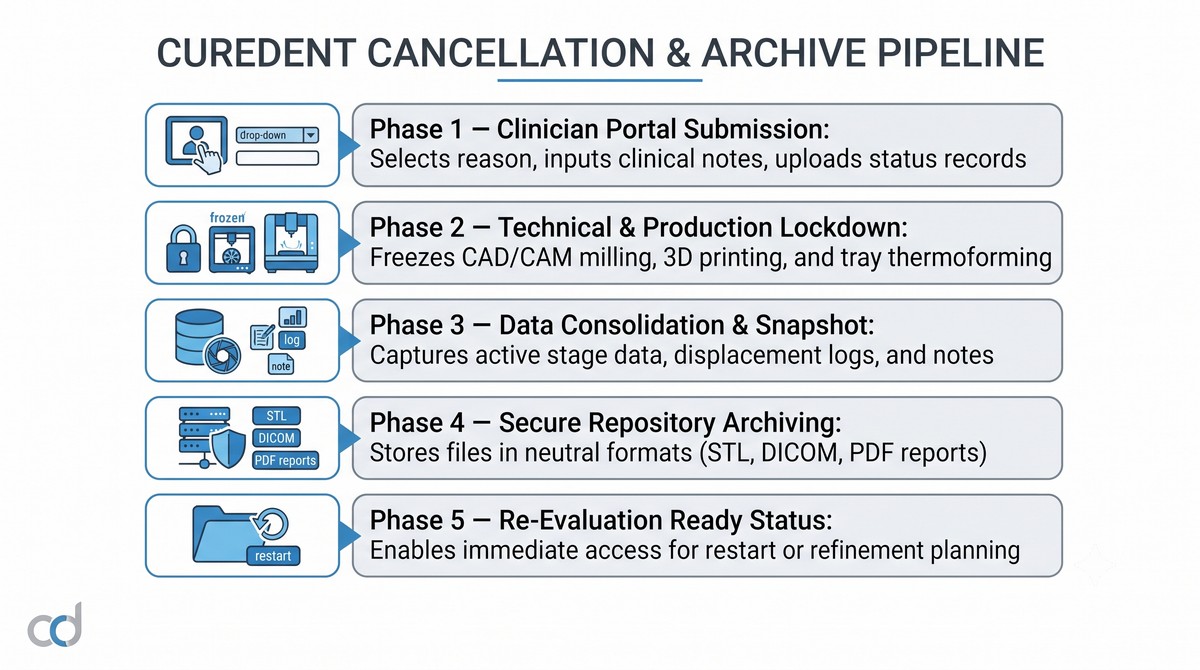
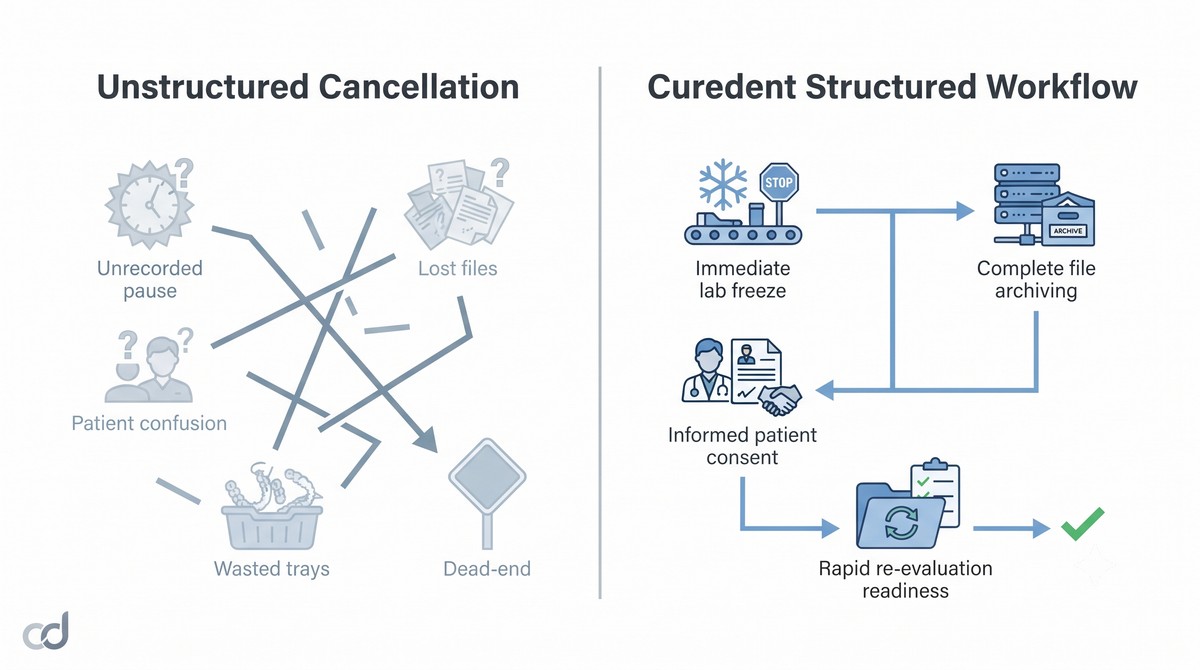
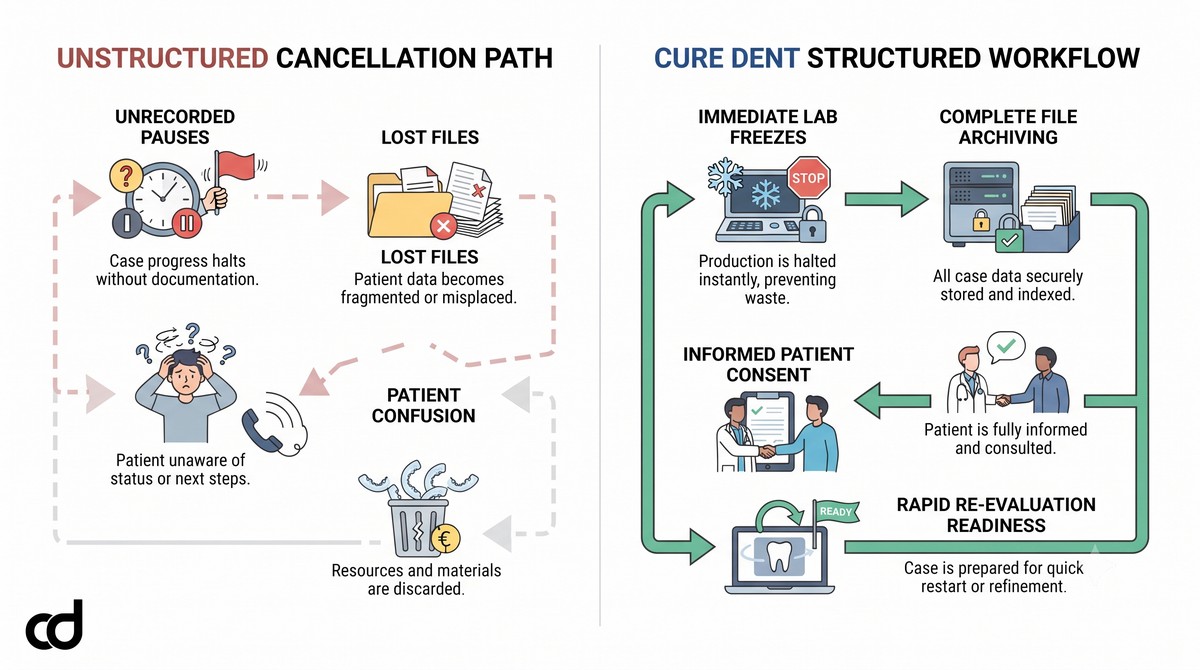
Upon receiving a cancellation notice through the case portal, Curedent’s digital engineering team initiates an automated production lock. If subsequent aligner batches are queued in CAD slicing, additive model printing, or pressure-thermoforming lines, the manufacturing queue is terminated immediately. This prevents the shipment of unviable appliances and clears the patient’s clinical file of conflicting active instructions.
Documentation and Status Confirmation
Once the case is locked, the treating practitioner receives an official digital confirmation summary detailing:
- The exact aligner stage at which active manufacturing ceased.
- A timestamped snapshot of cumulative linear and angular tooth movements achieved up to the cancellation point.
- Confirmation that the file is cataloged and pre-configured for future diagnostic modification, whether the upcoming step involves a refined aligner series, auxiliary mechanics, or bracket-based detailing.
Data Preservation Mechanics
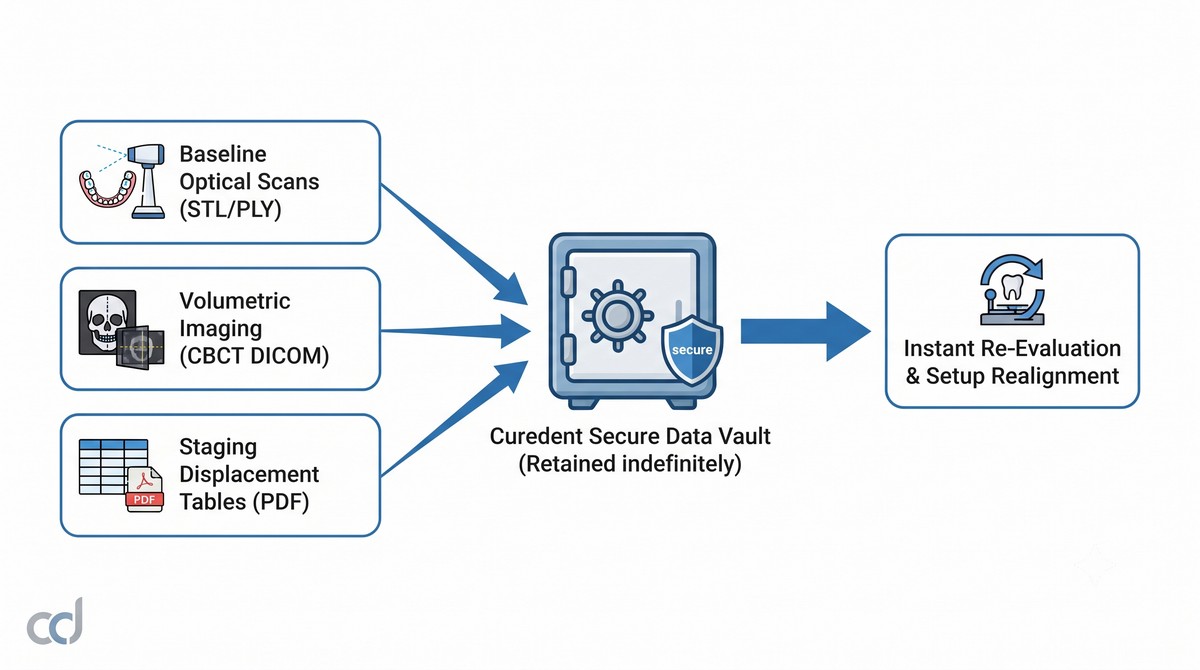
Cancelling an active plan does not purge the digital asset trail. Curedent’s digital infrastructure isolates the case geometry, preserving original pretreatment raw optical meshes, segmentation models, coordinate systems, and progressive staging steps. These files are stored in cold, encrypted digital archives, ensuring that historical movement vectors remain referenceable whenever the patient returns for restorative work or secondary alignment.
Section 3: Clinical Scenarios Requiring Cancellation
Biological Indicators and Pathology
Clear aligner biomechanics rely on predictable bone remodeling within the periodontal ligament (PDL). When biological limits are breached, forcing teeth along a pre-programmed track can lead to permanent tissue damage.
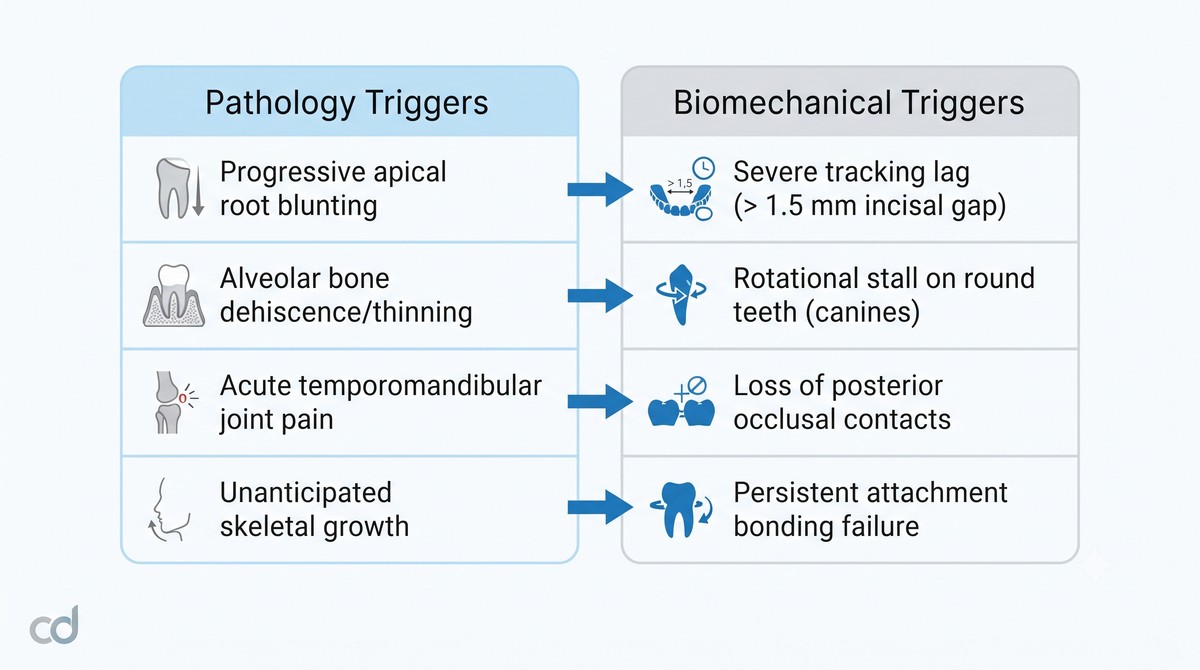
- Severe or Progressive Root Resorption: Routine mid-treatment periapical radiographs occasionally reveal unanticipated apical shortening, particularly on maxillary incisors subjected to extensive intrusion or torque. Halting treatment immediately eliminates further mechanical load, allowing the periapical tissues to stabilize.
- Periodontal Breakdown and Fenestration: Patients with thin gingival biotypes may exhibit acute marginal recession or cortical plate dehiscence during arch expansion. Immediate cancellation halts outward expansion before irreversible bony defects occur.
- Unresponsive Ankylosis: A tooth that fails to move despite proper attachment engagement and adequate space may be partially ankylosed. Continued tray progression applies reactionary reciprocal forces to adjacent anchor teeth, distorting the entire arch.
Biomechanical Breakdown and Irrecoverable Tracking Loss
While minor tracking issues (<0.5 mm) can often be corrected using auxiliary chewies or extended wear schedules, severe tracking failures require a formal halt:
- Incisal Margin Gapping Exceeding 1.5 mm: When teeth lag behind their virtual steps, the plastic can no longer engage the planned bevels of composite attachments. Continuing through successive trays delivers erratic, uncontrolled tipping moments.
- Unplanned Posterior Open Bite Development: Heavy aligner coverage on posterior teeth can induce unintended bite depression or muscular intrusion. When posterior contacts are lost while anterior teeth prematurely contact, the entire occlusal scheme must be stopped and redesigned.
- Severe Rotational Stall: Round teeth such as mandibular premolars and maxillary canines frequently slip inside aligner pockets during derotation attempts exceeding 30, causing the appliance to lift away from adjacent margins.
Patient-Driven and Lifestyle Variables
Patient cooperation remains an unpredictable factor in removable orthodontic therapy. Significant life disruptions—such as extended travel, hospitalization, or financial hardship—may prevent the patient from attending regular reviews. Acknowledging these barriers early through a structured case re-evaluation prevents the patient from wearing worn, ill-fitting trays at home without clinical supervision.
Section 4: Clinical & Administrative Protocol
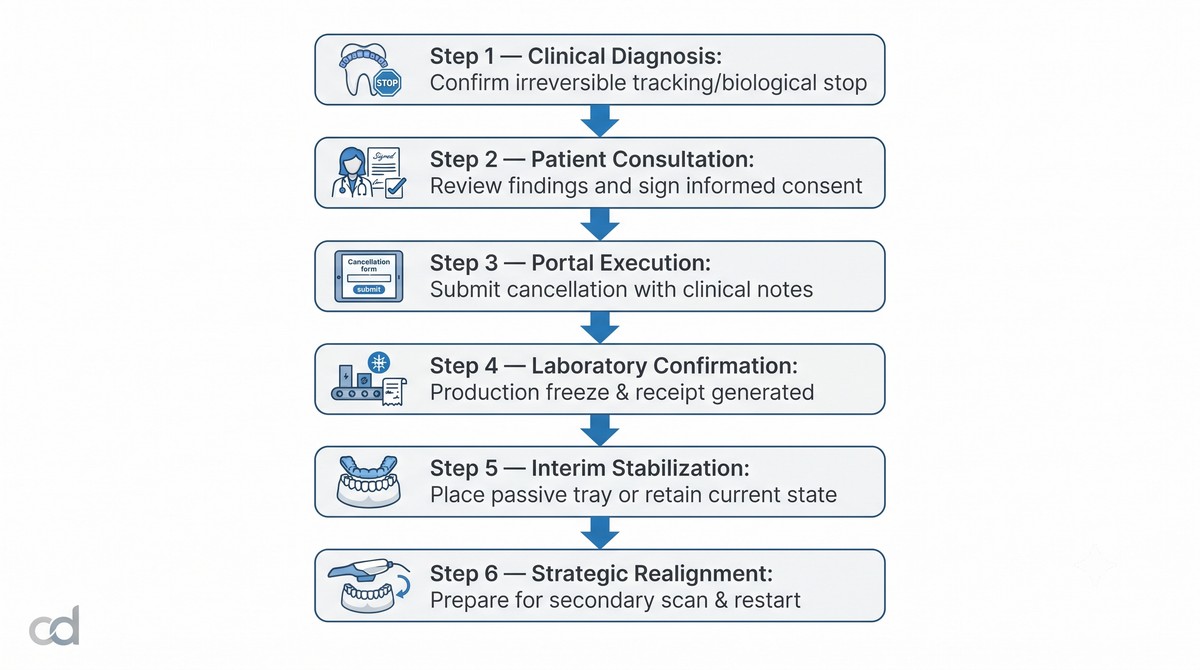
Step 1: Clinical Chairside Assessment
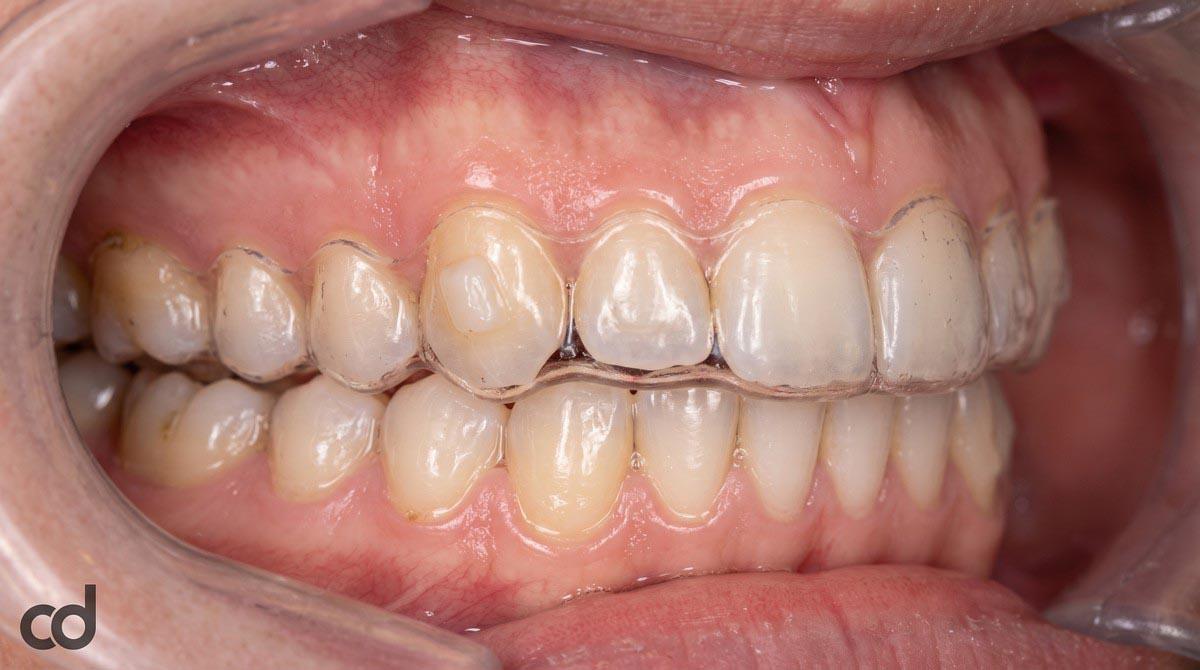
During regular recall, thoroughly examine tracking, periodontal health, and occlusal contacts. If tracking loss exceeds conservative recovery measures or pathology is detected, advise the patient that the active series should be paused.
Step 2: Patient Communication & Informed Consent
Explain the clinical rationale for stopping the current aligner series. Document that continuing with the existing trays could compromise root health, bone support, or the final aesthetic outcome. Obtain written informed consent acknowledging that the current plan is concluded and outlining the anticipated next steps (observation, retention, or re-scanning).
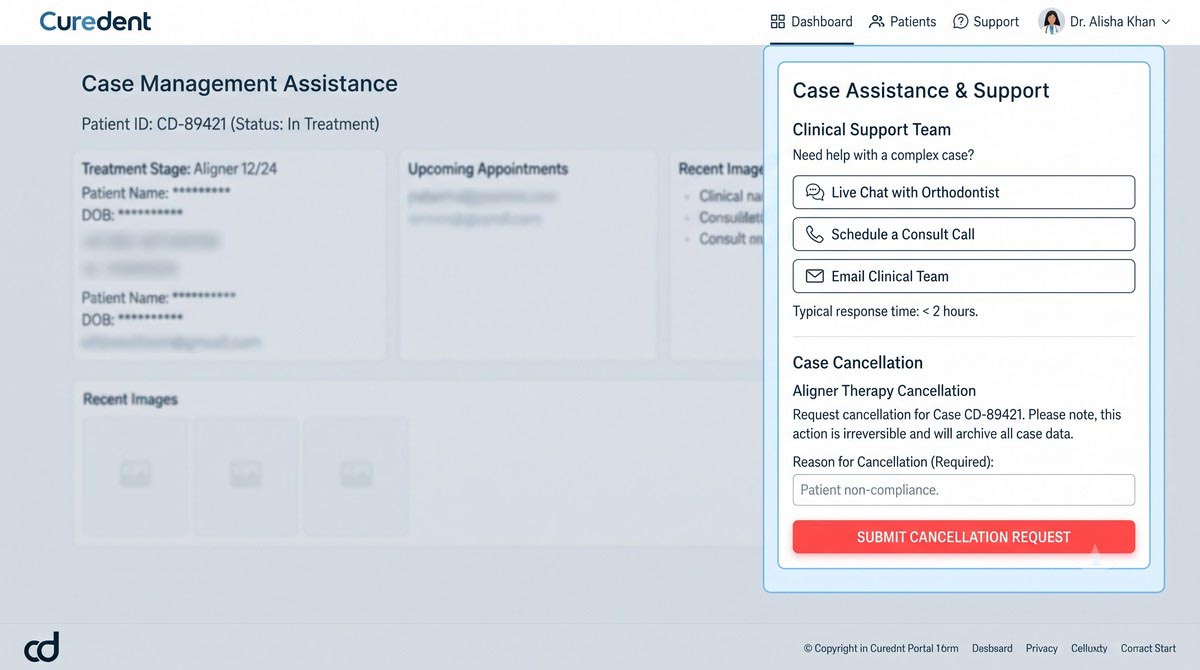
Step 3: Submitting the Request via Curedent Portal
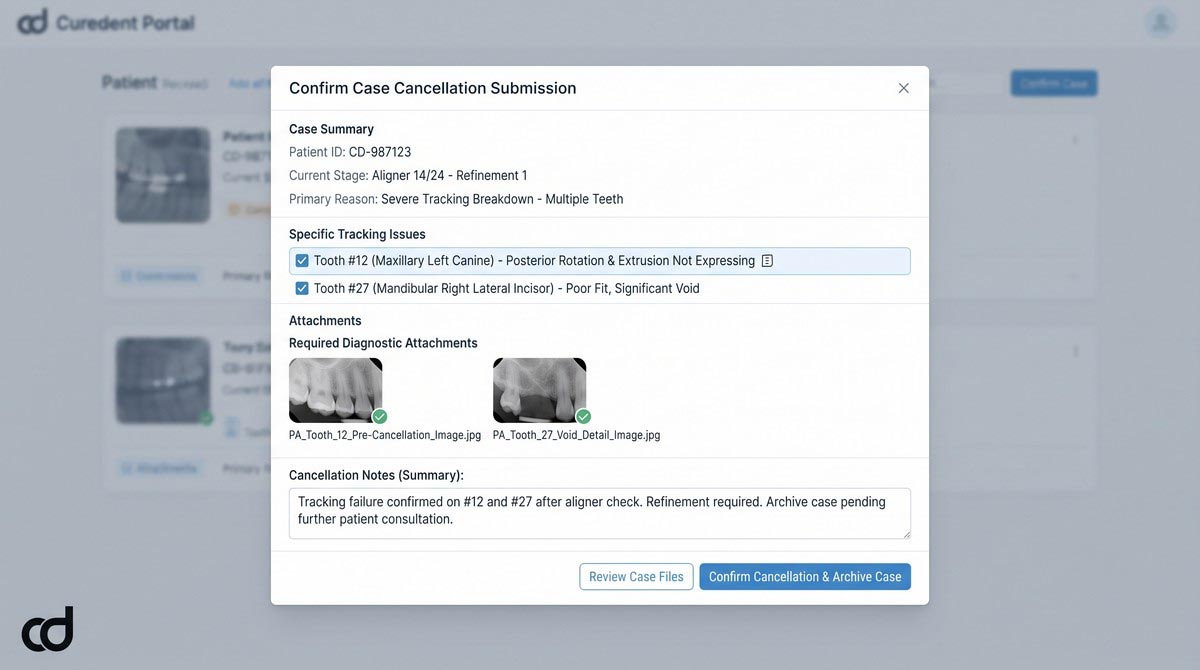
Log in to the Curedent doctor portal, navigate to the patient’s active case file, and select the cancellation option. Complete the guided form:
- Identify the primary clinical reason (e.g., biological change, tracking failure, patient request).
- Record the final aligner stage safely completed by the patient.
- Attach current progress photos and any relevant diagnostic radiographs.
- Input specific clinical notes regarding tooth positions that require stabilization.
Step 4: Laboratory Confirmation and Queue Freeze
Curedent’s digital team reviews the submission, verifies that no further aligners will be printed or shipped, updates the dashboard status to “Cancelled – Archived”, and issues an administrative confirmation receipt for practice records.
Step 5: Implementing Clinical Protocol Adjustment
Chairside management transitions from active movement to stabilization through a defined clinical protocol adjustment:
- Remove active composite attachments if the patient will be taking a therapeutic rest period, preventing plaque accumulation around non-functional buttons.
- If tooth positions must be maintained while awaiting a new diagnostic setup, instruct the patient to wear their last well-fitting aligner as a passive retainer exclusively at night, or fabricate an in-office vacuum-formed clear retainer.
- For periodontal or endodontic concerns, initiate appropriate therapy and establish a 3- to 6-month observation period before introducing new orthodontic forces.
Step 6: Case Repositioning or Alternative Planning
Once the oral environment is stable, the practitioner can initiate a fresh diagnostic workflow: upload a new optical intraoral scan, define revised clinical objectives, and initiate a secondary setup calibrated to the patient’s current dental coordinates.
Documentation Integrity and Legal Traceability
Maintaining detailed documentation during treatment alterations is essential for professional practice risk management. Recording the precise clinical factors, radiographic findings, and patient communications that prompted the cancellation creates an objective paper trail. This clear record protects the practice from disputes over extended treatment times and demonstrates that clinical decisions prioritized patient biological safety over rigid treatment timelines.

Section 5: Digital File Management & Data Integrity
Digital Asset Preservation Architecture
When a treatment plan is cancelled, preserving the patient’s digital record history is critical. Curedent maintains all project assets within an indexed, accessible file structure rather than deleting discontinued designs.
| Item | Detail |
| Cancellation request channel | Curedent case management portal |
| Clinical documentation required | Reason for cancellation, clinical notes, attachments |
| Data archived | Scan files, staging files, case reports |
| Archived file formats | STL, DICOM, PDF case report |
| Re-evaluation readiness | Case data preserved for future restart or new plan |
| Patient communication | Documented by treating clinician |
| Confirmation turnaround | Case status updated and confirmed via portal |
| Traceability | Full audit trail maintained per case |
Data Formats and Open-Architecture Integration
All retained case components are cataloged using open, non-proprietary standards, ensuring the practice maintains full ownership of its diagnostic records:
- Optical Surface Models (STL / PLY): Baseline, intermediate, and progress surface meshes showing enamel geometry, gingival contours, and attachment footprints.
- Volumetric Radiography (DICOM): Co-registered CBCT datasets illustrating root axes and alveolar bone levels relative to planned movements.
- Diagnostic Summaries (PDF): The original staging sequence report, including planned IPR distributions, attachment configurations, and stage-by-stage tooth displacement tables.
Preserving Digital Workflow Flexibility
Retaining access to past project milestones provides valuable digital workflow flexibility. When building a revised setup, Curedent planners reference historical tracking vectors alongside the patient’s new intraoral scan. This allows engineers to identify which movements were biologically resistant—such as slow canine rotation or difficult premolar extrusion—and apply different attachment configurations, altered staging patterns, or slower movement rates in the new plan.


Section 6: Clinical Benefits & Practice Impact
Patient-Level Clinical Benefits
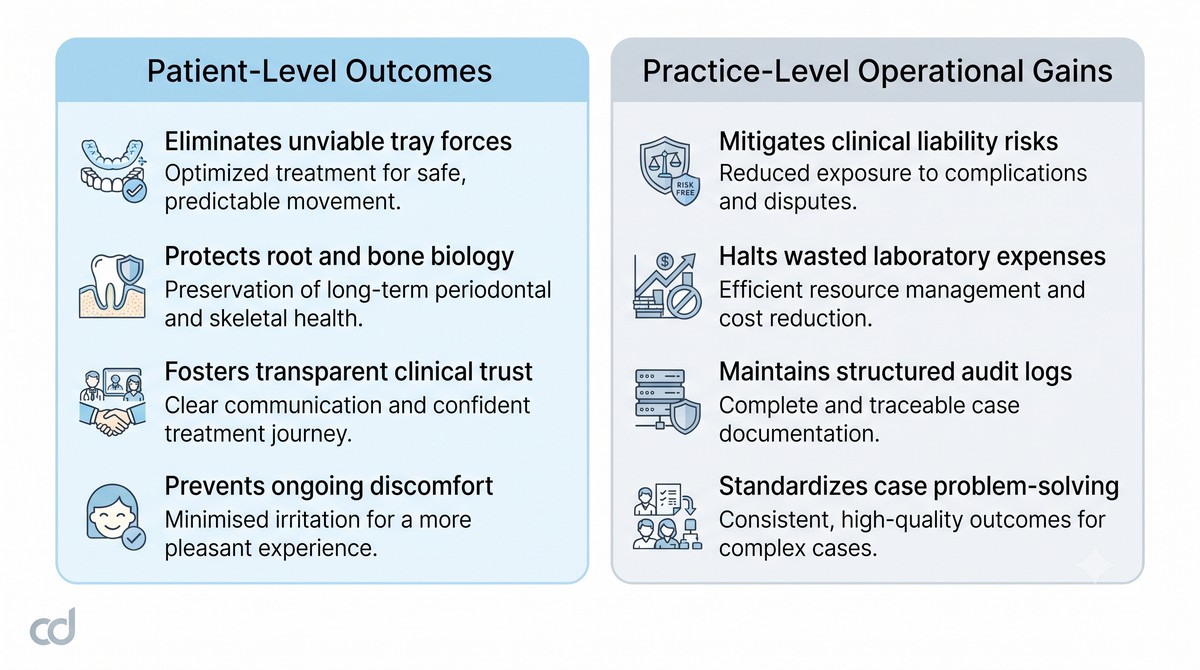
- Biological Health Preservation: Halting an unviable aligner series prevents prolonged stress on compromised periodontal tissues, protecting against root shortening and alveolar dehiscence.
- Protection from Chronic Discomfort: Wearing ill-fitting trays that have lost tracking creates painful, conflicting pressure points without advancing tooth alignment.
- Transparent Professional Relationship: Patients appreciate a clinician who proactively identifies when a plan is off track and pauses treatment to re-evaluate, reinforcing confidence in the doctor’s clinical integrity.
Practice-Level Operational Advantages
- Effective Risk Management in Orthodontics: Implementing a documented, systematic cancellation protocol serves as a key pillar of risk management in orthodontics. It replaces informal, unrecorded pauses with an objective, auditable clinical record that clarifies why active therapy was altered.
- Operational Overhead Control: Promptly cancelling an unviable case halts automated lab manufacturing queues, preventing overhead loss associated with producing aligner trays the patient will never wear.
- Organized Practice Workflows: Standardizing how cancellations are handled gives clinical assistants, treatment coordinators, and front-office teams clear operating guidelines, eliminating confusion over which cases are active versus on hold.
- Predictable Therapeutic Detours: Rather than attempting ad-hoc adjustments with ill-fitting trays, the practice follows a clear, repeatable roadmap: pause, stabilize, re-evaluate, and re-scan.
Structured Case Management as a Quality Standard
Pausing or cancelling an orthodontic plan is not a clinical setback; it is an expected checkpoint in personalized healthcare. Biological systems do not always adhere to computerized algorithms. Recognizing when a physical response diverges from a digital setup—and having the infrastructure to halt, evaluate, and adjust—is the hallmark of modern, patient-centered orthodontic care.
Section 7: Requesting a Cancellation, FAQ & Call to Action
Simple Three-Step Submission Process
Executing a treatment plan cancellation through the Curedent portal takes only a few minutes:
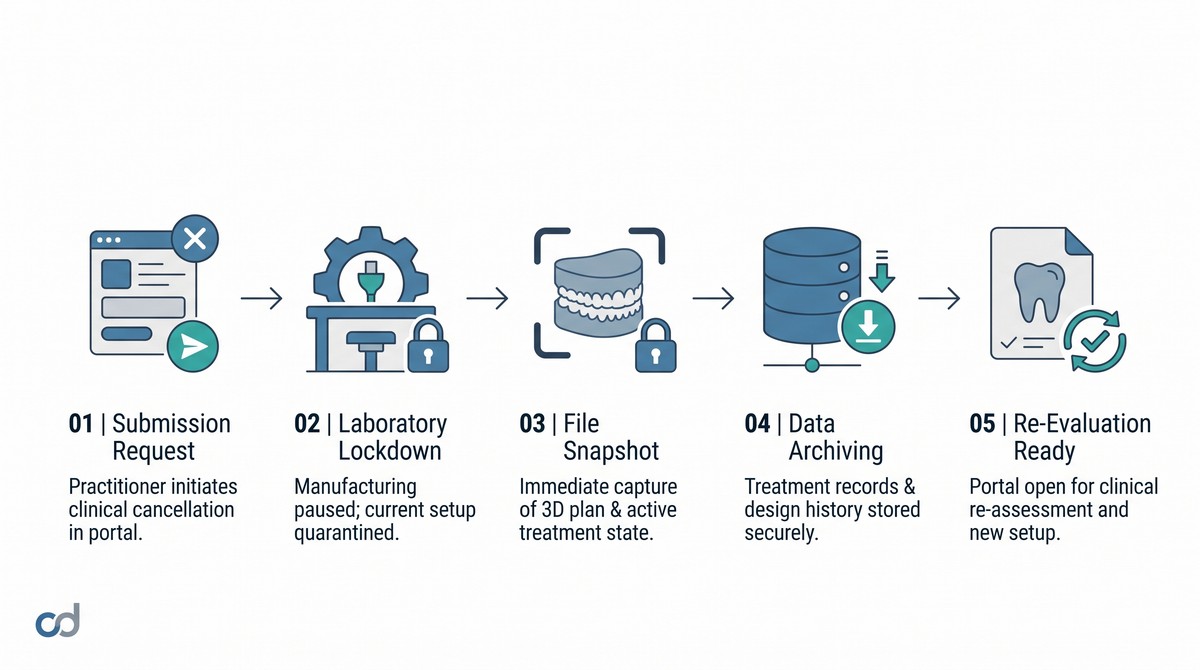
[Step 1: Locate Case File] ──► [Step 2: Input Notes & Photos] ──► [Step 3: Receive Audit Receipt]
Doctor Portal Dashboard Record Clinical Justification Production Frozen & Archived
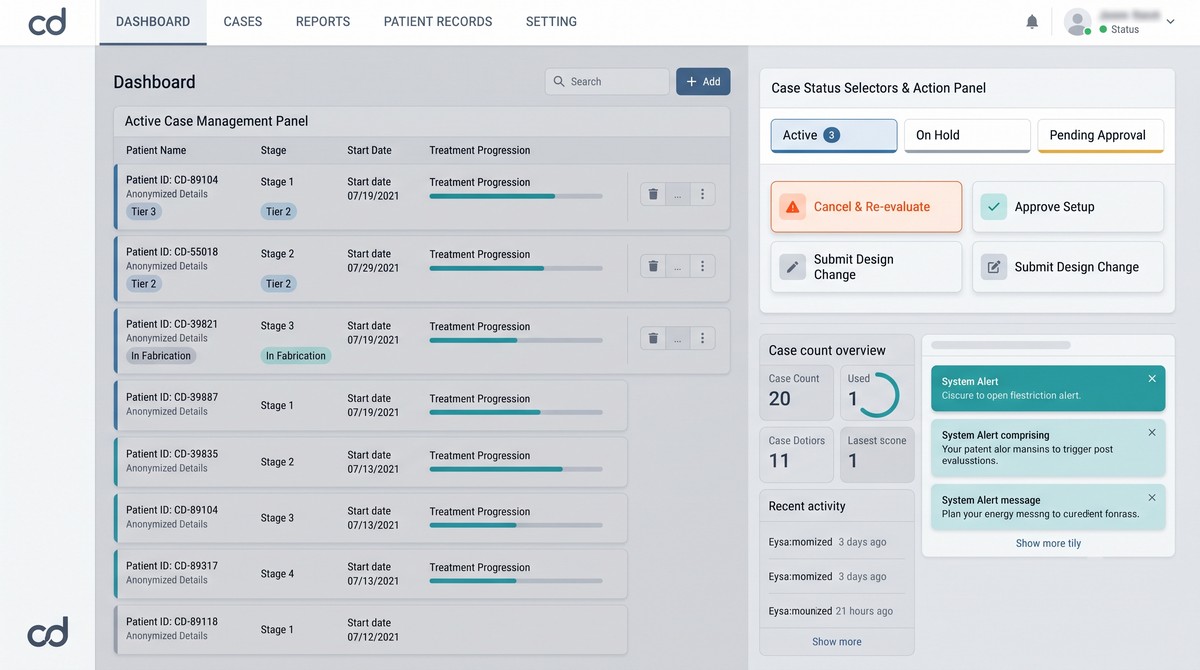
- Locate the Patient Profile: Open the Curedent case portal, locate the patient’s record in your active cases dashboard, and click “Case Options” followed by “Cancel & Re-evaluate”.
- Submit Diagnostic Notes: Complete the cancellation form by selecting the primary clinical trigger, noting the final aligner stage worn, and attaching any relevant progress photos or radiographs.
- Receive Status Confirmation: Curedent’s digital team processes the freeze within standard administrative queues, updates your portal dashboard to “Archived”, and delivers an official audit summary to your practice inbox.
Post-Cancellation File Deliverables:

Frequently Asked Questions
Can I restart the orthodontic plan later using the original diagnostic records?
Yes. All original STL scans, DICOM volumes, and intermediate setups remain preserved within your secure Curedent portal archive. However, because minor tooth settling or relapse typically occurs during treatment pauses, capturing a fresh optical intraoral scan is clinically recommended prior to manufacturing new aligners.
Do I need to take a new scan immediately when submitting a cancellation?
No. The cancellation request serves to freeze active lab production and document the reason for the pause. You can capture a new intraoral scan immediately, or wait until soft-tissue, endodontic, or lifestyle factors have fully stabilized.
How long are archived case files retained in the Curedent system?
Archived files—including raw intraoral meshes, segmented tooth models, and staging history—are maintained in our secure digital repository indefinitely, ensuring you have long-term access for clinical reviews or medical-legal documentation.
Will my patient receive an automated notification from Curedent when the plan is cancelled?
No. Curedent operates strictly as your digital laboratory and engineering partner. All patient communications, informed consent discussions, and treatment timeline updates remain entirely under the direct management of your clinical practice.
Can I cancel only the mandibular arch while continuing active aligners on the maxillary arch?
Yes. Curedent supports single-arch treatment modifications. You can request a cancellation and hold for one arch (for instance, to manage localized periodontal treatment or a lost tooth) while maintaining the scheduled aligner progression on the opposing arch.
Suggested Clinical Solutions
- Fine-tune final tooth positions and close micro-gaps with a dedicated Curedent Refinement Plan.
- Maintain dental positions during therapeutic rest periods using Curedent Clear Retainers.
- Re-evaluate comprehensive malocclusions across structured Curedent Tiered Aligner Packages.


